Mounjaro and Zepbound contain the same medicine, tirzepatide, and both are made by Eli Lilly, so they work the same way in the body. The difference is how each one is approved. Zepbound is FDA-approved for weight loss and obstructive sleep apnea, while Mounjaro is approved for type 2 diabetes. If your goal is weight loss, Zepbound is the on-label option, and it is the version insurers evaluate for weight management.
Mounjaro vs. Zepbound at a Glance
| Feature | Mounjaro | Zepbound |
|---|---|---|
| Active ingredient | Tirzepatide | Tirzepatide |
| Manufacturer | Eli Lilly | Eli Lilly |
| FDA-approved uses | Type 2 diabetes (adults and children 10+); lowering major cardiovascular event risk in adults with type 2 diabetes at high risk | Chronic weight management in adults with obesity, or overweight with a weight-related condition; moderate to severe obstructive sleep apnea in adults with obesity |
| Approved by FDA | May 2022 | November 2023 (sleep apnea added December 2024) |
| Typical insurance pathway | Diabetes benefits | Weight management or sleep apnea benefits |
| Dosing | Once weekly injection, starting at 2.5 mg | Once weekly injection, starting at 2.5 mg |
| Maximum dose | 15 mg weekly in adults | 15 mg weekly |
| Best fit | Adults with type 2 diabetes | Adults seeking medical weight loss, with or without sleep apnea |
Are Mounjaro and Zepbound the Same Drug?
Yes and no. The two products are molecularly identical, according to Drugs.com, but they carry different FDA approvals and are marketed for different conditions. Lilly sells them under separate names so each can have its own labeling, and insurance plans typically cover them under different benefits.
Tirzepatide activates two gut hormone receptors, GIP and GLP-1. That helps lower appetite, increases the feeling of fullness, slows how fast the stomach empties, and improves how the body responds to insulin. It is not a stimulant or a fat burner. If you want the bigger picture, our guide to how GLP-1 weight loss programs work explains the biology in plain language.
Which Is Better for Weight Loss, Mounjaro or Zepbound?
Neither is more powerful. Because the active ingredient is the same, the weight loss mechanism is the same. The real differences are practical:
- Approval: Zepbound is the version studied and approved for weight management. Weight loss is not an approved use of Mounjaro.
- Coverage: Plans that cover Mounjaro usually require a type 2 diabetes diagnosis. Plans that cover Zepbound usually look for obesity, or overweight with a related condition.
- Your health picture: Someone with type 2 diabetes and obesity may be a candidate for either product, while someone without diabetes would typically be prescribed Zepbound.
A prescriber makes this call based on your diagnosis, history, and coverage. Using a diabetes-labeled medication for weight loss is an off-label decision that should only happen under medical supervision.
How Much Weight Can You Lose on Tirzepatide?
In the SURMOUNT-1 trial, adults with obesity but without diabetes lost an average of 20.9% of body weight at the 15 mg dose over 72 weeks, compared with 3.1% on placebo. These are group averages, not guarantees. Your result depends on dose, tolerance, nutrition, activity, sleep, and medical history.
Tirzepatide has also been compared directly with semaglutide. In the 2025 SURMOUNT-5 trial of 751 adults, tirzepatide users lost an average of 20.2% of body weight versus 13.7% for semaglutide at 72 weeks. That study was randomized and controlled, but it was open-label and funded by Lilly.
Results do not arrive overnight. Dose increases happen gradually, so the early weeks are about tolerance as much as weight. If the scale stalls, it helps to understand why weight loss plateaus happen before assuming the medication has stopped working.
How Do Mounjaro and Zepbound Dosing Compare?
The schedules are essentially the same. Both start at 2.5 mg once weekly, and the dose can rise in 2.5 mg steps after at least four weeks at the current dose. Zepbound maintenance doses for weight management are 5, 10, or 15 mg weekly, with 15 mg as the maximum. Mounjaro also tops out at 15 mg in adults.
Both brands come in pen and vial formats, though availability varies by pharmacy and program. Do not adjust your dose, skip steps, or combine tirzepatide with another GLP-1 medication on your own. Your prescriber should manage every change.
What Are the Side Effects and Safety Risks?
Because both products contain tirzepatide, the safety profile is the same. Drugs.com lists these common side effects:
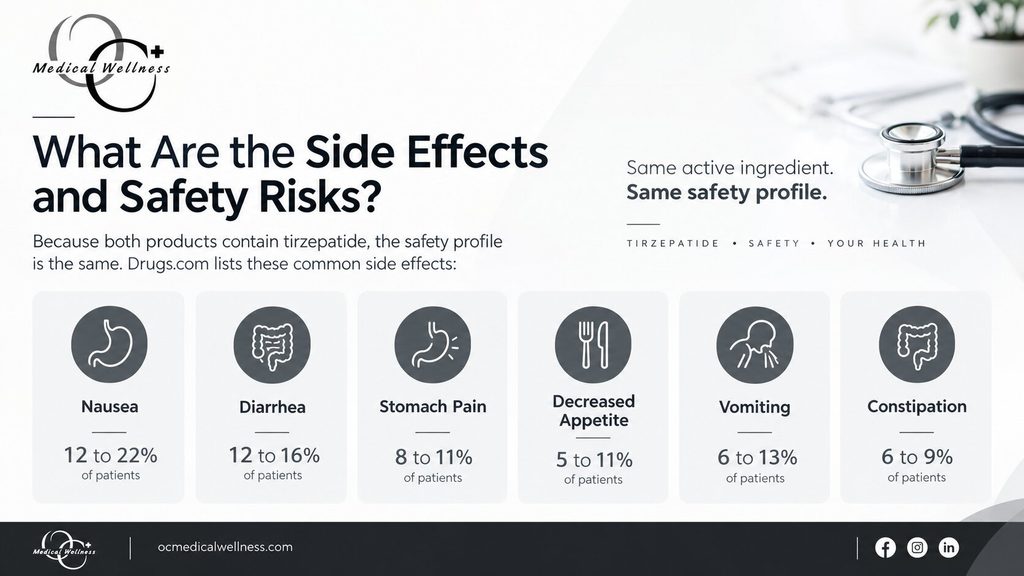
- Nausea (12 to 22% of patients)
- Diarrhea (12 to 16%)
- Stomach pain (8 to 11%)
- Decreased appetite (5 to 11%)
- Vomiting (6 to 13%)
- Constipation (6 to 9%)
Most digestive symptoms show up during dose increases. Small meals, plenty of fluids, and avoiding greasy food can help, and a prescriber can advise on anything further.
Important warnings apply to both:
- Boxed warning: risk of thyroid C-cell tumors. Tirzepatide is not for anyone with a personal or family history of medullary thyroid carcinoma or MEN 2 syndrome.
- Pancreatitis, gallbladder disease, dehydration affecting the kidneys, severe stomach problems, vision changes, and serious allergic reactions
- Low blood sugar, particularly when combined with insulin or certain diabetes medications
- Birth control: tirzepatide can reduce absorption of oral contraceptives. Current guidance is to use a non-oral or barrier method for four weeks after starting and after each dose increase.
Seek medical care promptly for severe abdominal pain, repeated vomiting, inability to keep fluids down, a neck lump, trouble swallowing, or signs of an allergic reaction. Never share a pen with another person.
How Much Do Mounjaro and Zepbound Cost?
Without insurance, the list price of both medicines is roughly $1,000 to $1,100 per month, according to Drugs.com. Cash pricing for Zepbound can be lower through Lilly’s direct pharmacy: self-pay prices range from $299 to $449 per month for single-dose vials, depending on dose. Eligible commercially insured patients with Zepbound coverage may pay as little as $25 through a manufacturer program. lilly
Coverage works differently for each product:
- Mounjaro: usually requires a type 2 diabetes diagnosis, and may need prior authorization or step therapy, such as trying metformin first.
- Zepbound: many plans exclude weight-loss drugs, and approval often requires documented BMI, comorbidities, and prior weight-loss efforts. Sleep apnea coverage varies.
Prices and programs change often. Confirm current figures with your insurer, pharmacy, or clinic before you decide.
Who Qualifies for Zepbound or Mounjaro?
For weight management, Zepbound is indicated for adults with a BMI of 30 or higher, or a BMI of 27 or higher with at least one weight-related condition such as high blood pressure, high cholesterol, or sleep apnea. It is used alongside a reduced-calorie diet and more physical activity. Mounjaro is for adults and children 10 and older with type 2 diabetes.
BMI alone does not settle safety. A physician should also review your medications, pregnancy plans, digestive history, blood sugar, and family history. Our overview of how medical weight loss programs are structured explains what that evaluation typically covers.
How Does Tirzepatide Compare With Semaglutide?
Tirzepatide is the active ingredient in Mounjaro and Zepbound. Semaglutide is the ingredient in Ozempic and Wegovy, and the naming pattern is the same: one brand for diabetes, one for weight loss. If you are curious how that split works on the semaglutide side, see Ozempic vs. Wegovy.
In SURMOUNT-5, tirzepatide produced higher average weight loss, but semaglutide has its own strengths, including a cardiovascular risk-reduction indication for certain adults, and its options have expanded since that trial. Our detailed breakdown of semaglutide vs. tirzepatide walks through the trade-offs, and the semaglutide for weight loss guide covers that medication on its own.
Tirzepatide Weight Loss in Irvine, CA
OC Medical Wellness is a primary care and wellness clinic at 113 Waterworks Way, Suite 210, in Irvine, serving patients across Orange County. The practice is led by Dr. Arturo Portales, a board-certified osteopathic physician with more than 20 years of experience in anti-aging, regenerative, and functional medicine.
Our physician-guided medical weight loss program combines a medical evaluation, medication management, nutrition guidance, and ongoing follow-up. We offer personalized semaglutide and tirzepatide plans, and you can read about our semaglutide treatment in Irvine as well. For a closer look at the medication behind Mounjaro and Zepbound, see our guide to tirzepatide for weight loss.
We accept CareCredit, Afterpay, cash, and major credit and debit cards, and we offer in-house payment plans. Office hours are Monday through Friday, 9:00 AM to 5:00 PM.
What Should You Consider Before Choosing?
- Your diagnosis. Type 2 diabetes, obesity, sleep apnea, or a combination changes which product fits.
- Your coverage. Check whether your plan covers weight management drugs, diabetes drugs, or neither.
- Your budget. Compare insurance copays, manufacturer programs, and cash prices, including follow-up visits.
- Your tolerance. Digestive side effects, other medications, and birth control all matter.
- Your support. Dose changes, nutrition, hydration, and progress tracking work better with regular medical follow-up.
Frequently Asked Questions
Is Zepbound the same as Mounjaro?
They contain the same ingredient, tirzepatide, and are made by Eli Lilly. They differ in FDA-approved uses and insurance coverage.
Is Zepbound stronger than Mounjaro?
No. Same molecule, same mechanism, same top dose of 15 mg. Results differ by dose and person, not by brand.
Can I use Mounjaro for weight loss?
Weight loss is not an approved use of Mounjaro, though its active ingredient causes weight loss. Any off-label use should be decided with a physician, and insurance coverage generally follows the diabetes diagnosis.
Can I switch from Mounjaro to Zepbound?
A prescriber can switch you, particularly if coverage or your treatment goal changes. They will decide the starting dose based on your current dose, side effects, and other medications, so do not switch on your own.
How long does it take to see results?
Treatment starts at a low dose and rises gradually, so early weeks focus on tolerance. Drugs.com notes that meaningful weight loss often takes about 8 to 12 weeks, and individual timelines vary.
Do I have to stay on it long term?
Zepbound is approved to help reduce excess weight and maintain the reduction long term, so ongoing treatment is common. Talk with your physician before stopping.
How much does Zepbound cost without insurance?
List price is roughly $1,000 to $1,100 per month, while Lilly’s self-pay vial program has listed $299 to $449 per month by dose. Verify current prices before purchasing.
Key Takeaways
- Mounjaro and Zepbound both contain tirzepatide and work the same way.
- Zepbound is FDA-approved for weight management and sleep apnea; Mounjaro is approved for type 2 diabetes.
- In SURMOUNT-1, tirzepatide at 15 mg produced an average 20.9% weight loss over 72 weeks.
- Side effects, warnings, and dosing steps are the same for both products.
- Insurance coverage usually depends on your diagnosis and which brand is prescribed.
- A medical evaluation, not an online comparison, should decide which option fits you.
Talk With a Physician in Irvine
If you are weighing tirzepatide for weight loss, a medical evaluation is the right first step. Review your options with our team, then schedule an appointment at OC Medical Wellness or call 949-273-2301.