
GLP-1 weight loss programs use prescription medications, such as semaglutide and tirzepatide, that mimic a hormone your gut already produces after eating. That hormone signals fullness to the brain, slows digestion, and helps regulate blood sugar, which is why these medications reduce appetite and support meaningful weight loss. A GLP-1 program is more than a prescription. It includes a medical evaluation, dose titration under physician supervision, and ongoing monitoring, and it is not appropriate for everyone.
What Is a GLP-1 Weight Loss Program?
A GLP-1 weight loss program is a physician-supervised treatment plan built around a GLP-1 receptor agonist medication, combined with medical evaluation, lab monitoring, and nutrition or lifestyle support. The goal is sustained, clinically meaningful weight loss for adults with obesity or overweight who have not reached their goals through diet and exercise alone.
How Do GLP-1 Medications Work?
GLP-1 stands for glucagon-like peptide-1, a hormone released by the intestine after a meal. It signals the brain that you are full, slows how quickly food leaves the stomach, and helps the pancreas manage insulin and blood sugar. GLP-1 receptor agonist medications are designed to mimic this hormone at a stronger, more sustained level than the body produces on its own, which is what drives the appetite reduction patients notice.
Not all GLP-1 medications work the same way. Semaglutide activates only the GLP-1 receptor, while tirzepatide is a dual agonist that activates both GLP-1 and GIP (glucose-dependent insulinotropic polypeptide) receptors, which is one reason tirzepatide has shown somewhat greater average weight loss in clinical trials. For a deeper look at each medication individually, see our guides to semaglutide for weight loss and tirzepatide for weight loss.
What Medications Are Used in GLP-1 Weight Loss Programs?
As of 2026, the FDA has approved several GLP-1-class medications specifically for chronic weight management, and a few others are used off-label for weight loss because they share the same active ingredients at lower doses.
| Medication | Active Ingredient | Approved Use | Form |
| Wegovy | Semaglutide | Chronic weight management | Weekly injection or daily pill |
| Zepbound | Tirzepatide | Chronic weight management | Weekly injection |
| Saxenda | Liraglutide | Chronic weight management | Daily injection |
| Ozempic / Mounjaro | Semaglutide / Tirzepatide | Type 2 diabetes (used off-label for weight loss) | Weekly injection |
Our Semaglutide service page has more detail on what a semaglutide treatment plan looks like at OC Medical Wellness.
What Does a Medically Supervised GLP-1 Program Actually Include?
A responsible GLP-1 program is built around more than the injection itself.
- An initial evaluation covering medical history, current medications, BMI, and weight-related health conditions
- Baseline labs to screen for conditions that would make GLP-1 therapy inappropriate
- A starting dose with gradual titration over several weeks to reduce side effects
- Scheduled follow-up visits to monitor progress, side effects, and dose adjustments
- Nutrition and behavioral guidance to support the medication rather than replace it
Because weight can also be affected by hormonal imbalance, thyroid function, and metabolic health, OC Medical Wellness often evaluates GLP-1 candidates alongside our Functional Medicine and Hormone Replacement Therapy services when relevant, rather than treating weight loss as an isolated issue. For a broader look at how medical weight loss programs are structured, see our guide, What Is a Medical Weight Loss Program?.
Who Is Eligible for a GLP-1 Weight Loss Program?
Per FDA labeling for the weight-management-approved GLP-1 medications, adults are generally considered candidates if they have a body mass index (BMI) of 30 or greater, or a BMI of 27 or greater along with at least one weight-related condition such as high blood pressure, type 2 diabetes, or high cholesterol. Eligibility ultimately depends on an individual medical evaluation, not BMI alone. The FDA’s approval announcement for Zepbound outlines these criteria along with the conditions that would exclude someone from treatment.
What Are the Benefits?
- Clinically significant weight loss for many patients when combined with lifestyle changes
- Reduced appetite and fewer intrusive food cravings, sometimes described by patients as less “food noise”
- Improved blood sugar regulation, which matters for patients with prediabetes or type 2 diabetes
- For semaglutide specifically, an FDA-approved indication for reducing cardiovascular risk in adults with obesity or overweight and existing heart disease
- Ongoing physician oversight rather than an unsupervised, self-directed approach
What Are the Risks and Side Effects?
The most common side effects are gastrointestinal: nausea, constipation, diarrhea, and vomiting, especially during dose increases. These medications also carry a boxed warning for thyroid C-cell tumors observed in rodent studies, and they should not be used by patients with a personal or family history of medullary thyroid carcinoma or Multiple Endocrine Neoplasia syndrome type 2. Other precautions include pancreatitis, gallbladder problems, and low blood sugar in patients also taking diabetes medications. This is why a proper screening and ongoing monitoring by a licensed provider, not a one-time online questionnaire, matters before and during treatment.
GLP-1 Programs vs. Weight Loss Without Medication
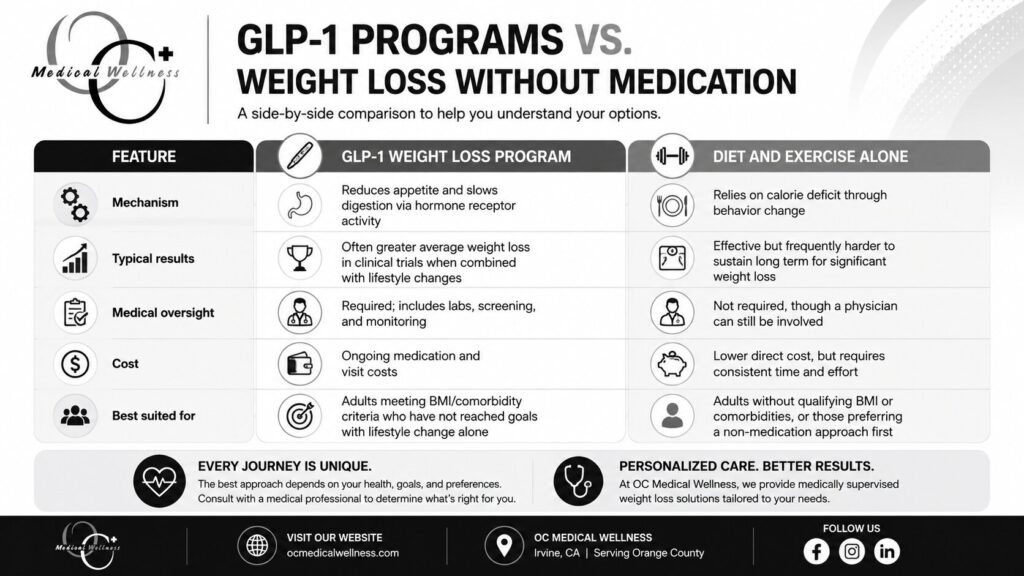
| Feature | GLP-1 Weight Loss Program | Diet and Exercise Alone |
| Mechanism | Reduces appetite and slows digestion via hormone receptor activity | Relies on calorie deficit through behavior change |
| Typical results | Often greater average weight loss in clinical trials when combined with lifestyle changes | Effective but frequently harder to sustain long term for significant weight loss |
| Medical oversight | Required; includes labs, screening, and monitoring | Not required, though a physician can still be involved |
| Cost | Ongoing medication and visit costs | Lower direct cost, but requires consistent time and effort |
| Best suited for | Adults meeting BMI/comorbidity criteria who have not reached goals with lifestyle change alone | Adults without qualifying BMI or comorbidities, or those preferring a non-medication approach first |
What If Weight Loss Stalls on a GLP-1 Program?
Plateaus can happen even with medication, often due to metabolic adaptation, dose timing, or unaddressed factors like sleep and stress. Our article on why weight loss plateaus happen and what to do about them covers this in more detail and applies whether or not medication is part of the plan.
GLP-1 Weight Loss Programs in Orange County
OC Medical Wellness offers physician-supervised GLP-1 weight loss programs from our Irvine, CA location, serving patients throughout Orange County. Our Weight Loss Program combines GLP-1 therapy, when appropriate, with functional medicine evaluation and ongoing support rather than a prescription-only approach.
How Much Does a GLP-1 Weight Loss Program Cost?
Cost depends on the specific medication, dosage, and whether insurance covers the prescribed indication. Coverage is more likely when a medication is prescribed for its FDA-approved use and less consistent for off-label prescribing. Because pricing changes and varies by insurance plan, the most reliable next step is to ask directly when scheduling a consultation.
Frequently Asked Questions
What does GLP-1 stand for?
Glucagon-like peptide-1, a hormone naturally produced in the gut that regulates appetite, digestion, and blood sugar.
Is a GLP-1 weight loss program the same as taking Ozempic?
Not necessarily. Ozempic contains semaglutide but is FDA-approved for type 2 diabetes; when used for weight loss it is prescribed off-label. Wegovy contains the same active ingredient at a dose specifically approved for chronic weight management.
How much weight can someone expect to lose?
Results vary by medication, dose, and individual factors. Clinical trials have shown average weight loss in the double digits as a percentage of body weight for both semaglutide and tirzepatide, but individual results differ and should be discussed with a provider rather than assumed from trial averages.
Do I have to stay on the medication permanently?
Many patients regain some weight after stopping GLP-1 medication, which is why obesity is generally treated as a chronic condition requiring an ongoing plan rather than a short course of treatment. This should be discussed as part of your individualized treatment plan.
Are GLP-1 medications safe?
For appropriately screened patients, yes, under medical supervision. They carry real risks and contraindications, including a boxed warning related to thyroid tumors, which is why screening and monitoring matter.
Does insurance cover GLP-1 weight loss medications?
Coverage varies widely by plan and is more likely when the medication is prescribed for an FDA-approved indication. Patients should confirm their specific coverage with their insurer.
Who should not use a GLP-1 medication?
Patients with a personal or family history of medullary thyroid carcinoma or Multiple Endocrine Neoplasia syndrome type 2 should not use these medications. Patients with a history of pancreatitis or severe gastrointestinal disease need a careful individual evaluation.
Key Takeaways
- GLP-1 weight loss programs use medications that mimic a natural gut hormone to reduce appetite and support weight loss.
- Semaglutide and tirzepatide work through related but distinct mechanisms, and tirzepatide’s dual action has shown somewhat greater average results in trials.
- Eligibility generally follows FDA BMI and comorbidity criteria, but requires an individual medical evaluation.
- These medications carry real risks, including a boxed warning for thyroid tumors, and require physician screening and monitoring.
- A well-run program includes labs, dose titration, and nutrition support, not just a prescription.
Ready to Learn if a GLP-1 Program Is Right for You?
If diet and exercise alone haven’t gotten you to your goals, contact OC Medical Wellness to schedule a consultation and find out whether a GLP-1 weight loss program is a fit for your health history and goals.