
A medical weight loss program is a physician-supervised plan that combines medical evaluation, nutrition guidance, behavioral support, and, when appropriate, FDA-approved medication to help patients lose weight safely and sustainably. Unlike commercial diet plans, it’s built around each patient’s individual health history rather than a one-size-fits-all formula.
For adults in Irvine and across Orange County who have tried dieting and exercise without lasting results, understanding how these programs actually work is the first step toward deciding whether one is right for you.
What Is a Medical Weight Loss Program?
A medical weight loss program is a structured, physician-led plan that uses lab testing, nutrition counseling, behavioral coaching, and sometimes prescription medication to help a patient reach and maintain a healthier weight. It differs from a fad diet in that it’s supervised by a clinical team and adjusted over time based on how the patient’s body responds.
At OC Medical Wellness, medical weight loss is typically approached as part of a broader picture of metabolic and hormonal health, not an isolated calorie-counting exercise. That’s an important distinction, since unresolved issues like thyroid dysfunction, insulin resistance, or hormonal imbalance can make weight loss harder to sustain through diet alone.
How Do Medical Weight Loss Programs Work?
Most medically supervised weight loss programs follow a similar sequence, though the specifics are tailored to each patient:
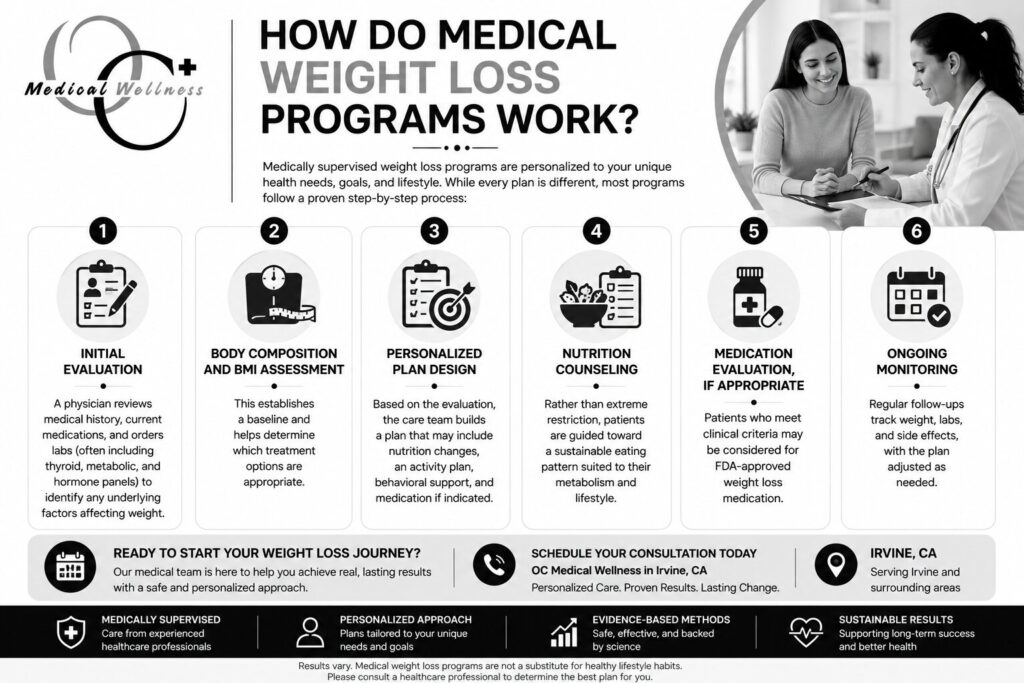
- Initial evaluation. A physician reviews medical history, current medications, and orders labs (often including thyroid, metabolic, and hormone panels) to identify any underlying factors affecting weight.
- Body composition and BMI assessment. This establishes a baseline and helps determine which treatment options are appropriate.
- Personalized plan design. Based on the evaluation, the care team builds a plan that may include nutrition changes, an activity plan, behavioral support, and medication if indicated.
- Nutrition counseling. Rather than extreme restriction, patients are guided toward a sustainable eating pattern suited to their metabolism and lifestyle.
- Medication evaluation, if appropriate. Patients who meet clinical criteria may be considered for FDA-approved weight loss medication.
- Ongoing monitoring. Regular follow-ups track weight, labs, and side effects, with the plan adjusted as needed.
Who Is a Candidate for Medical Weight Loss?
Candidacy is determined individually by a physician, but general guidance from major medical organizations offers a useful starting point. According to clinical guidance from the American College of Physicians and the American College of Cardiology, adults with a BMI of 30 or higher are generally considered candidates for pharmacologic treatment, as are adults with a BMI of 27 or higher who also have a weight-related condition such as high blood pressure, high cholesterol, or sleep apnea. (Flag for clinical review: confirm this reflects the criteria OC Medical Wellness’s providers actually apply before publishing.)
These are general eligibility ranges, not guarantees of treatment, a physician still needs to review a patient’s full health history before recommending a specific plan.
What Treatment Options Are Typically Included?
Medical weight loss programs draw from several categories of tools, used individually or in combination:
- Nutrition and behavioral coaching — addressing eating patterns, portion habits, and the emotional or lifestyle factors that affect food choices.
- Structured activity guidance — an exercise approach suited to the patient’s current fitness level and any physical limitations.
- FDA-approved weight loss medication — for eligible patients, options may include GLP-1 receptor agonist medications, which work in part by slowing gastric emptying and reducing appetite signals. (Flag for clinical review: verify which medications OC Medical Wellness prescribes or manages before naming specific brands.)
- Hormonal and metabolic evaluation — since imbalances in thyroid function or other hormones can interfere with weight management, some integrative programs, including OC Medical Wellness’s approach, screen for these alongside standard weight loss care.
Research on GLP-1 medications has generally shown meaningful average weight loss when combined with diet and lifestyle changes, though individual results vary considerably and are not guaranteed. (Flag for clinical review: insert a current, specific source citation here before publishing, e.g., a named clinical trial or FDA labeling reference.)
What About Cost and Insurance?
Coverage for medical weight loss visits and medication varies widely by insurance plan. Some plans cover physician visits and labs but require prior authorization for medication, while others exclude weight-management drugs from coverage entirely. Patients are generally encouraged to check with their insurance provider directly and ask their care team about self-pay options if needed.
Common Myths About Medical Weight Loss
“It’s only for people who are severely overweight.” Medical weight loss programs are designed for a range of patients, including those with a lower BMI who have a weight-related health condition.
“It’s just a prescription.” Medication, when used, is typically one part of a broader plan that includes nutrition, behavioral support, and monitoring, not a standalone fix.
“Results happen instantly.” Sustainable weight loss through a medical program tends to unfold gradually, with regular check-ins used to adjust the plan over time.
Why Consider a Medically Supervised Approach
Working with a physician-led team means changes to your plan are based on how your body is actually responding, not guesswork. For Orange County residents weighing their options, a program that also screens for underlying hormonal or metabolic contributors can offer a more complete picture than a diet plan or medication prescription alone.
If you’re exploring medical weight loss programs in Orange County, the next step is a consultation where a provider can review your health history and discuss which options may fit your situation.
FAQ:
Q: What is a medical weight loss program?
A: It’s a physician-supervised weight loss plan that combines medical evaluation, nutrition and behavioral guidance, and sometimes prescription medication, tailored to the individual patient.
Q: How is medical weight loss different from dieting on my own?
A: It includes a clinical team, lab testing, and ongoing monitoring, so the plan is adjusted based on your body’s response rather than following a generic template.
Q: Who qualifies for medical weight loss medication?
A: General clinical guidance points to adults with a BMI of 30 or higher, or a BMI of 27 or higher with a weight-related condition, though a physician determines actual candidacy after a full evaluation.
Q: Is medical weight loss covered by insurance?
A: Coverage varies by plan, some cover visits and labs but require prior authorization for medication, and some plans exclude weight-loss drugs. Checking directly with your insurer is recommended.
Q: How long does a medical weight loss program take to show results?
A: Timelines vary by person and plan; most programs use regular follow-up visits over several months to track progress and make adjustments rather than promising a fixed timeline.