
Have you been eating well, exercising consistently, and following your weight loss plan, only to find that the number on the scale hasn’t changed for weeks?
If so, you may have reached a weight loss plateau. This is one of the most common challenges people face during their weight loss journey. While it can be frustrating, it doesn’t necessarily mean you’re doing something wrong.
A weight loss plateau may happen for several reasons, including changes in metabolism, hormone levels, muscle mass, stress, sleep habits, or underlying medical conditions. Understanding what’s causing the plateau is the first step toward finding the right solution.
At OC Medical Wellness, we help patients in Irvine and throughout Orange County identify the factors that may be preventing continued weight loss. Our providers take a personalized, medically guided approach to help patients overcome obstacles and achieve sustainable, long-term results.
What Is a Weight Loss Plateau?
A weight loss plateau occurs when your weight remains the same for several weeks despite continuing your diet and exercise routine.
Many people lose weight steadily during the first few weeks or months of a program. As the body adjusts to weight loss, progress often slows, and in some cases, stops temporarily.
This is a normal part of the weight loss process, but a plateau that lasts for several weeks may indicate that your body has adapted to your current routine or that other health factors should be evaluated.
A healthcare provider can help determine whether your plateau is a natural adjustment or whether additional testing and treatment may be appropriate.
Signs You May Have Reached a Weight Loss Plateau
You may be experiencing a weight loss plateau if you notice:
- Your weight has stayed the same for three to four weeks or longer.
- You’re following a healthy eating plan but aren’t seeing progress.
- You’re exercising regularly without additional weight loss.
- Your clothes fit the same despite consistent effort.
- You feel frustrated because your previous routine no longer produces results.
It’s important to remember that body composition can change even if the scale doesn’t move. Building lean muscle while reducing body fat may not always be reflected by weight alone.
Why Have You Stopped Losing Weight?
There isn’t one single cause of a weight loss plateau. Instead, several factors may contribute.
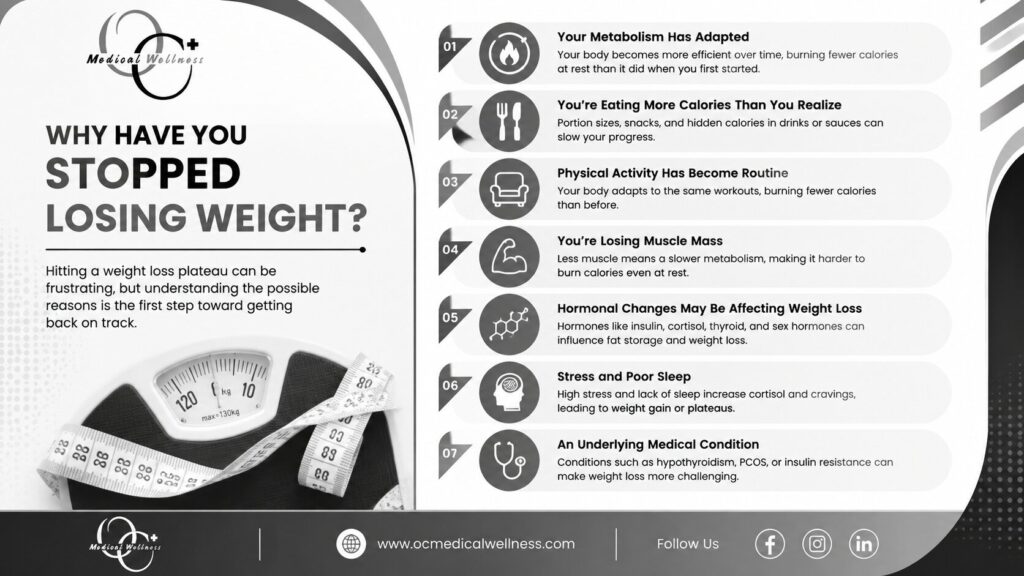
1. Your Metabolism Has Adapted
As you lose weight, your body naturally requires fewer calories to function.
This process, sometimes called metabolic adaptation, means the calorie deficit that helped you lose weight initially may no longer be enough to continue losing weight.
This doesn’t mean your metabolism is “broken.” It simply means your body has adjusted, and your weight loss strategy may need to be updated.
2. You’re Eating More Calories Than You Realize
Even healthy foods can contribute to excess calorie intake when portion sizes increase.
Common examples include:
- Extra snacks between meals
- Sugary coffee drinks
- Salad dressings and sauces
- Nuts and trail mix
- Restaurant portions
Many people unintentionally consume more calories over time without realizing it.
3. Physical Activity Has Become Routine
Your body becomes more efficient as your fitness improves.
The same workout that burned a significant number of calories months ago may now burn fewer calories because your body has adapted.
Adding strength training, increasing activity levels, or varying your exercise routine may help improve energy expenditure.
4. You’re Losing Muscle Mass
Muscle tissue burns more energy than fat, even while you’re resting.
If you’re losing muscle because of inadequate protein intake, aging, or lack of resistance training, your resting metabolism may decrease, making continued weight loss more challenging.
Maintaining lean muscle is an important part of long-term weight management.
5. Hormonal Changes May Be Affecting Weight Loss
Hormones play an important role in regulating metabolism, hunger, fat storage, and energy levels.
Hormonal changes that may contribute to difficulty losing weight include:
- Menopause
- Perimenopause
- Low testosterone
- Thyroid disorders
- Insulin resistance
Hormonal imbalances don’t always cause weight gain on their own, but they may make weight loss more difficult despite healthy habits.
If symptoms such as fatigue, low energy, brain fog, or unexplained weight changes occur alongside a plateau, a medical evaluation may help identify contributing factors.
6. Stress and Poor Sleep
Chronic stress and inadequate sleep may influence hormones involved in appetite regulation and metabolism.
People who consistently sleep too little or experience ongoing stress may notice:
- Increased hunger
- More food cravings
- Reduced energy for exercise
- Difficulty maintaining healthy habits
Improving sleep quality and stress management can be an important part of a comprehensive weight loss plan.
7. An Underlying Medical Condition
Sometimes, a weight loss plateau may be related to an underlying medical issue rather than diet or exercise alone.
Conditions that may affect weight management include:
- Thyroid disorders
- Prediabetes
- Insulin resistance
- Polycystic ovary syndrome (PCOS)
- Certain medications
- Hormonal disorders
A healthcare provider can evaluate your symptoms, review your medical history, and recommend appropriate laboratory testing when necessary.
Could a Weight Loss Plateau Be a Sign You Need Medical Support?
Many people assume they simply need to “try harder.”
In reality, persistent difficulty losing weight may indicate that your body needs a different approach rather than more restrictive dieting.
A personalized medical evaluation may help identify factors such as hormone imbalance, metabolic changes, insulin resistance, or other conditions that can influence weight management.
Ready to Move Beyond Your Weight Loss Plateau?
If you’ve been struggling to lose weight despite consistent effort, you don’t have to figure it out alone.
OC Medical Wellness provides personalized medical weight loss evaluations for patients in Irvine and Orange County. Our team can assess your health, discuss your goals, and determine whether lifestyle changes, laboratory testing, or medically supervised weight loss options may be appropriate for you.
Schedule a consultation today to take the next step toward achieving your long-term health and weight management goals.
When Should You See a Healthcare Provider?
While occasional plateaus are common, you should consider scheduling a medical evaluation if:
- Your weight hasn’t changed for four weeks or longer despite healthy habits.
- You experience persistent fatigue or low energy.
- You have symptoms of hormone imbalance.
- You’re concerned about insulin resistance or prediabetes.
- Weight gain is affecting your overall health or quality of life.
- You’ve tried multiple diets without lasting success.
A healthcare provider can help determine whether additional evaluation or a personalized treatment plan may improve your progress.
How Is a Weight Loss Plateau Evaluated?
If you’ve reached a weight loss plateau that lasts several weeks despite healthy eating and regular exercise, a healthcare provider may recommend a comprehensive evaluation.
The goal isn’t simply to help you lose more weight, it’s to understand why your progress has stalled.
During your evaluation, your provider may:
- Review your medical history and current medications.
- Discuss your nutrition and physical activity.
- Evaluate your sleep, stress levels, and lifestyle habits.
- Assess symptoms such as fatigue, low energy, brain fog, or hormone-related changes.
- Recommend laboratory testing if clinically appropriate to evaluate thyroid function, blood sugar levels, or hormone balance.
A personalized assessment can help identify factors that may be limiting your progress and guide the next steps in your weight management plan.
How to Break Through a Weight Loss Plateau
There is no one-size-fits-all solution. The most effective strategy depends on the underlying cause of your plateau.
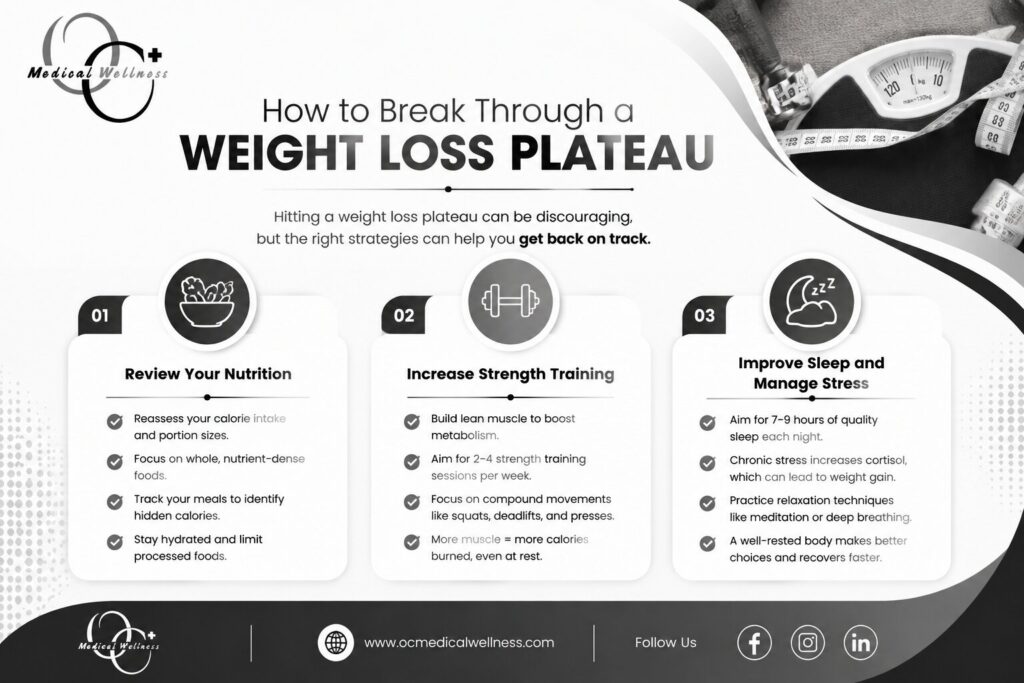
Review Your Nutrition
As your body weight changes, your calorie needs may also change.
Simple adjustments can sometimes help restart progress, including:
- Eating balanced meals with lean protein, healthy fats, and fiber.
- Monitoring portion sizes.
- Limiting sugary drinks and processed snacks.
- Staying hydrated throughout the day.
Rather than following restrictive diets, focus on creating eating habits you can maintain long term.
Increase Strength Training
Building and maintaining lean muscle supports a healthy metabolism.
If your current routine focuses mainly on cardio, adding resistance training two to three times per week may help improve body composition and support long-term weight management.
Improve Sleep and Manage Stress
Poor sleep and chronic stress may affect hormones that regulate hunger, appetite, and energy.
Healthy habits that may help include:
- Maintaining a consistent sleep schedule.
- Practicing stress management techniques.
- Staying physically active.
- Limiting caffeine late in the day.
Small lifestyle improvements often contribute to better overall health and may support continued weight loss.
Consider a Medically Supervised Weight Loss Program
For some individuals, lifestyle changes alone may not be enough.
A medically supervised weight loss program provides personalized guidance based on your health history, current weight, medical conditions, and goals.
Your provider may recommend:
- Nutrition counseling
- Exercise recommendations
- Hormone evaluation when clinically appropriate
- Ongoing progress monitoring
- Prescription weight loss medications if appropriate
Medical supervision can help ensure your treatment plan is safe, realistic, and tailored to your individual needs.
Can GLP-1 Medications Help Overcome a Weight Loss Plateau?
For eligible patients, GLP-1 medications may be considered as part of a comprehensive medical weight loss program.
These medications work differently than traditional dieting by helping regulate appetite, increase feelings of fullness, and support healthier eating habits.
Depending on your medical history, your provider may discuss options such as:
- Semaglutide
- Tirzepatide
These medications are not appropriate for everyone and should only be used under the supervision of a qualified healthcare provider.
At OC Medical Wellness, treatment recommendations are personalized based on each patient’s health history, weight management goals, and overall wellness.
Looking for personalized medical weight loss support in Irvine or Orange County?
Our team can help determine whether a medically supervised weight loss program, including GLP-1 treatment options when appropriate, may be right for you.
Schedule your consultation today to create a personalized weight loss plan.
Frequently Asked Questions
Why have I stopped losing weight even though I’m eating healthy?
As you lose weight, your body naturally adapts by requiring fewer calories. Hormonal changes, stress, sleep quality, muscle loss, and certain medical conditions may also contribute to a weight loss plateau.
How long does a weight loss plateau last?
Some plateaus last only a few weeks, while others may continue longer. If your weight has remained unchanged for several weeks despite consistent healthy habits, it may be beneficial to discuss your concerns with a healthcare provider.
Can hormone imbalance make it harder to lose weight?
Hormonal changes may influence metabolism, appetite, and body composition. Conditions involving thyroid hormones, menopause, low testosterone, or insulin resistance can sometimes affect weight management. A medical evaluation can help determine whether further testing is appropriate.
Is Semaglutide effective for weight loss?
Semaglutide has been shown to support weight loss in appropriate patients when combined with healthy lifestyle changes. Your healthcare provider can determine whether it is a suitable option based on your medical history and treatment goals.
Is Tirzepatide different from Semaglutide?
Both medications are used as part of medically supervised weight management for eligible patients, but they work in slightly different ways. Your provider can explain the differences and recommend the most appropriate treatment for your individual needs.
When should I seek medical help for a weight loss plateau?
You should consider scheduling an evaluation if:
- Your weight has not changed for several weeks.
- You’ve tried multiple diet and exercise programs without lasting success.
- You’re experiencing fatigue, hormone-related symptoms, or unexplained weight changes.
- You’re concerned about conditions such as insulin resistance or thyroid disorders.
Why Choose OC Medical Wellness?
At OC Medical Wellness, we understand that successful weight management is about more than simply reducing calories.
Our providers take a comprehensive approach by evaluating your overall health, lifestyle, and potential medical factors that may be affecting your progress.
Our personalized services may include:
- Medical Weight Loss Programs
- GLP-1 Weight Loss Therapy (when appropriate)
- Semaglutide and Tirzepatide consultations
- Hormone evaluations
- Nutrition and lifestyle guidance
- Ongoing support and progress monitoring
We proudly serve patients in Irvine, Orange County, Tustin, Newport Beach, and surrounding communities with individualized care focused on long-term wellness.
Take the Next Step Toward Sustainable Weight Loss
If you’ve been asking yourself, “Why have I stopped losing weight?”, you’re not alone.
A weight loss plateau doesn’t necessarily mean you’ve reached the end of your progress. With the right evaluation, personalized guidance, and evidence-based treatment plan, many people can continue working toward their health goals.
Whether you’re interested in learning more about medical weight loss, Semaglutide, Tirzepatide, or simply want to understand why your progress has stalled, the team at OC Medical Wellness is here to help.
Schedule your consultation today to receive a personalized evaluation and explore weight management options designed around your unique health needs and long-term goals.