
Tirzepatide is a prescription injectable medication that activates GLP-1 and GIP receptors to reduce appetite, slow digestion, and support significant weight loss in adults with obesity or excess weight-related health conditions. It is sold under two FDA-approved brand names, Zepbound for chronic weight management and Mounjaro for type 2 diabetes, and it works best as part of a medically supervised plan that includes nutrition and activity changes. Whether tirzepatide is right for a given patient depends on individual health history, current medications, and a clinician’s evaluation.
This guide explains how tirzepatide works, what results patients typically see, how dosing is structured, what side effects to watch for, and how it compares with semaglutide, so you can have an informed conversation with a healthcare provider before starting treatment.
What Is Tirzepatide for Weight Loss?
Tirzepatide is a once-weekly injectable medication and the first dual GIP/GLP-1 receptor agonist approved by the FDA. It mimics two natural gut hormones, glucose-dependent insulinotropic polypeptide (GIP) and glucagon-like peptide-1 (GLP-1), that regulate appetite, insulin release, and digestion.
For weight management, tirzepatide is sold as Zepbound, FDA-approved for chronic weight management in adults with obesity, or with excess weight and at least one weight-related condition, when used alongside a reduced-calorie diet and increased physical activity. Mounjaro is the same active ingredient, tirzepatide, but it is FDA-approved specifically for improving blood sugar control in adults with type 2 diabetes. The two products are not interchangeable simply because they share an active ingredient; each has its own approved indication and prescribing considerations.
How Does Tirzepatide Help With Weight Loss?
Tirzepatide supports weight loss by acting on receptors in the brain and gut that influence hunger and fullness. By activating both GLP-1 and GIP receptor pathways, it tends to:
- Reduce appetite and food intake
- Slow gastric emptying, so meals feel more filling for longer
- Improve insulin sensitivity and blood sugar regulation
- Support gradual, sustained calorie reduction when paired with lifestyle changes
Because it affects both digestion and appetite signaling, tirzepatide is generally considered alongside semaglutide as one of the more effective medications currently available for weight management, though individual response still varies.
How Much Weight Can You Lose With Tirzepatide?
In the SURMOUNT-1 clinical trial, adults with obesity who did not have type 2 diabetes lost an average of 15.0% of body weight at the 5 mg maintenance dose, 21.4% at 10 mg, and 22.5% at 15 mg over 72 weeks, compared with a small reduction in the placebo group. The majority of participants at the highest studied dose lost at least 5% of their starting body weight.
These are clinical trial averages, not guarantees. Individual results depend on starting weight, dose, how long treatment continues, adherence to the medication schedule, concurrent lifestyle changes, and underlying medical conditions. A clinician can help set realistic, personalized expectations based on your health profile.
Who May Qualify for Tirzepatide for Weight Loss?
Zepbound is generally considered for adults who have:
- A body mass index (BMI) of 30 or higher (obesity), or
- A BMI of 27 or higher (overweight) with at least one weight-related condition, such as high blood pressure, type 2 diabetes, high cholesterol, or obstructive sleep apnea
BMI alone does not determine candidacy. A prescribing clinician also reviews medical history, current medications, prior weight-management attempts, potential drug interactions, and any contraindications before recommending tirzepatide. This is a clinical decision made individually, not a checklist a patient completes on their own.
What Is the Tirzepatide Dosing Schedule?
Tirzepatide dosing follows a gradual titration schedule to reduce the risk of gastrointestinal side effects. According to current FDA prescribing information for Zepbound:
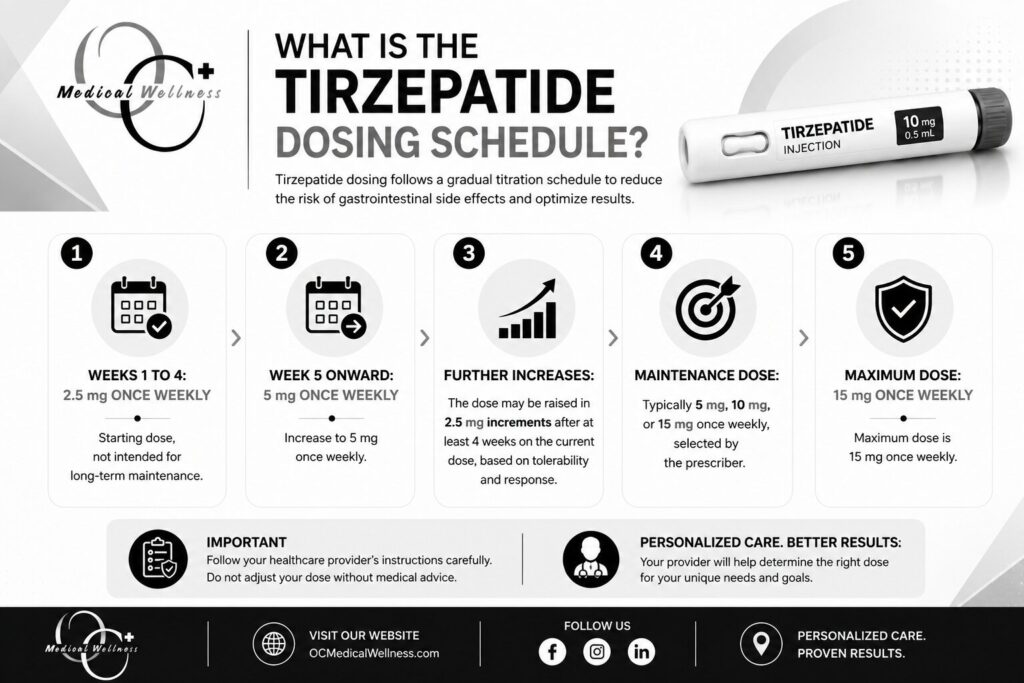
- Weeks 1 to 4: 2.5 mg once weekly (starting dose, not intended for long-term maintenance)
- Week 5 onward: Increase to 5 mg once weekly
- Further increases: The dose may be raised in 2.5 mg increments after at least 4 weeks on the current dose, based on tolerability and response
- Maintenance dose: Typically 5 mg, 10 mg, or 15 mg once weekly, selected by the prescriber
- Maximum dose: 15 mg once weekly
What Does a Tirzepatide Dosage Chart Look Like?
| Week | Dose |
| 1–4 | 2.5 mg weekly |
| 5–8 | 5 mg weekly |
| 9–12 | 7.5 mg weekly (if advanced) |
| 13–16 | 10 mg weekly (if advanced) |
| 17–20 | 12.5 mg weekly (if advanced) |
| 21+ | 15 mg weekly (maximum, if advanced and tolerated) |
This chart reflects the general FDA-approved titration framework and is for educational purposes only. It does not replace an individualized prescription. Not every patient advances through every step; a prescriber may hold a patient at a lower maintenance dose based on tolerability and treatment goals. Dose changes, pauses, or discontinuation should always be directed by the prescribing clinician.
What Are the Side Effects of Tirzepatide?
The most commonly reported side effects of tirzepatide are gastrointestinal and tend to be more noticeable during dose increases. These include:
- Nausea
- Diarrhea
- Vomiting
- Constipation
- Abdominal discomfort or pain
- Decreased appetite
- Indigestion
Less common but more serious risks discussed in the FDA prescribing information include gallbladder problems, pancreatitis, severe gastrointestinal reactions, and a boxed warning regarding thyroid C-cell tumors observed in rodent studies. It is not known whether tirzepatide causes this effect in humans. Patients using insulin or sulfonylureas may also have an increased risk of low blood sugar when tirzepatide is combined with those medications.
Patients should contact their healthcare provider promptly for severe abdominal pain, persistent vomiting, signs of gallbladder problems, a neck mass, or symptoms of an allergic reaction.
Is Tirzepatide Safe for Weight Loss?
Tirzepatide is FDA-approved and has been studied in large clinical trials, but it is not appropriate for everyone. It is contraindicated in people with a personal or family history of medullary thyroid carcinoma or Multiple Endocrine Neoplasia syndrome type 2 (MEN 2), and it requires caution in patients with a history of pancreatitis, severe gastrointestinal disease, or certain other conditions. A clinician reviews these factors, along with current medications and pregnancy status, before prescribing.
Safety also depends on appropriate medical supervision throughout treatment, including monitoring for side effects and adjusting the dose as needed rather than self-titrating.
How Does Tirzepatide Compare With Semaglutide?
Both tirzepatide and semaglutide are injectable medications used for weight management, but they are not identical.
| Factor | Tirzepatide | Semaglutide |
| Drug class/action | Dual GIP/GLP-1 receptor agonist | GLP-1 receptor agonist |
| Weight-management brand | Zepbound | Wegovy |
| Administration | Subcutaneous injection, once weekly | Subcutaneous injection, once weekly |
| Dose escalation | Gradual, 2.5 mg to 15 mg maximum | Gradual, per product labeling |
| Common side effects | Nausea, diarrhea, vomiting, constipation | Nausea, diarrhea, vomiting, constipation |
| Key consideration | Dual-hormone mechanism; strong trial results | Longer track record; also studied for cardiovascular risk reduction |
Neither medication is universally “better.” The appropriate choice depends on an individual’s medical history, tolerability, treatment goals, insurance coverage, and a clinician’s assessment. Patients who have used semaglutide previously and want to understand tirzepatide as an alternative can review our Semaglutide for Weight Loss guide for a side-by-side look at how the two approaches differ.
How Much Does Tirzepatide Cost?
Pricing for tirzepatide varies by product, dose, pharmacy, insurance coverage, and location, so specific figures should be confirmed directly with a provider or pharmacy rather than assumed from general information. Insurance coverage for weight-management indications differs significantly between plans, and some patients may need prior authorization.
Is Compounded Tirzepatide the Same as FDA-Approved Tirzepatide?
No. Compounded tirzepatide is not the same as an FDA-approved product. Compounded medications are not FDA-reviewed for safety, effectiveness, or manufacturing quality in the same way branded products are. Following the FDA’s 2024 determination that the national tirzepatide shortage was resolved, compounding pharmacies are generally no longer permitted to produce copies of tirzepatide except in narrow circumstances involving documented medical necessity, such as a specific allergy to an ingredient in the approved formulation. Patients considering any tirzepatide product, compounded or branded, should confirm current regulatory status and sourcing with a licensed provider before proceeding.
How Long Does Tirzepatide Take to Work?
Some patients notice reduced appetite within the first few weeks, but meaningful weight loss typically builds gradually over several months as the dose is titrated upward. Clinical trial data reflect changes measured over 72 weeks of continuous treatment, which reflects how gradual and cumulative the process tends to be rather than a rapid effect.
What Should You Know Before Starting Tirzepatide?
Before starting treatment, it’s worth discussing the following with a healthcare provider:
- Am I an appropriate candidate for tirzepatide based on my BMI and health history?
- Which tirzepatide product fits my situation, and why?
- What starting dose and titration schedule should I follow?
- What side effects should I expect, and what warrants a call to my provider?
- How will my progress and any side effects be monitored?
- What nutrition and activity changes should accompany treatment?
- What happens if I stop treatment?
- What will treatment cost, and what does my insurance cover?
- Are there alternative weight-management options I should consider?
Tirzepatide is generally most effective when combined with sustainable nutrition and activity changes rather than used in isolation. Patients dealing with related concerns, such as a weight-loss plateau after prior attempts or hormone-related weight changes, may also benefit from a broader evaluation. Our Medical Weight Loss Programs article covers how a structured program approaches these factors together, and patients whose weight changes may be tied to hormonal shifts can review our Functional Medicine and Hormone Replacement Therapy.
Where Can You Get Medically Supervised Weight Loss in Irvine?
Patients in Irvine, California researching tirzepatide for weight loss can seek an evaluation through a licensed medical practice offering supervised weight-management care. OC Medical Wellness, located at Irvine, CA, provides medically supervised weight-management services as part of its broader wellness offerings. Anyone interested in tirzepatide should first schedule a consultation to review health history, discuss whether they may be a candidate, and determine an appropriate, individualized plan. Patients can also learn more about the practice’s general approach to supervised care through the Weight Loss Program.
Frequently Asked Questions
What is tirzepatide for weight loss?
Tirzepatide is an injectable dual GIP/GLP-1 receptor agonist. As Zepbound, it is FDA-approved for chronic weight management in eligible adults alongside diet and exercise.
How much weight can you lose with tirzepatide?
In clinical trials, average weight loss ranged from about 15% to 22.5% of body weight over 72 weeks, depending on the maintenance dose. Individual results vary.
How does tirzepatide work for weight loss?
It activates GLP-1 and GIP receptors to reduce appetite, slow digestion, and support calorie reduction alongside lifestyle changes.
What is the starting dose of tirzepatide for weight loss?
The FDA-approved starting dose for Zepbound is 2.5 mg injected once weekly for four weeks, which is not intended as a maintenance dose.
How long does tirzepatide take to work?
Appetite changes may appear within weeks, but significant weight loss develops gradually over months as the dose is titrated.
What are the most common side effects of tirzepatide?
Nausea, diarrhea, vomiting, constipation, and abdominal discomfort are the most commonly reported side effects, particularly during dose increases.
Is tirzepatide better than semaglutide for weight loss?
Neither is universally better. Tirzepatide’s dual-hormone mechanism has shown strong average results in trials, but the right choice depends on individual health history and a clinician’s assessment.
Is compounded tirzepatide the same as Zepbound?
No. Compounded tirzepatide is not FDA-reviewed in the same way as Zepbound, and compounding of tirzepatide is now generally restricted to narrow medical-necessity circumstances following the FDA’s 2024 shortage resolution.
Who may qualify for tirzepatide for weight loss?
Adults with a BMI of 30 or higher, or 27 or higher with a weight-related condition, may be considered, pending a full clinical evaluation.
How much does tirzepatide cost?
Cost varies by product, dose, pharmacy, and insurance coverage. Confirm current pricing directly with a provider or pharmacy.
Key Takeaways
- Tirzepatide (Zepbound) is an FDA-approved prescription medication that can support significant weight loss in appropriate patients when combined with diet and exercise.
- Clinical trial results show average weight loss up to 22.5% at the highest dose over 72 weeks, but individual results vary and are not guaranteed.
- Dosing follows a gradual titration schedule and should only be adjusted under a clinician’s supervision.
- Common side effects are gastrointestinal; some contraindications, such as a personal or family history of MTC or MEN 2, rule out candidacy.
- Compounded tirzepatide is not the same as FDA-approved Zepbound or Mounjaro, and compounding access is now limited following the FDA’s shortage resolution.
- Long-term success typically depends on combining medication with medical monitoring and sustainable lifestyle habits.
Ready to Discuss Tirzepatide?
If you’re in the Irvine area and want to find out whether tirzepatide may fit your weight-management goals, the next step is a consultation with a qualified healthcare professional at OC Medical Wellness to review your health history and discuss appropriate options.