
Both semaglutide and tirzepatide can support significant weight loss when combined with nutrition, physical activity, and medical supervision. Tirzepatide produced greater average weight loss than semaglutide in a direct 72-week clinical trial, but that does not make it the best medication for every patient.
Semaglutide may be particularly relevant for someone with established cardiovascular disease, while tirzepatide may be considered when greater average weight reduction or obesity-related obstructive sleep apnea is a priority. Your health history, current medications, side-effect tolerance, treatment goals, and insurance coverage should guide the final decision.
Semaglutide vs. Tirzepatide at a Glance
| Comparison | Semaglutide | Tirzepatide |
|---|---|---|
| Medication type | GLP-1 receptor agonist | Dual GIP and GLP-1 receptor agonist |
| Weight-management brand | Wegovy | Zepbound |
| Type 2 diabetes brand | Ozempic | Mounjaro |
| Main effect | Reduces appetite, increases fullness, slows digestion, and supports blood sugar regulation | Affects two incretin pathways to reduce appetite, increase fullness, slow digestion, and support blood sugar regulation |
| Head-to-head average weight loss | 13.7% at 72 weeks | 20.2% at 72 weeks |
| Administration | Weekly injection, with a daily Wegovy tablet now included in current adult labeling | Weekly injection |
| Notable additional indication | Wegovy is approved to reduce major cardiovascular events in certain adults | Zepbound is approved for moderate-to-severe obstructive sleep apnea in adults with obesity |
| Common side effects | Nausea, diarrhea, vomiting, constipation, abdominal discomfort | Nausea, diarrhea, vomiting, constipation, abdominal discomfort |
The weight-loss percentages above come from the SURMOUNT-5 trial, which used semaglutide injections of 1.7 or 2.4 mg and tirzepatide injections of 10 or 15 mg. They are study averages, not guaranteed individual results.
What Is the Main Difference Between Semaglutide and Tirzepatide?
Semaglutide activates the glucagon-like peptide-1, or GLP-1, receptor. This helps reduce appetite, increases feelings of fullness, slows how quickly food leaves the stomach, and supports blood sugar regulation.
Tirzepatide activates both the GLP-1 receptor and the glucose-dependent insulinotropic polypeptide, or GIP, receptor. Its dual action distinguishes it from medications that work through GLP-1 alone.
Neither medication is a stimulant or traditional fat burner. They help change biological signals related to hunger, fullness, digestion, and glucose regulation. For a broader explanation, see how GLP-1 weight loss programs work.
Both medications are intended to be used as part of a structured plan that includes appropriate nutrition and physical activity.
Is Tirzepatide More Effective Than Semaglutide for Weight Loss?
Tirzepatide produced greater average weight loss in the most relevant direct comparison currently available.
The 2025 SURMOUNT-5 head-to-head trial included 751 adults with obesity who did not have type 2 diabetes. Participants received the maximum tolerated dose of either medication for 72 weeks:
- Tirzepatide participants lost an average of 20.2% of their starting body weight.
- Semaglutide participants lost an average of 13.7%.
- More participants taking tirzepatide reached weight-loss thresholds of 10%, 15%, 20%, and 25%.
Gastrointestinal symptoms were the most common adverse events in both groups. Most were mild to moderate and occurred during dose escalation. The study was randomized and controlled, although it was open-label and funded by Eli Lilly, tirzepatide’s manufacturer.
A separate real-world study published in JAMA Internal Medicine followed 18,386 matched patients receiving diabetes-labeled versions of tirzepatide or semaglutide. It also found greater average weight loss with tirzepatide, but discontinuation was common. Because that study was observational and used Mounjaro and Ozempic rather than the obesity-labeled products, it should be viewed as supportive rather than definitive evidence.
An Important 2026 Qualification
The SURMOUNT-5 trial compared tirzepatide with semaglutide doses of 1.7 or 2.4 mg weekly. The current Wegovy prescribing information now permits an increase to 7.2 mg weekly in selected adults who tolerate 2.4 mg but need additional weight reduction. It also includes a daily oral Wegovy formulation for adults.
Therefore, SURMOUNT-5 does not tell us how tirzepatide compares directly with the newer 7.2 mg injectable dose or the daily tablet. Current formulations, availability, and appropriateness should be confirmed with a healthcare professional.
Do Semaglutide and Tirzepatide Have the Same Side Effects?
The most common side effects are similar because both medications affect appetite and digestion. They can include:
- Nausea
- Diarrhea
- Vomiting
- Constipation
- Abdominal discomfort
- Indigestion or reflux
- Reduced appetite
- Fatigue
Symptoms are often more noticeable when treatment begins or after the dose increases. Gradual dose escalation gives the body time to adjust, but some patients may need to stay at a lower dose longer.
Both medications carry important warnings related to pancreatitis, gallbladder disease, dehydration and kidney injury, severe gastrointestinal symptoms, allergic reactions, and low blood sugar when combined with insulin or certain diabetes medications. Both are contraindicated in patients with a personal or family history of medullary thyroid carcinoma or Multiple Endocrine Neoplasia syndrome type 2.
Weight-loss treatment is not appropriate during pregnancy. Tirzepatide can also affect the absorption of oral hormonal contraceptives. Current prescribing information advises using a non-oral method or adding a barrier method for four weeks after starting tirzepatide and for four weeks after every dose increase.
Seek prompt medical advice for severe or persistent abdominal pain, repeated vomiting, an inability to keep fluids down, signs of an allergic reaction, or symptoms of very low blood sugar.
When Might Semaglutide Be the Better Choice?
Semaglutide may deserve particular consideration when:
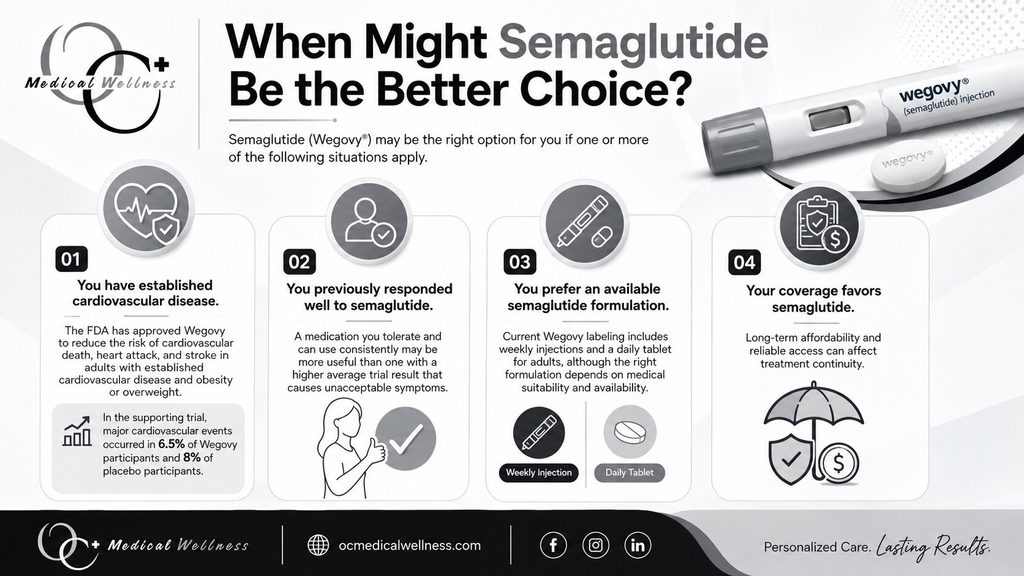
- You have established cardiovascular disease. The FDA has approved Wegovy to reduce the risk of cardiovascular death, heart attack, and stroke in adults with established cardiovascular disease and obesity or overweight. In the supporting trial, major cardiovascular events occurred in 6.5% of Wegovy participants and 8% of placebo participants.
- You previously responded well to semaglutide. A medication you tolerate and can use consistently may be more useful than one with a higher average trial result that causes unacceptable symptoms.
- You prefer an available semaglutide formulation. Current Wegovy labeling includes weekly injections and a daily tablet for adults, although the right formulation depends on medical suitability and availability.
- Your coverage favors semaglutide. Long-term affordability and reliable access can affect treatment continuity.
Patients considering this medication can review the complete patient guide to semaglutide for weight loss before discussing individual eligibility with a provider.
When Might Tirzepatide Be the Better Choice?
Tirzepatide may be worth discussing when:
- Maximizing average weight reduction is the primary objective. Tirzepatide produced greater average weight and waist-circumference reductions in SURMOUNT-5.
- You have obesity and moderate-to-severe obstructive sleep apnea. The FDA has approved Zepbound for this population when used with a reduced-calorie diet and increased physical activity. The approval was supported by studies showing meaningful reductions in sleep apnea events and body weight.
- Your response to semaglutide has been inadequate. A clinician may consider changing treatment after reviewing adherence, current dosage, side effects, nutrition, activity, sleep, medical conditions, and the reason progress has slowed.
- You tolerate tirzepatide and can access it consistently. Greater average efficacy is only useful when the treatment remains medically appropriate and sustainable.
Learn more about its mechanism, dosing, and expected results in the clinic’s guide to tirzepatide for weight loss.
Who May Qualify for Prescription Weight-Loss Medication?
For adult chronic weight management, medications such as Wegovy and Zepbound are generally indicated for:
- A body mass index of 30 or higher, or
- A BMI of 27 or higher with at least one weight-related condition, such as high blood pressure, type 2 diabetes, or high cholesterol.
They are used alongside reduced-calorie nutrition and increased physical activity. A medical evaluation is still necessary because BMI alone does not determine whether a medication is safe or appropriate.
A physician may review your medical history, current prescriptions, previous weight-loss attempts, blood sugar, kidney and liver health, digestive symptoms, pregnancy plans, and family history. The clinic’s guide to how medical weight loss programs are structured explains why evaluation and ongoing monitoring matter.
How Do the Dosages Compare?
Semaglutide and tirzepatide dosages are not numerically equivalent. A 5 mg dose of tirzepatide cannot be directly compared with a 1 mg dose of semaglutide because they are different medications.
For weekly semaglutide injections, the current prescribing information starts treatment at 0.25 mg weekly and increases the dose gradually. Standard adult weight-management maintenance doses are 1.7 or 2.4 mg weekly, with 2.4 mg recommended. Selected adults who tolerate 2.4 mg may be considered for 7.2 mg when additional weight reduction is clinically indicated.
The current Zepbound prescribing information starts tirzepatide at 2.5 mg weekly for four weeks. The dose may then increase in 2.5 mg steps after at least four weeks at the current dose. Recommended maintenance doses for weight management are 5, 10, or 15 mg weekly, with 15 mg as the maximum.
Do not combine semaglutide and tirzepatide or attempt to calculate your own conversion. A switch should be planned by the prescribing clinician based on your current dose, response, symptoms, diabetes treatment, and overall health.
What About Cost and Insurance Coverage?
The cost of semaglutide and tirzepatide varies considerably based on the prescribed product, indication, dosage, insurance plan, pharmacy, prior-authorization requirements, and eligibility for a manufacturer program.
Before choosing between them, verify:
- Whether the specific weight-management brand is covered
- Whether prior authorization or documented treatment history is required
- The deductible, copay, and cash price
- Whether coverage is likely to continue during maintenance
- Whether follow-up visits, testing, and nutritional support are included
The medication with the lower advertised price is not always the more sustainable option. Consistent access and medical follow-up should be included in the comparison.
How Should You Choose Between Semaglutide and Tirzepatide?
A useful decision should answer five questions:
- What is your primary goal? Consider total weight reduction, blood sugar management, cardiovascular risk, sleep apnea, mobility, or another health outcome.
- Which medication fits your health history? Contraindications, digestive conditions, pregnancy plans, diabetes medications, and prior adverse reactions can change the recommendation.
- Which treatment can you tolerate? A slower dose increase or lower maintenance dose may be more appropriate than pursuing the highest available dose.
- Which option can you maintain? Insurance coverage, supply, appointment access, and follow-up costs matter.
- How will progress be monitored? Treatment should evaluate more than the number on the scale. Appetite, waist circumference, strength, nutrition, hydration, bowel symptoms, laboratory results, and quality of life may also be relevant.
When weight loss slows, the answer is not always an immediate medication change. Understanding why a weight loss plateau happens can help identify whether dosage, nutrition, physical activity, sleep, stress, or another medical factor needs attention.
Semaglutide and Tirzepatide Treatment in Irvine, CA
OC Medical Wellness offers personalized semaglutide and tirzepatide plans based on a patient’s medical history, weight objectives, and response to treatment. Its broader medical weight-loss approach includes clinical guidance, customized planning, nutrition support, and ongoing follow-up for patients in Irvine and throughout Orange County.
Patients can explore semaglutide treatment in Irvine or learn about the clinic’s physician-guided medical weight-loss program before scheduling an evaluation.
Frequently Asked Questions
Is tirzepatide stronger than semaglutide?
Tirzepatide produced greater average weight loss in the 72-week SURMOUNT-5 trial. However, “stronger” does not automatically mean safer, better tolerated, more affordable, or more suitable for a particular patient.
Is tirzepatide safer than semaglutide?
Neither medication is universally safer. Both commonly cause gastrointestinal symptoms and have several similar warnings. Safety depends on medical history, other medications, dose escalation, and individual response.
Can you switch from semaglutide to tirzepatide?
A clinician may switch a patient when the original medication is ineffective, poorly tolerated, unavailable, or no longer the most appropriate option. There is no universal milligram-for-milligram conversion, so the timing and starting dose must be individualized.
Can semaglutide and tirzepatide be taken together?
No. Current product information does not recommend combining Zepbound with another GLP-1 receptor agonist, or Wegovy with another semaglutide-containing or GLP-1 medication.
Which is better for type 2 diabetes?
Semaglutide and tirzepatide are available in diabetes-specific brands, Ozempic and Mounjaro. The appropriate choice depends on blood sugar goals, current diabetes medications, cardiovascular considerations, side effects, and insurance coverage. Weight-management and diabetes products should not be treated as automatically interchangeable.
What should I do if my weight loss stops?
Do not increase the dose or switch medications without medical guidance. A provider should review medication adherence, food intake, protein consumption, physical activity, sleep, stress, side effects, metabolic factors, and whether your current dose has had sufficient time to work.
Key Takeaways
- Tirzepatide produced greater average weight loss than semaglutide in a direct 72-week trial.
- Semaglutide has a specific cardiovascular risk-reduction indication for certain adults.
- Tirzepatide has a specific indication for moderate-to-severe obstructive sleep apnea in adults with obesity.
- Both medications commonly cause gastrointestinal side effects and require gradual dose escalation.
- Current semaglutide options have expanded since the head-to-head trial, so older comparisons need qualification.
- The best choice depends on medical suitability, treatment goals, tolerability, access, and long-term follow-up.
Take the Next Step With a Personalized Medical Evaluation
Choosing between semaglutide and tirzepatide should begin with a medical assessment, not an online comparison alone. OC Medical Wellness can evaluate your health history, weight-loss goals, current medications, and previous results to determine whether either option belongs in your treatment plan.
Explore the medical weight-loss program in Irvine to learn how physician-guided care, nutrition support, medication management, and ongoing monitoring can work together.