
Peptide therapy has become one of the most discussed advancements in functional and regenerative medicine. From supporting healthy aging and weight management to improving recovery and optimizing wellness, peptides are increasingly being used as part of personalized treatment plans.
But what is peptide therapy, how does it work, and is it right for you?
In this comprehensive guide, you’ll learn what peptides are, how peptide therapy works, potential benefits, common applications, safety considerations, and what to expect from treatment. Whether you’re exploring options for improved vitality, muscle recovery, cognitive performance, or healthy aging, understanding the science behind peptide therapy can help you make informed healthcare decisions.
What Is Peptide Therapy?
Peptide therapy uses naturally occurring or synthetic peptides to target specific biological functions, potentially supporting recovery, performance, metabolism, and overall wellness.
Peptides act as signaling molecules that help cells communicate with one another. They play important roles in processes such as:
- Hormone production
- Tissue repair
- Immune system function
- Metabolism
- Sleep regulation
- Cognitive performance
- Muscle recovery
- Healthy aging
When administered under medical supervision, certain peptides may help support natural physiological processes that can decline with age, stress, illness, or lifestyle factors.
Understanding Peptides: The Building Blocks of Cellular Communication
Peptides are made up of amino acids, the same compounds that form proteins. The primary difference is size.
| Peptides | Proteins |
|---|---|
| Short chains of amino acids | Long chains of amino acids |
| Usually contain 2–50 amino acids | Often contain hundreds or thousands |
| Act as signaling molecules | Perform structural and functional roles |
| Target specific cellular functions | Support broader biological processes |
Many naturally occurring peptides already exist in the human body and help regulate critical systems.
Examples include:
- Insulin
- Glucagon
- Growth hormone-releasing peptides
- Collagen peptides
- Neurotransmitter-related peptides
How Does Peptide Therapy Work?
Peptide therapy works by introducing targeted peptides that interact with specific receptors in the body.
Think of peptides as biological messengers.
Once a peptide binds to its target receptor, it may signal cells to perform a specific function such as:
- Supporting tissue repair
- Promoting cellular recovery
- Enhancing metabolic activity
- Encouraging hormone signaling
- Supporting immune responses
- Optimizing cognitive function
Because peptides can be highly targeted, treatment plans are often personalized based on a patient’s health goals and medical history.
Common Types of Peptide Therapy
Several peptide categories are used in functional and regenerative medicine.
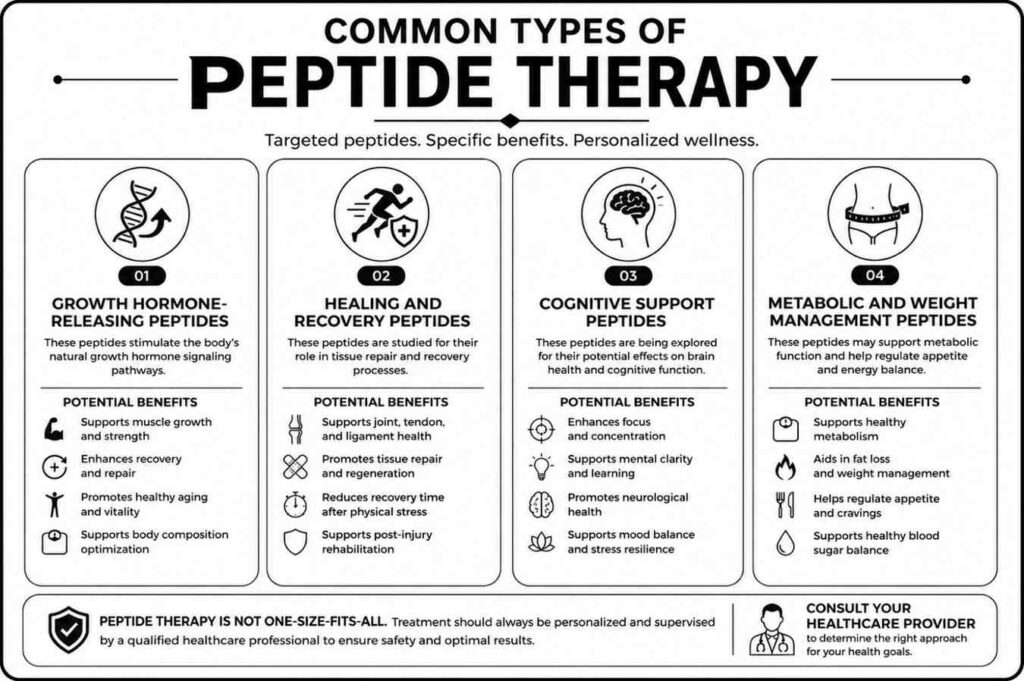
Growth Hormone-Releasing Peptides
These peptides are designed to stimulate the body’s natural growth hormone signaling pathways.
Potential applications may include:
- Recovery support
- Body composition optimization
- Healthy aging programs
- Exercise recovery
Healing and Recovery Peptides
Certain peptides are studied for their potential role in tissue repair and recovery.
Potential uses include:
- Joint support
- Soft tissue recovery
- Athletic recovery programs
- Post-injury rehabilitation
One example frequently discussed in wellness and performance communities is the wolverine peptide, a nickname often associated with peptides investigated for tissue repair and recovery support.
Cognitive Support Peptides
Some peptides are being explored for their potential effects on focus, mental clarity, and cognitive performance.
A well-known example is semax peptide, which has been studied for its effects on cognitive function, attention, and neurological support.

Metabolic and Weight Management Peptides
Certain peptides may support:
- Appetite regulation
- Metabolic health
- Blood sugar management
- Weight loss programs
These therapies are typically combined with nutrition, exercise, and lifestyle modifications for optimal results.
Potential Benefits of Peptide Therapy
Benefits vary depending on the specific peptide used and individual patient factors.
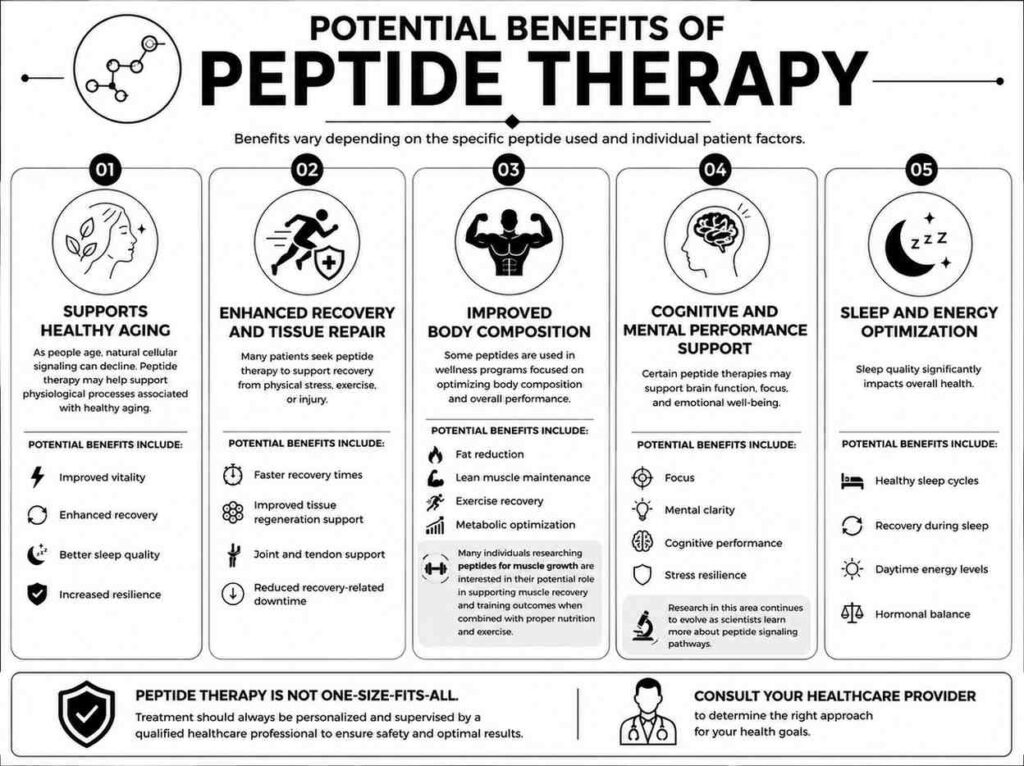
1. Supports Healthy Aging
As people age, natural cellular signaling can decline. Peptide therapy may help support physiological processes associated with healthy aging.
Potential benefits include:
- Improved vitality
- Enhanced recovery
- Better sleep quality
- Increased resilience
2. Enhanced Recovery and Tissue Repair
Many patients seek peptide therapy to support recovery from physical stress, exercise, or injury.
Potential benefits include:
- Faster recovery times
- Improved tissue regeneration support
- Joint and tendon support
- Reduced recovery-related downtime
3. Improved Body Composition
Some peptides are used in wellness programs focused on:
- Fat reduction
- Lean muscle maintenance
- Exercise recovery
- Metabolic optimization
Many individuals researching peptides for muscle growth are interested in their potential role in supporting muscle recovery and training outcomes when combined with proper nutrition and exercise.
4. Cognitive and Mental Performance Support
Certain peptide therapies may support:
- Focus
- Mental clarity
- Cognitive performance
- Stress resilience
Research in this area continues to evolve as scientists learn more about peptide signaling pathways.
5. Sleep and Energy Optimization
Sleep quality significantly impacts overall health.
Some peptide therapies may support:
- Healthy sleep cycles
- Recovery during sleep
- Daytime energy levels
- Hormonal balance
Who May Benefit From Peptide Therapy?
Peptide therapy may be considered for individuals seeking support with:
Healthy Aging
- Age-related decline in vitality
- Recovery challenges
- Wellness optimization
Athletic Performance
- Exercise recovery
- Muscle maintenance
- Injury recovery support
Weight Management
- Metabolic optimization
- Lifestyle-based weight loss programs
Cognitive Wellness
- Focus and concentration support
- Mental performance optimization
Every treatment plan should be personalized and guided by a qualified healthcare provider.
What Happens During Peptide Therapy?
Treatment generally begins with a comprehensive evaluation.
Initial Assessment
Your provider may review:
- Medical history
- Current symptoms
- Lifestyle habits
- Health goals
- Laboratory testing if appropriate
Personalized Treatment Plan
A customized protocol may include:
- Specific peptide selection
- Dosing recommendations
- Treatment schedule
- Lifestyle modifications
- Nutrition guidance
Ongoing Monitoring
Follow-up visits help evaluate:
- Progress
- Symptom improvement
- Treatment response
- Safety considerations
Peptide Therapy vs Hormone Replacement Therapy
Many patients wonder how peptide therapy compares with hormone therapy.
| Peptide Therapy | Hormone Therapy |
| Uses signaling peptides | Replaces hormones directly |
| Supports natural biological pathways | Supplements deficient hormones |
| Highly targeted actions | Broader hormonal effects |
| Often used in wellness optimization | Often used for diagnosed hormone deficiencies |
Both approaches can be valuable depending on a patient’s needs and medical evaluation.
Are Peptides Safe?
When prescribed and monitored by qualified healthcare professionals, peptide therapy is generally considered well-tolerated for appropriate candidates.
However, safety depends on:
- Peptide type
- Dosage
- Medical history
- Treatment goals
- Quality of products used
Patients should avoid unregulated or non-medical peptide products sold online.
Peptide Side Effects
Like any medical treatment, peptide therapy may have potential risks.
Commonly reported Peptide Side Effects may include:
- Injection site irritation
- Temporary redness or swelling
- Headaches
- Fatigue
- Nausea
- Changes in appetite
The likelihood and severity of side effects vary depending on the specific peptide and individual patient factors.
Always discuss potential risks and benefits with a qualified healthcare provider before starting treatment.
Signs You Should Talk to a Provider About Peptide Therapy
Consider scheduling a consultation if you’re experiencing:
- Persistent fatigue
- Slower recovery from exercise
- Age-related performance decline
- Difficulty achieving wellness goals
- Interest in personalized longevity strategies
- Concerns about metabolic health
A medical evaluation can help determine whether peptide therapy is appropriate for your situation.
Why Personalized Peptide Therapy Matters
One of the most overlooked aspects of peptide therapy is personalization.
The most effective programs typically consider:
- Medical history
- Biomarkers
- Lifestyle factors
- Nutrition
- Sleep quality
- Stress levels
- Long-term wellness goals
Rather than taking a one-size-fits-all approach, individualized care helps maximize safety and treatment effectiveness.
Peptide Therapy in Irvine at OC Medical Wellness
At OC Medical Wellness, patients receive personalized wellness and regenerative medicine solutions designed around their unique health goals.
Led by Dr. Arturo Portales, the team focuses on evidence-based, patient-centered care that addresses the root causes of health concerns rather than simply managing symptoms.
For individuals seeking peptide therapy Irvine services, a comprehensive evaluation can help determine whether peptide-based treatments may support goals related to recovery, healthy aging, metabolic health, cognitive performance, or overall wellness.
Why Patients Choose OC Medical Wellness
- Personalized treatment plans
- Comprehensive health evaluations
- Functional and regenerative medicine approach
- Focus on long-term wellness optimization
- Ongoing monitoring and support
Schedule a consultation with Dr. Arturo Portales and the team at OC Medical Wellness to learn whether peptide therapy may fit your individualized wellness strategy.
Key Takeaways
- Peptide therapy uses targeted amino acid chains to support specific biological functions.
- Peptides act as signaling molecules that help regulate cellular communication.
- Potential applications include recovery, healthy aging, metabolism, cognitive support, and wellness optimization.
- Treatment should always be personalized and medically supervised.
- Benefits and outcomes vary depending on the peptide used and individual health factors.
- Consulting a qualified provider is essential before beginning therapy.
FAQs:
What is peptide therapy used for?
Peptide therapy may be used to support recovery, healthy aging, metabolic health, cognitive performance, sleep quality, and overall wellness optimization, depending on the peptide selected.
How long does it take for peptide therapy to work?
Response times vary. Some individuals notice changes within weeks, while others may require several months of consistent treatment and monitoring.
Is peptide therapy FDA approved?
Some peptide-based medications are FDA-approved for specific medical conditions, while many peptides used in wellness and regenerative medicine may have different regulatory statuses. A healthcare provider can explain available options.
Can peptide therapy help with muscle growth?
Certain peptides are being studied for their potential role in supporting recovery, exercise performance, and muscle maintenance when combined with proper training and nutrition.
Are peptide injections painful?
Most patients report minimal discomfort. Injection techniques, dosage, and treatment type can affect the experience.
Who is a good candidate for peptide therapy?
Individuals interested in personalized wellness, recovery support, healthy aging, metabolic optimization, or performance enhancement may benefit from an evaluation to determine whether peptide therapy is appropriate for their needs.