
Not every medical concern requires a trip to the emergency room, but some conditions shouldn’t wait days for a routine doctor’s appointment. That’s where acute care comes in.
If you’re dealing with a sudden illness, minor injury, infection, or other non-life-threatening health issue, an acute care clinic can provide prompt diagnosis and treatment without the long wait times and high costs often associated with emergency departments.
For residents seeking acute care in Irvine, CA, understanding when to visit an acute care clinic can help you receive timely treatment, avoid complications, and get back to feeling your best faster.
What Is Acute Care?
Acute care refers to medical services provided for sudden illnesses, injuries, infections, or health conditions that require prompt attention but are not typically life-threatening.
The primary goal of acute care is to:
- Diagnose the problem quickly
- Relieve symptoms
- Prevent complications
- Restore health as efficiently as possible
Unlike preventive care, which focuses on maintaining long-term health, acute care addresses immediate medical concerns that develop unexpectedly.
Examples of Acute Conditions
Common acute conditions include:
- Flu and viral infections
- Respiratory illnesses
- Urinary tract infections (UTIs)
- Ear infections
- Strep throat
- Minor fractures
- Sprains and strains
- Cuts and lacerations
- Skin infections
- Allergic reactions
- Fever and dehydration
Many people mistakenly assume these conditions require an emergency room visit. In reality, an acute care clinic is often the most appropriate and cost-effective option.
Read More: What Is Acute Care? A Complete Guide to Urgent, Short-Term Medical Treatment
When Should You Visit an Acute Care Clinic?
You should visit an acute care clinic when you experience symptoms that need prompt medical evaluation but are not severe enough to require emergency care.
Signs You Should Seek Acute Care
Consider visiting an acute care provider if you have:
- Persistent fever
- Sudden onset of illness
- Pain that interferes with daily activities
- Mild to moderate breathing symptoms
- Signs of infection
- Minor injuries from sports or accidents
- New skin rashes or allergic reactions
- Gastrointestinal symptoms such as vomiting or diarrhea
- Urinary symptoms such as burning or frequent urination
Early evaluation can often prevent a condition from worsening and reduce recovery time.
Conditions Commonly Treated in Acute Care Clinics
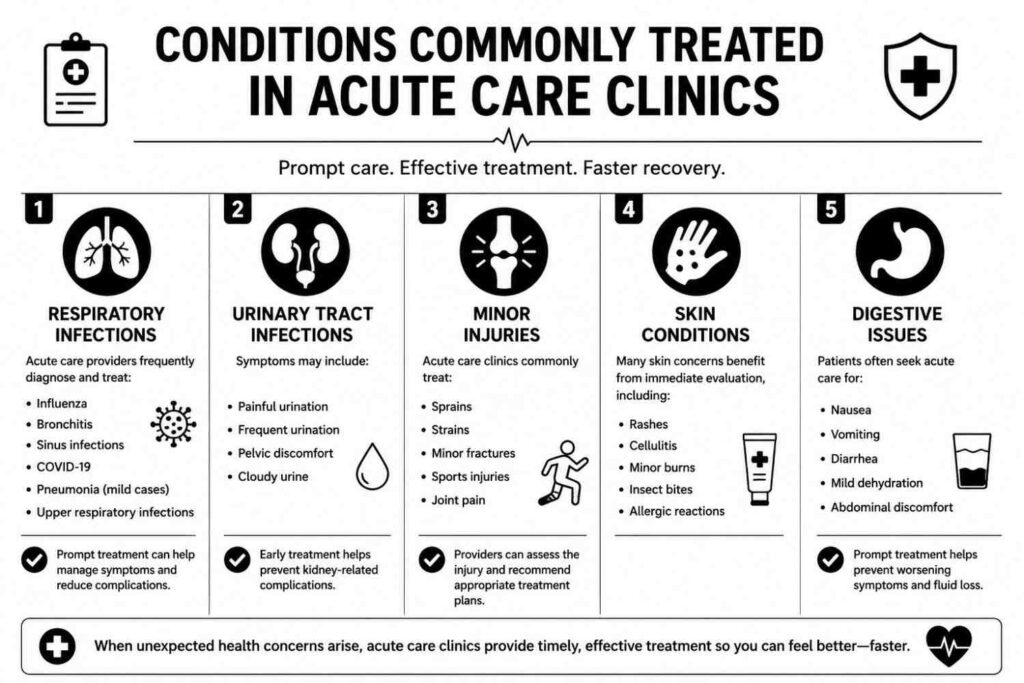
Respiratory Infections
Acute care providers frequently diagnose and treat:
- Influenza
- Bronchitis
- Sinus infections
- COVID-19
- Pneumonia (mild cases)
- Upper respiratory infections
Prompt treatment can help manage symptoms and reduce complications.
Urinary Tract Infections
Symptoms may include:
- Painful urination
- Frequent urination
- Pelvic discomfort
- Cloudy urine
Early treatment helps prevent kidney-related complications.
Minor Injuries
Acute care clinics commonly treat:
- Sprains
- Strains
- Minor fractures
- Sports injuries
- Joint pain
Providers can assess the injury and recommend appropriate treatment plans.
Skin Conditions
Many skin concerns benefit from immediate evaluation, including:
- Rashes
- Cellulitis
- Minor burns
- Insect bites
- Allergic reactions
Digestive Issues
Patients often seek acute care for:
- Nausea
- Vomiting
- Diarrhea
- Mild dehydration
- Abdominal discomfort
Prompt treatment helps prevent worsening symptoms and fluid loss.
Acute Care Clinic vs. Emergency Room: What’s the Difference?
Many patients are unsure whether they should visit an acute care clinic or the emergency room.
| Situation | Acute Care Clinic | Emergency Room |
|---|---|---|
| Flu symptoms | ✓ | |
| Ear infection | ✓ | |
| Minor fracture | ✓ | |
| UTI symptoms | ✓ | |
| Sprains and strains | ✓ | |
| Chest pain | ✓ | |
| Severe breathing difficulty | ✓ | |
| Stroke symptoms | ✓ | |
| Major trauma | ✓ | |
| Uncontrolled bleeding | ✓ |
Go to the Emergency Room Immediately If You Experience:
- Chest pain
- Sudden weakness or paralysis
- Signs of stroke
- Severe shortness of breath
- Significant head injuries
- Major burns
- Severe allergic reactions affecting breathing
- Loss of consciousness
These conditions require emergency medical intervention and should not be delayed.
Benefits of Choosing Acute Care in Irvine, CA
Faster Access to Medical Attention
Acute care clinics are designed to evaluate and treat patients quickly, often on the same day symptoms develop.
Lower Costs Compared to Emergency Care
For non-emergency conditions, acute care services are generally more affordable than emergency room visits.
Comprehensive Evaluation
Many acute care providers can:
- Perform physical examinations
- Order diagnostic tests
- Evaluate symptoms
- Prescribe medications
- Coordinate follow-up care
Continuity of Care
Patients benefit when acute care services are integrated with primary care, allowing for better long-term health management.
Why Early Acute Care Treatment Matters
Many people delay medical attention, hoping symptoms will improve on their own. Unfortunately, some conditions can worsen without proper evaluation.
Seeking timely Acute Care Treatment may help:
- Reduce symptom severity
- Prevent complications
- Improve recovery time
- Avoid hospitalization
- Lower overall healthcare costs
For example, a simple infection treated early may prevent more serious health issues later.
What to Expect During an Acute Care Visit
Understanding the process can help patients feel more comfortable.
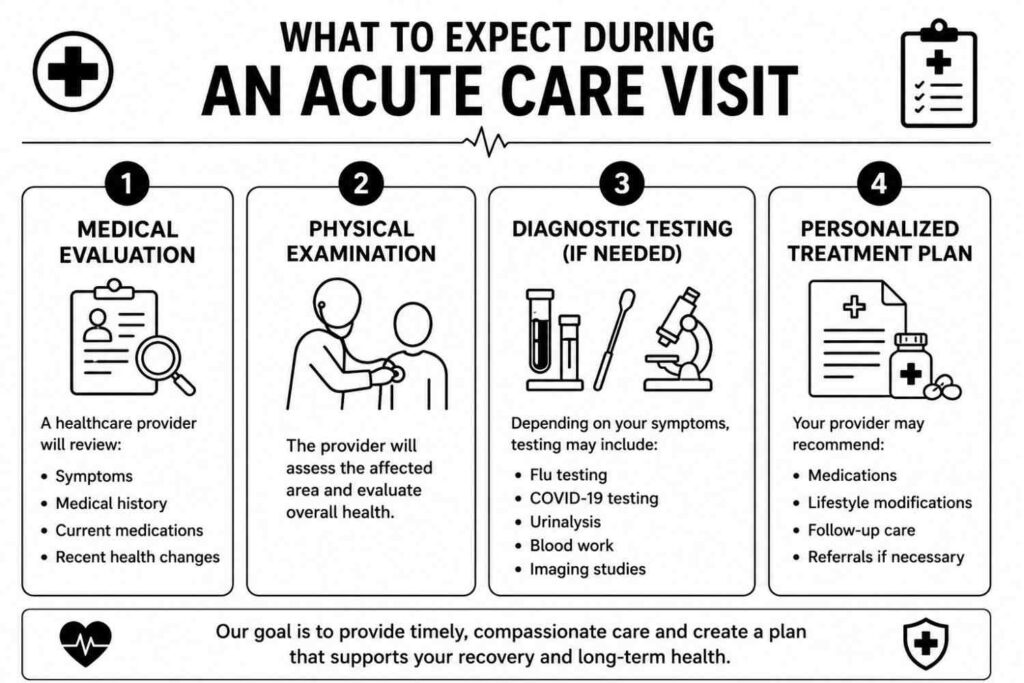
Step 1: Medical Evaluation
A healthcare provider will review:
- Symptoms
- Medical history
- Current medications
- Recent health changes
Step 2: Physical Examination
The provider will assess the affected area and evaluate overall health.
Step 3: Diagnostic Testing (If Needed)
Depending on your symptoms, testing may include:
- Flu testing
- COVID-19 testing
- Urinalysis
- Blood work
- Imaging studies
Step 4: Personalized Treatment Plan
Your provider may recommend:
- Medications
- Lifestyle modifications
- Follow-up care
- Referrals if necessary
Read More: What to Expect in Acute Care Settings
Acute Care Services at OC Medical Wellness in Irvine
When unexpected health concerns arise, receiving timely and personalized care can make a significant difference in recovery.
At OC Medical Wellness, patients receive comprehensive acute care services under the leadership of Dr. Arturo Portales, an experienced physician dedicated to patient-centered healthcare.
Why Patients Choose OC Medical Wellness
- Same-day evaluations for many acute conditions
- Personalized treatment plans
- Comprehensive medical assessments
- Continuity with primary care services
- Focus on whole-person health and wellness
- Convenient care for Irvine residents
Whether you’re dealing with an infection, respiratory illness, minor injury, or another sudden medical concern, the team works to identify the root cause and provide effective treatment tailored to your needs.
Need Prompt Medical Care in Irvine?
If you’re experiencing a non-emergency illness or injury, scheduling an evaluation with Dr. Arturo Portales and the team at OC Medical Wellness can help you receive timely diagnosis, treatment, and guidance for recovery.
Common Myths About Acute Care
Myth #1: Acute Care Is the Same as the Emergency Room
Acute care clinics treat urgent but non-life-threatening conditions, while emergency rooms manage severe and life-threatening situations.
Myth #2: You Need a Referral
Most acute care clinics allow patients to seek treatment without a specialist referral.
Myth #3: Acute Conditions Aren’t Serious
Even common illnesses can worsen if left untreated. Early evaluation often leads to better outcomes.
Myth #4: Acute Care Is Only for Injuries
Acute care also addresses infections, respiratory illnesses, digestive issues, allergic reactions, and many other health concerns.
Key Takeaways
- Acute care focuses on sudden illnesses and injuries requiring prompt medical attention.
- Many non-emergency conditions can be treated effectively at an acute care clinic.
- Early diagnosis and treatment may prevent complications and improve recovery.
- Understanding the difference between acute care and emergency care helps patients choose the right level of treatment.
- Irvine residents have access to comprehensive acute care services through experienced providers such as Dr. Arturo Portales at OC Medical Wellness.
FAQs:
What is acute care?
Acute care is medical treatment for sudden illnesses, injuries, or health conditions that require prompt attention but are generally not life-threatening.
When should I go to an acute care clinic instead of the emergency room?
Visit an acute care clinic for conditions such as infections, minor injuries, flu symptoms, rashes, and mild respiratory illnesses. Seek emergency care for chest pain, stroke symptoms, severe breathing problems, or major trauma.
How quickly should I seek treatment for an acute illness?
It’s best to seek evaluation as soon as symptoms become concerning, especially if they worsen, persist, or interfere with daily activities.
Can acute care clinics treat infections?
Yes. Acute care providers commonly diagnose and treat respiratory infections, urinary tract infections, skin infections, ear infections, and other acute illnesses.
Does acute care replace primary care?
No. Acute care addresses immediate medical concerns, while primary care focuses on preventive health, chronic disease management, and long-term wellness.
Is an Acute Care Hospital the same as an acute care clinic?
No. An Acute Care Hospital provides inpatient medical services for patients who require hospitalization, while an acute care clinic treats non-life-threatening conditions on an outpatient basis.
Final Thoughts
Knowing when to seek acute care can save time, reduce healthcare costs, and help prevent minor medical concerns from becoming more serious problems. If you’re experiencing a sudden illness, infection, or minor injury, prompt evaluation can lead to faster recovery and greater peace of mind.
For residents seeking trusted acute care in Irvine, working with experienced healthcare professionals like Dr. Arturo Portales at OC Medical Wellness provides access to personalized, timely treatment designed to support both immediate recovery and long-term health.