
When a medical situation becomes serious or urgent, acute care settings are where patients receive immediate, short-term treatment. Whether it’s a sudden illness, injury, or a flare-up of a chronic condition, understanding what happens in these environments can reduce anxiety and help patients and families feel more prepared.
This guide explains what acute care involves, the services offered, common treatments, and what patients can realistically expect from admission to discharge.
What Is Acute Care?
Acute care refers to short-term medical treatment for severe or urgent health conditions that require prompt attention. Unlike preventive or long-term care, the focus here is stabilization, diagnosis, and recovery.
An Acute Care Hospital is specifically designed to handle these situations, offering advanced medical technology, specialized staff, and 24/7 services.
Read More: What Is Acute Care?
Common Reasons for Acute Care Visits
- Sudden injuries (fractures, trauma)
- Severe infections
- Heart-related conditions
- Respiratory distress
- Post-surgical complications
- Acute flare-ups of chronic diseases
Types of Services in Acute Care Settings
Acute care facilities are structured to provide rapid and comprehensive care. Services typically include:
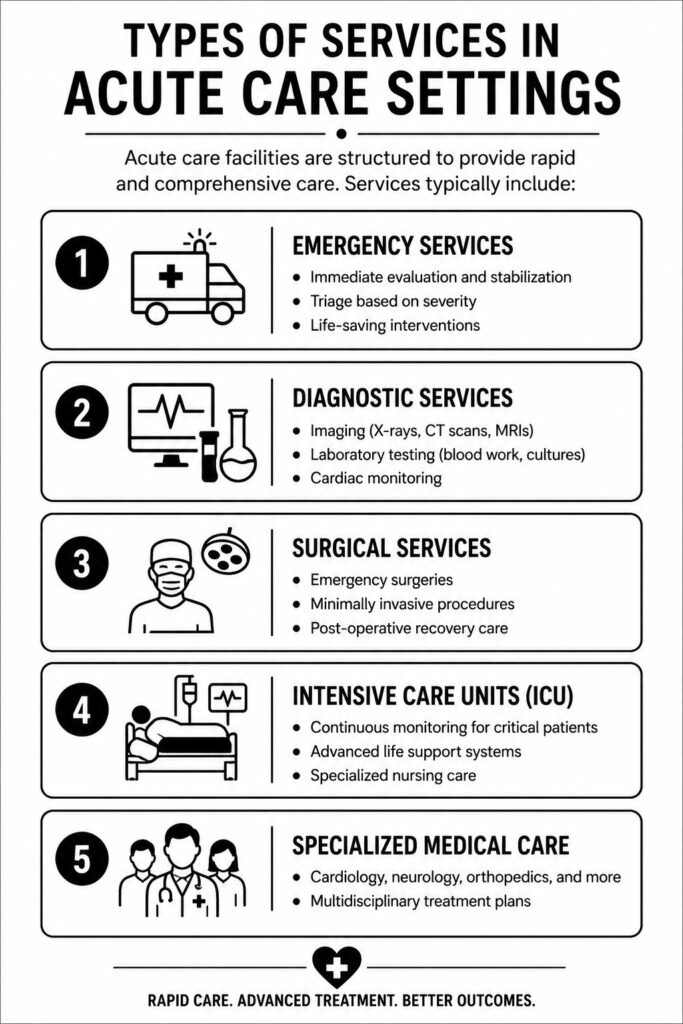
1. Emergency Services
- Immediate evaluation and stabilization
- Triage based on severity
- Life-saving interventions
2. Diagnostic Services
- Imaging (X-rays, CT scans, MRIs)
- Laboratory testing (blood work, cultures)
- Cardiac monitoring
3. Surgical Services
- Emergency surgeries
- Minimally invasive procedures
- Post-operative recovery care
4. Intensive Care Units (ICU)
- Continuous monitoring for critical patients
- Advanced life support systems
- Specialized nursing care
5. Specialized Medical Care
- Cardiology, neurology, orthopedics, and more
- Multidisciplinary treatment plans
Acute Care Treatments: What Happens During Your Stay?
Treatment in acute care settings is focused on rapid diagnosis and effective intervention. Acute Care Treatment varies depending on the condition but generally follows a structured approach.
Step-by-Step Care Process
| Stage | What Happens |
|---|---|
| Admission | Patient evaluation, vital signs, and initial assessment |
| Diagnosis | Tests and imaging to identify the issue |
| Treatment Plan | Customized plan created by physicians and specialists |
| Intervention | Medication, procedures, or surgery |
| Monitoring | Ongoing observation and adjustments |
| Discharge | Instructions for recovery and follow-up care |
Patient Experience: What to Expect
Understanding the patient journey can make the experience less overwhelming.
1. Fast-Paced Environment
Acute care settings are busy and prioritized by urgency. Patients with critical needs are treated first.
2. Multidisciplinary Care
You may interact with:
- Physicians
- Nurses
- Specialists
- Technicians
- Case managers
3. Communication and Updates
Healthcare teams typically provide updates, but it’s okay to ask questions about:
- Diagnosis
- Treatment options
- Expected recovery time
4. Length of Stay
Most stays are short-term, ranging from a few hours to several days, depending on the condition.
5. Discharge Planning
Before leaving, patients receive:
- Medication instructions
- Follow-up appointments
- Recovery guidelines
Read More: What Is an Acute Care Hospital?
Benefits of Acute Care Settings
Acute care facilities are designed for efficiency and effectiveness in critical situations.
Key Advantages
- Immediate access to medical professionals
- Advanced diagnostic tools
- Coordinated care across specialties
- Rapid response to life-threatening conditions
Challenges Patients May Face
While acute care is essential, it can come with certain challenges:
- Wait times for non-critical cases
- High-stress environment
- Limited time for in-depth consultations
- Complex medical information
Being informed helps patients navigate these challenges more confidently.
Tips for Patients and Families
To improve your experience in acute care:
- Bring medical history and medication lists
- Ask questions and take notes
- Have a support person if possible
- Follow discharge instructions carefully
- Schedule follow-ups promptly
FAQs:
1. What is the difference between acute care and primary care?
Acute care focuses on urgent, short-term treatment, while primary care manages long-term health and preventive services.
2. How long do patients stay in acute care?
Most stays are short, typically from a few hours to several days, depending on the condition and recovery progress.
3. Do I need a referral for acute care?
No, acute care especially emergency services does not require a referral.
4. What should I bring to an acute care visit?
Bring identification, insurance details, a list of medications, and relevant medical history.
5. Is acute care only for emergencies?
Not always. It also includes urgent but non-life-threatening conditions requiring prompt attention.
6. What happens after discharge?
Patients receive instructions for recovery, medications, and follow-up appointments to ensure continued care.
Final Thoughts
Acute care settings play a critical role in managing urgent health conditions with speed, precision, and expertise. From emergency interventions to specialized treatments, these facilities are equipped to handle complex medical situations efficiently.
Understanding what to expect, from services to patient experience can help reduce stress and ensure better outcomes for patients and their families.
Get Immediate, Expert Care in Irvine
When your health can’t wait, trust the team at OC Medical Wellness, your reliable acute care clinic in Irvine, for prompt, compassionate, and results-driven care.
Whether you’re dealing with sudden symptoms, illness, or need urgent medical attention, our experienced providers deliver high-quality care without the long hospital wait times.
Take control of your health today:
- Same-day appointments available
- Personalized treatment plans
- Advanced diagnostics and on-site care
Call now or book your visit online to get fast, effective care from a trusted acute care clinic. Your health shouldn’t wait.