
Semaglutide is an FDA-approved GLP-1 medication that supports weight loss by reducing appetite, slowing digestion, and helping the body regulate blood sugar. In clinical trials, adults using semaglutide for weight management lost significantly more body weight than those on placebo, with many patients losing 15 percent or more of their starting weight over 68 weeks. It is not a quick fix. Semaglutide works best as part of a medically supervised program that includes nutrition guidance, activity, and regular monitoring.
This guide walks through how semaglutide works, what dosing typically looks like, what it costs, who qualifies, and what patients can realistically expect, so you can have an informed conversation with your provider before starting treatment.
What Is Semaglutide and How Does It Work for Weight Loss?
Semaglutide is a GLP-1 receptor agonist, a class of medication that mimics glucagon-like peptide-1, a hormone your gut naturally releases after eating. GLP-1 signals the brain that you are full, slows how quickly food leaves the stomach, and helps the pancreas release insulin more efficiently.
For weight loss specifically, semaglutide is approved under the brand name Wegovy, while the same compound is approved as Ozempic for type 2 diabetes management. Compounded semaglutide, prepared by licensed pharmacies, is also widely used in medical weight loss clinics, though it is not FDA-approved as a standalone product and quality can vary by pharmacy.
The net effect of semaglutide is that patients feel fuller on less food, experience fewer cravings, and find it easier to maintain a calorie deficit. A landmark trial published in the New England Journal of Medicine found that participants taking semaglutide lost an average of 14.9 percent of their body weight over 68 weeks, compared to 2.4 percent in the placebo group.
Who Qualifies for Semaglutide? BMI and Health Criteria
Semaglutide is generally prescribed to adults who meet one of the following criteria, based on guidance from the American Academy of Family Physicians:
- A body mass index (BMI) of 30 or higher (classified as obesity)
- A BMI of 27 or higher with at least one weight-related health condition, such as type 2 diabetes, high blood pressure, high cholesterol, or obstructive sleep apnea
Your semaglutide BMI eligibility is only a starting point. A qualified provider will also review your medical history, current medications, kidney function, and any personal or family history of thyroid cancer or pancreatitis, since semaglutide carries specific contraindications for those conditions. This is why an initial consultation and lab work typically come before any prescription is written.
Semaglutide Dosage Chart for Weight Loss
Semaglutide is dosed on a gradual, step-up schedule. Starting at a low dose and increasing slowly over several weeks helps the body adjust and reduces the risk of nausea and other gastrointestinal side effects. A typical semaglutide dosage chart for weight loss looks like this:
| Week | Weekly Dose | Purpose |
| 1 to 4 | 0.25 mg | Initiation dose; not intended for weight loss results yet |
| 5 to 8 | 0.5 mg | First therapeutic step-up |
| 9 to 12 | 1 mg | Continued titration |
| 13 to 16 | 1.7 mg | Approaching target dose |
| 17 and beyond | 2.4 mg | Maintenance dose for most patients |
This schedule reflects the standard titration used in clinical trials and mirrors the labeling for Wegovy. Some patients and providers use a slower semaglutide schedule dosing approach, spending extra weeks at a given dose if side effects are more pronounced, which is a normal and medically reasonable adjustment.
Can You Lose Weight on 0.25 mg Semaglutide?
The 0.25 mg starting dose is an initiation dose, not a treatment dose. Some patients do notice reduced appetite even at this level, and modest early weight loss is possible, but 0.25 mg is not the dose studied for significant weight loss outcomes. Meaningful, sustained results are associated with reaching and maintaining the 1.7 mg to 2.4 mg range over time. Patients who stay on 0.25 mg longer than the initial four-week window should discuss the reason with their provider, since it may signal that titration needs to be adjusted rather than halted.
Semaglutide Injection Sites and the “Trapezoid Shot” Question
Semaglutide is administered as a subcutaneous injection, meaning it is injected into the fatty tissue just under the skin rather than into muscle. Approved and commonly used injection sites include the abdomen, the front of the thigh, and the upper arm. Rotating between these sites each week helps reduce irritation and skin thickening at any one location.
Patients sometimes search for a “trapezoid shot for weight loss,” which is not a distinct medication or technique. It typically reflects confusion with standard semaglutide administration or with unrelated injection therapies. If you have seen this term used to describe a specific weight loss shot, it is worth confirming exactly what is being offered and by whom, since semaglutide should only be administered based on guidance from a licensed medical provider using an approved injection site.
Semaglutide Glycine and Compounded Formulations
You may also come across the term semaglutide glycine, which refers to a semaglutide salt form sometimes used in compounded preparations rather than the sodium salt form used in FDA-approved Wegovy and Ozempic. Compounding pharmacies can legally prepare customized formulations, including added ingredients like glycine or vitamin B12, under a valid prescription. However, compounded semaglutide is not FDA-reviewed for safety, effectiveness, or manufacturing consistency in the same way the branded products are. Patients considering a compounded option should ask their provider or pharmacy directly about sourcing, ingredient purity, and quality testing.
Cost of Semaglutide and Compound Semaglutide
Cost is one of the most common concerns patients raise, and it varies considerably depending on the formulation and whether insurance covers it.
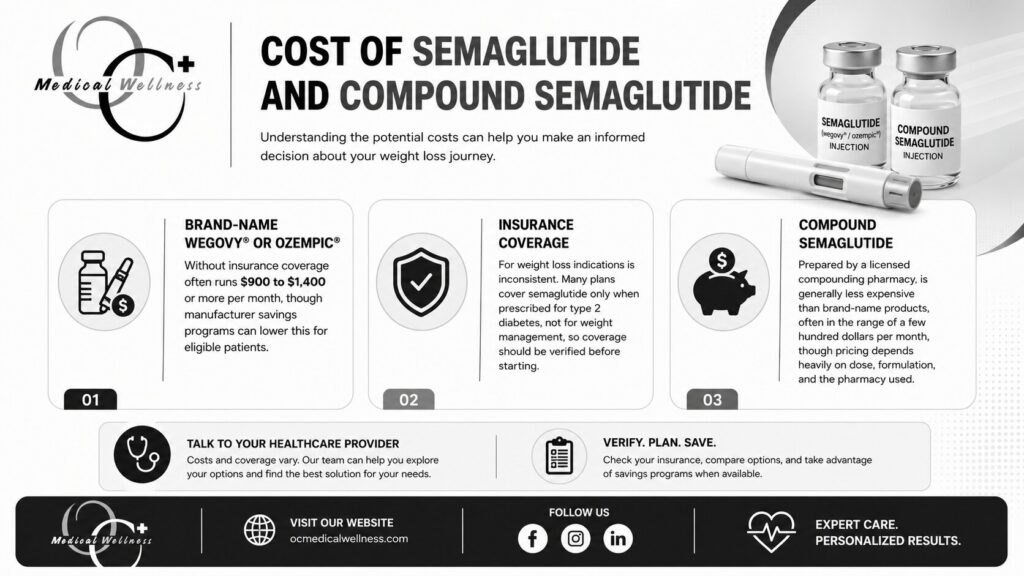
- Brand-name Wegovy or Ozempic without insurance coverage often runs $900 to $1,400 or more per month, though manufacturer savings programs can lower this for eligible patients.
- Insurance coverage for weight loss indications is inconsistent. Many plans cover semaglutide only when prescribed for type 2 diabetes, not for weight management, so coverage should be verified before starting.
- Compound semaglutide, prepared by a licensed compounding pharmacy, is generally less expensive than brand-name products, often in the range of a few hundred dollars per month, though pricing depends heavily on dose, formulation, and the pharmacy used.
Because pricing changes and depends on individual insurance benefits, the most reliable way to get an accurate number is a direct conversation with your provider’s office about current program pricing.
Semaglutide Reviews: What Do Patients Typically Report?
Patient experiences with semaglutide vary, but several themes come up consistently in clinical literature and patient-reported outcomes:
- Reduced appetite and fewer food cravings, often noticed within the first few weeks
- Gradual, steady weight loss rather than rapid drops, particularly during the titration period
- Mild to moderate nausea, constipation, or fatigue during dose increases, which tend to improve as the body adjusts
- Better blood sugar stability, especially in patients with insulin resistance or prediabetes
Individual results depend on starting weight, adherence, diet quality, and consistency of follow-up care, which is why medically supervised programs generally outperform self-directed use.
GLP-1 Before and After: What Realistic Results Look Like
GLP-1 before and after results are frequently shared online, but it helps to understand the timeline behind them. In the semaglutide weight loss trials, most participants saw the majority of their weight loss occur between months 3 and 12, with results plateauing as they reached a stable maintenance dose. Weight loss is typically gradual rather than dramatic in the first few weeks, since those weeks are spent titrating up to a therapeutic dose. Patients who expect fast results in month one are often disappointed; patients who understand the 6 to 12 month timeline tend to have more realistic expectations and better long-term adherence.
Semaglutide vs. Ozempic for Weight Management
Ozempic and Wegovy contain the identical active ingredient, semaglutide, but they are approved for different purposes. Ozempic is FDA-approved for type 2 diabetes management, while Wegovy is FDA-approved specifically for chronic weight management. Some providers prescribe Ozempic off-label for weight loss, particularly for patients with insulin resistance or prediabetes, since the dosing structures overlap closely. The clinical effect on appetite and weight is comparable; the difference is primarily regulatory labeling and, in some cases, insurance coverage rules.
Side Effects and Safety Considerations
The most common side effects of semaglutide are gastrointestinal: nausea, constipation, diarrhea, and occasional vomiting, especially during dose increases. These effects are usually manageable with dietary adjustments, such as smaller meals and lower fat intake, and tend to ease as the body adjusts to each new dose.
Semaglutide is not appropriate for everyone. It is contraindicated in patients with a personal or family history of medullary thyroid carcinoma or Multiple Endocrine Neoplasia syndrome type 2, and it should be used cautiously in patients with a history of pancreatitis or significant gastrointestinal disease. This is why lab work and a thorough medical history review are a standard part of qualifying for treatment, not an optional formality.
What to Consider Before Starting Semaglutide
Before beginning treatment, it helps to think through:
- Your health history. Conditions like thyroid disease, pancreatitis, or gallbladder issues can affect candidacy.
- Your support system. Semaglutide works best paired with nutrition and lifestyle changes, not as a standalone solution.
- Your timeline. Meaningful results typically take several months of consistent dosing.
- Your budget. Understanding insurance coverage, or the cost of compound semaglutide if self-pay, avoids surprises partway through treatment.
- Your provider. Medical supervision, including regular check-ins and lab monitoring, is associated with safer outcomes and better long-term weight maintenance.
How OC Medical Wellness Approaches Semaglutide Treatment
At OC Medical Wellness in Irvine, CA, semaglutide and tirzepatide treatment plans are built around each patient’s medical history, lab results, and weight loss goals rather than a one-size-fits-all protocol. Dr. Arturo Portales and the clinical team manage dosing, injection site guidance, and side-effect monitoring throughout treatment, with regular follow-ups to track progress and adjust the plan as needed.
Semaglutide therapy is offered as part of a broader medical weight loss program that also incorporates nutrition guidance and support for weight loss plateaus. For patients whose weight concerns are tied to underlying hormonal or metabolic imbalances, the clinic’s functional medicine and hormone replacement therapy services can be integrated into the same care plan. Patients interested in complementary options can also read about what peptides help with weight loss and how peptide therapy fits alongside GLP-1 treatment, or learn more about Dr. Portales and the practice’s approach to care.
Frequently Asked Questions
Is semaglutide safe for long-term weight loss?
Semaglutide has been studied for use up to two years in clinical trials, with most patients tolerating it well. Long-term safety depends on individual health factors, which is why ongoing medical supervision matters throughout treatment.
What happens if I stop taking semaglutide?
Appetite regulation from semaglutide diminishes once the medication is stopped, and many patients regain some weight without continued lifestyle support. Providers often recommend a maintenance plan, which may include continuing at a lower dose or reinforcing nutrition and activity habits.
How much weight can I expect to lose on semaglutide?
Clinical trial participants lost an average of around 15 percent of body weight over 68 weeks, though individual results vary based on starting weight, dose, and adherence to lifestyle changes.
Is compound semaglutide as effective as Wegovy or Ozempic?
Compound semaglutide contains the same active peptide, but it is not FDA-reviewed as a finished product, so quality and consistency depend on the compounding pharmacy. Discuss sourcing with your provider before choosing a compounded option.
Do I need to change my diet while taking semaglutide?
Yes. Semaglutide reduces appetite, but nutrition quality still matters for sustainable weight loss and to minimize side effects like nausea. Most programs include nutrition guidance alongside the medication.
Can semaglutide be used without a diagnosed weight-related condition?
Semaglutide for weight loss is typically prescribed based on BMI thresholds, generally 30 or higher, or 27 or higher with a weight-related condition, rather than requiring a specific diagnosis like diabetes.
How is semaglutide different from older weight loss medications?
Unlike stimulant-based weight loss drugs, semaglutide works through appetite and blood sugar regulation via the GLP-1 pathway, which is associated with more sustained weight loss in clinical research and a different side-effect profile.
Key Takeaways
- Semaglutide is a GLP-1 medication that reduces appetite and supports gradual, sustained weight loss when combined with lifestyle changes.
- Dosing follows a step-up schedule from 0.25 mg to a 2.4 mg maintenance dose over about 17 weeks, and meaningful results usually take several months.
- Eligibility is generally based on a BMI of 30+, or 27+ with a weight-related health condition, along with a review of personal medical history.
- Cost varies widely between brand-name and compounded formulations, and insurance coverage for weight loss specifically is inconsistent.
- Medical supervision, including lab monitoring and regular follow-ups, supports both safety and long-term success.
Ready to Talk to a Provider About Semaglutide?
If you are considering semaglutide for weight loss and want a plan built around your own health history and goals, the team at OC Medical Wellness in Irvine offers personalized consultations to determine whether semaglutide, tirzepatide, or another approach is the right fit. Schedule an appointment to discuss your options, or call 949-273-2301.