
Hormone Replacement Therapy (HRT) can significantly improve quality of life for people experiencing menopause-related symptoms or hormone deficiencies. But what happens if you stop taking it without a plan?
The side effects of stopping HRT suddenly can include the return of menopausal symptoms, mood changes, sleep disturbances, hot flashes, night sweats, vaginal dryness, joint discomfort, and changes in bone health over time. While not everyone experiences severe withdrawal effects, stopping abruptly may cause your body to readjust more quickly than if you gradually taper your treatment.
In this guide, you’ll learn:
- What happens when you stop HRT suddenly
- Common short-term and long-term side effects
- Whether tapering is better than stopping abruptly
- Who should avoid stopping without medical guidance
- When it’s appropriate to discontinue treatment
- Tips for making the transition more comfortable
What Is Hormone Replacement Therapy (HRT)?
Hormone Replacement Therapy is a medical treatment that replaces declining estrogen, progesterone, or testosterone levels when the body no longer produces enough hormones naturally.
It is commonly prescribed to help relieve symptoms associated with menopause, perimenopause, surgical menopause, and certain hormone deficiencies.
Depending on your medical history and treatment goals, providers may recommend different Types of Hormone Replacement Therapy (HRT), including oral medications, topical creams, gels, injections, pellets, or HRT Patches.
Can You Stop HRT Suddenly?
Technically, yes, but it is not always recommended.
Some people can discontinue therapy without major problems, while others experience a rapid return of symptoms because hormone levels decline quickly after treatment stops.
Whether stopping suddenly is appropriate depends on factors such as:
- Your age
- Duration of HRT use
- Overall health
- Medical history
- Type of hormones prescribed
- Personal risk factors
For many patients, healthcare providers recommend gradually reducing the dose instead of stopping all at once.
What Happens When You Stop HRT Suddenly?
When HRT is discontinued abruptly, hormone levels may drop rapidly. As your body adapts, symptoms that were previously controlled by treatment may return.
The adjustment period varies from person to person.
Some people notice changes within days, while others experience symptoms several weeks later.
Common Side Effects of Stopping HRT Suddenly
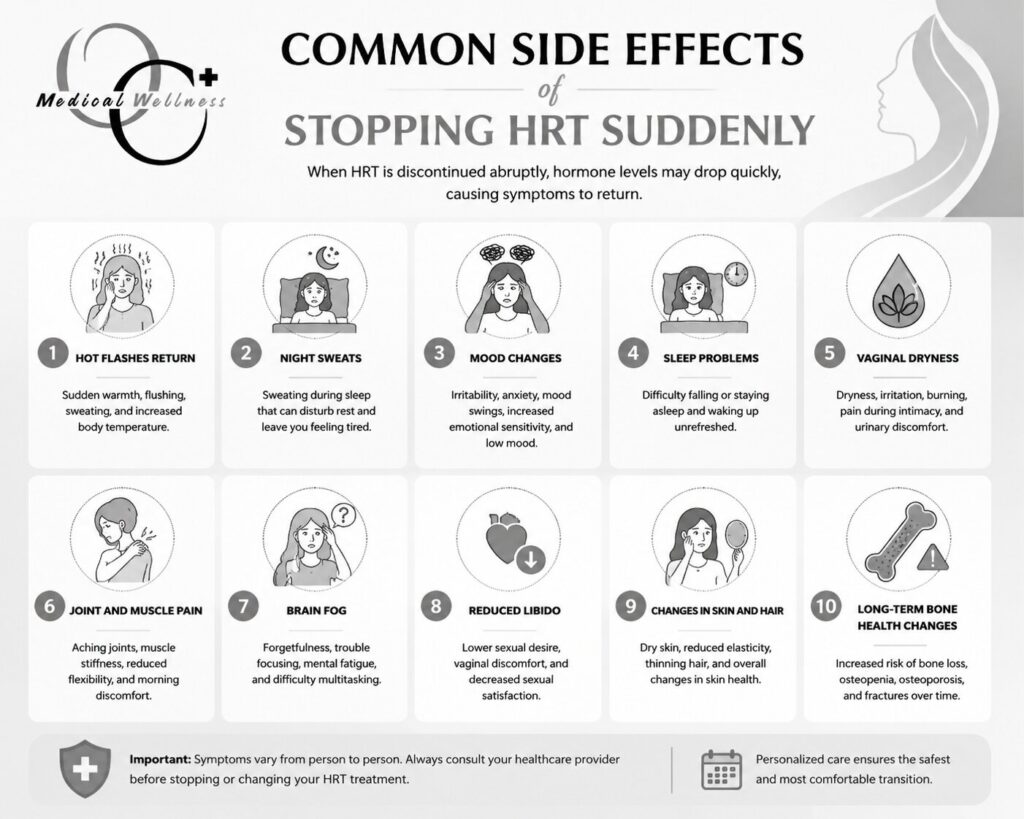
1. Hot Flashes Return
One of the most common symptoms is the return of hot flashes.
You may experience:
- Sudden warmth
- Facial flushing
- Sweating
- Increased body temperature
- Episodes throughout the day
Some individuals report that symptoms temporarily feel more intense than before starting therapy.
2. Night Sweats
Night sweats may interrupt sleep and leave you feeling fatigued the next day.
Frequent sleep disruption can affect:
- Energy levels
- Concentration
- Mood
- Productivity
3. Mood Changes
Hormones influence neurotransmitters that regulate emotional well-being.
After stopping HRT suddenly, some people experience:
- Irritability
- Anxiety
- Mood swings
- Increased emotional sensitivity
- Low mood
4. Sleep Problems
Reduced estrogen levels may make it more difficult to:
- Fall asleep
- Stay asleep
- Wake feeling refreshed
Poor sleep often worsens other menopausal symptoms.
5. Vaginal Dryness
Estrogen helps maintain healthy vaginal tissue.
Without hormone support, some people notice:
- Dryness
- Burning
- Irritation
- Pain during intimacy
- Increased urinary discomfort
6. Joint and Muscle Pain
Many patients report:
- Aching joints
- Muscle stiffness
- Reduced flexibility
- Morning discomfort
These symptoms may gradually improve or require additional treatment depending on the cause.
7. Brain Fog
Some individuals notice temporary cognitive changes such as:
- Forgetfulness
- Trouble focusing
- Mental fatigue
- Difficulty multitasking
8. Reduced Libido
Lower hormone levels may contribute to:
- Reduced sexual desire
- Vaginal discomfort
- Less sexual satisfaction
9. Changes in Skin and Hair
Hormones influence collagen production and skin hydration.
After stopping therapy, you may notice:
- Dry skin
- Thinning hair
- Reduced skin elasticity
10. Long-Term Bone Health Changes
Estrogen plays an important role in maintaining bone density.
Long-term discontinuation may increase the risk of:
- Bone loss
- Osteopenia
- Osteoporosis
- Fractures in susceptible individuals
Your provider may recommend bone density monitoring if appropriate.
Comparison: Stopping HRT Suddenly vs. Gradually
| Factor | Stop Suddenly | Gradual Taper |
|---|---|---|
| Return of symptoms | Often faster | Usually slower |
| Hot flashes | More noticeable | Often less intense |
| Mood changes | More common | May be milder |
| Sleep disruption | Higher likelihood | Often reduced |
| Hormone adjustment | Abrupt | Progressive |
| Patient comfort | Can be difficult | Often easier |
How Long Do Side Effects Last?
There is no single timeline.
Many people improve within several weeks, while others experience symptoms for several months.
Factors influencing recovery include:
- Age
- Overall health
- Hormone levels
- Length of HRT use
- Lifestyle
- Individual biology
Is It Better to Taper Off HRT?
For many patients, yes.
Gradually reducing hormone doses allows your body more time to adapt.
Your healthcare provider may recommend:
- Lowering the dosage slowly
- Increasing time between doses
- Monitoring symptoms
- Adjusting the taper if symptoms become difficult
Never change your medication schedule without medical advice.
Who Should Talk to Their Healthcare Provider Before Stopping?
Medical guidance is especially important if you have:
- Premature menopause
- Surgical menopause
- Osteoporosis risk
- Cardiovascular risk factors
- History of severe menopausal symptoms
- Hormone-sensitive medical conditions
Your provider can determine whether stopping HRT is appropriate and recommend the safest approach.
Lifestyle Tips That May Help During the Transition
While lifestyle changes cannot replace medical treatment, they may help manage symptoms.
Stay Physically Active
Regular exercise supports:
- Better sleep
- Mood
- Bone health
- Heart health
Eat a Balanced Diet
Focus on foods rich in:
- Calcium
- Vitamin D
- Lean protein
- Fruits
- Vegetables
- Whole grains
Manage Stress
Helpful techniques include:
- Deep breathing
- Meditation
- Gentle yoga
- Walking outdoors
Maintain Good Sleep Habits
Try to:
- Keep a consistent bedtime
- Limit caffeine late in the day
- Keep your bedroom cool
- Reduce screen time before bed
Common Myths About Stopping HRT
| Myth | Reality |
|---|---|
| Everyone experiences severe withdrawal. | Symptoms vary greatly between individuals. |
| HRT must be stopped after a certain number of years. | Treatment duration should be individualized. |
| Stopping suddenly is always dangerous. | It may be appropriate for some patients, depending on their health and treatment plan. |
| Symptoms always disappear quickly. | Some symptoms may persist for weeks or months. |
Related Hormone Therapy Questions Patients Often Ask
Many people researching hormone health also want to know:
- The difference between Birth Control Hormone Replacement Therapy and menopause treatment.
- The Signs That You Need Hormone Replacement Therapy if symptoms return after stopping.
- Whether HRT Help With Weight Loss is supported by evidence or if weight changes are influenced by multiple lifestyle and metabolic factors.
- Why some people notice changes in Weight on HRT, while others do not.
- Whether treatment adjustments can Reduce Water Retention from HRT if fluid retention becomes bothersome.
These questions highlight why personalized treatment plans are important rather than making medication changes without professional guidance.
When Should You Contact a Healthcare Provider?
Schedule an evaluation if you experience:
- Severe hot flashes
- Persistent depression or anxiety
- Heavy vaginal bleeding
- Significant sleep disruption
- Severe pain
- Symptoms affecting daily life
- Concerns about bone or heart health
Your provider can determine whether symptoms are related to stopping HRT or another underlying condition.
Why Personalized HRT Care Matters
Hormone therapy is not one-size-fits-all. The safest way to start, adjust, or discontinue treatment depends on your symptoms, health history, and treatment goals.
At OC Medical Wellness in Irvine, patients receive individualized hormone evaluations and evidence-based care led by Dr. Arturo Portales, a board-certified osteopathic physician. Rather than recommending the same approach for everyone, the team develops personalized treatment plans, monitors progress, and helps patients make informed decisions about starting, adjusting, or safely discontinuing hormone therapy when appropriate.
If you’re experiencing menopausal symptoms, have concerns about stopping HRT, or want to discuss whether hormone therapy is right for you, scheduling a professional consultation can help you understand your options and create a plan tailored to your needs.
Key Takeaways
- Stopping HRT suddenly may cause menopausal symptoms to return more quickly.
- Common side effects include hot flashes, night sweats, mood changes, sleep disturbances, vaginal dryness, and joint discomfort.
- The severity and duration of symptoms vary from person to person.
- Gradually tapering HRT is often recommended to help the body adjust more comfortably.
- Decisions about stopping hormone therapy should always be made with guidance from a qualified healthcare provider.
FAQs
Can stopping HRT suddenly make menopausal symptoms come back?
Yes. Many people experience the return of hot flashes, night sweats, sleep disturbances, and mood changes after stopping HRT abruptly. The timing and severity vary based on individual factors.
Is it dangerous to stop HRT without tapering?
For many people, stopping suddenly is not medically dangerous, but it can lead to uncomfortable symptoms. Your healthcare provider can determine whether tapering is the better option for your situation.
How long does it take for hormones to balance after stopping HRT?
There is no universal timeline. Some individuals adjust within a few weeks, while others experience symptoms for several months depending on age, hormone levels, and duration of therapy.
Will I gain weight after stopping HRT?
Weight changes are influenced by many factors, including aging, metabolism, diet, physical activity, and hormonal changes. Stopping HRT alone does not guarantee weight gain.
Can I restart HRT after stopping?
In some cases, yes. If symptoms return and there are no medical reasons to avoid treatment, your healthcare provider may discuss restarting or modifying your hormone therapy plan.
Who should avoid stopping HRT on their own?
People with premature menopause, surgical menopause, osteoporosis risk, or complex medical histories should consult their healthcare provider before discontinuing treatment to ensure the safest approach.