
If you’ve been researching ways to improve muscle recovery, optimize hormone health, support athletic performance, or enhance overall wellness, you’ve likely come across the debate surrounding peptides vs steroids. Although both are associated with performance and body composition, they work in fundamentally different ways and carry very different safety profiles.
Steroids directly alter hormone levels by introducing synthetic hormones into the body. Peptides, on the other hand, are short chains of amino acids that signal specific biological processes, encouraging your body to produce or regulate natural compounds.
Understanding these differences is essential before considering any treatment. This guide explains how peptides and steroids work, their benefits, risks, medical applications, and why professional medical supervision is important.
Quick Answer: Peptides vs Steroids
| Feature | Peptides | Steroids |
|---|---|---|
| What they are | Short chains of amino acids | Synthetic versions of hormones, usually testosterone |
| Primary function | Stimulate natural biological processes | Directly increase hormone levels |
| How they work | Signal cells to perform specific functions | Replace or supplement hormones |
| Common uses | Recovery, hormone optimization, regenerative medicine | Hormone replacement, inflammatory diseases, muscle-wasting disorders |
| Muscle growth | Supports recovery and lean muscle development | Rapid muscle growth and strength increases |
| Risk profile | Generally lower when medically prescribed | Higher risk of hormonal disruption and adverse effects |
| Medical supervision | Strongly recommended | Essential |
What Are Peptides?
Peptides are naturally occurring chains of amino acids that serve as signaling molecules throughout the body. They help regulate numerous physiological processes, including:
- Tissue repair
- Cellular communication
- Growth hormone release
- Immune response
- Metabolism
- Sleep regulation
- Skin health
Because peptides encourage the body to perform natural functions rather than replacing hormones outright, many healthcare providers use peptide therapy as part of personalized wellness and regenerative medicine plans.
What Are Steroids?
Steroids are synthetic compounds that mimic naturally occurring hormones. There are two primary categories:
Anabolic Steroids
These imitate testosterone and are used to:
- Increase muscle mass
- Improve strength
- Treat delayed puberty
- Manage muscle wasting diseases
Unfortunately, anabolic steroids are also commonly misused for bodybuilding and athletic performance enhancement.
Corticosteroids
These are completely different from anabolic steroids and help reduce inflammation. They are prescribed for conditions such as:
- Asthma
- Autoimmune diseases
- Arthritis
- Allergic reactions
- Skin disorders
When people compare peptides vs steroids, they are usually referring to anabolic steroids.
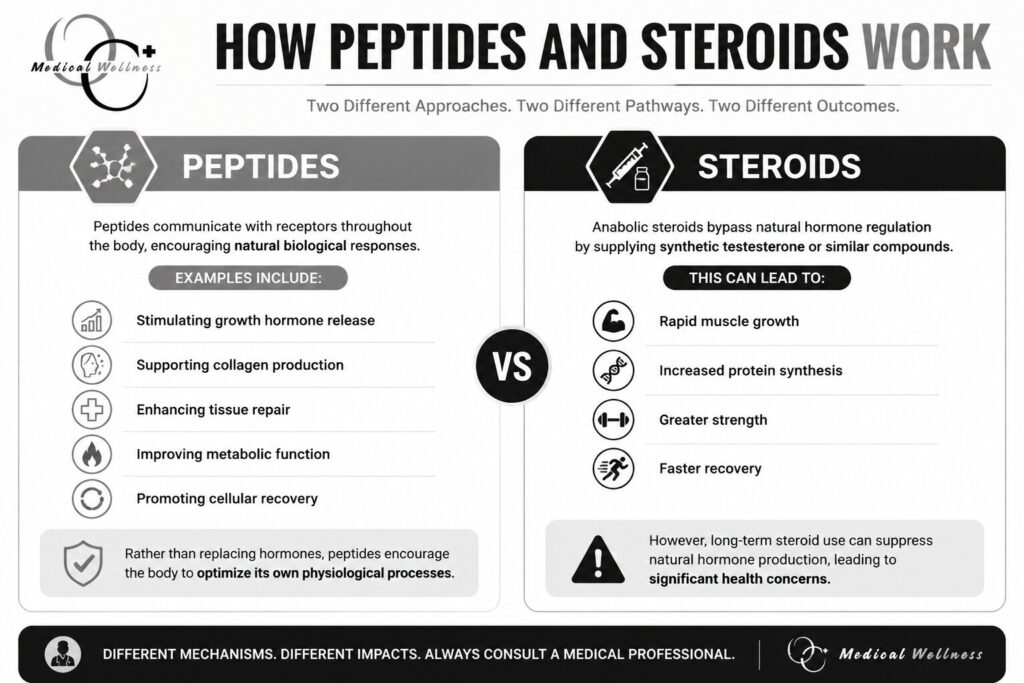
How Peptides and Steroids Work
Peptides
Peptides communicate with receptors throughout the body, encouraging natural biological responses.
Examples include:
- Stimulating growth hormone release
- Supporting collagen production
- Enhancing tissue repair
- Improving metabolic function
- Promoting cellular recovery
Rather than replacing hormones, peptides encourage the body to optimize its own physiological processes.
Steroids
Anabolic steroids bypass natural hormone regulation by supplying synthetic testosterone or similar compounds.
This can lead to:
- Rapid muscle growth
- Increased protein synthesis
- Greater strength
- Faster recovery
However, long-term steroid use can suppress natural hormone production, leading to significant health concerns.
Peptides vs Steroids for Muscle Growth
One of the biggest reasons people compare these therapies is muscle development.
| Goal | Peptides | Steroids |
|---|---|---|
| Lean muscle support | ✓ | ✓ |
| Rapid muscle gain | Moderate | Significant |
| Recovery support | Excellent | Good |
| Tendon recovery | Better support | Limited |
| Natural hormone stimulation | Yes | No |
| Hormonal suppression | Minimal under medical care | Common |
While many people search for peptides for muscle growth, it’s important to understand that peptides are not instant muscle-building agents. Their greatest strength often lies in improving recovery, supporting training consistency, and optimizing the body’s natural healing mechanisms.
Common Types of Peptides
Medical providers may recommend different peptides depending on individual health goals.
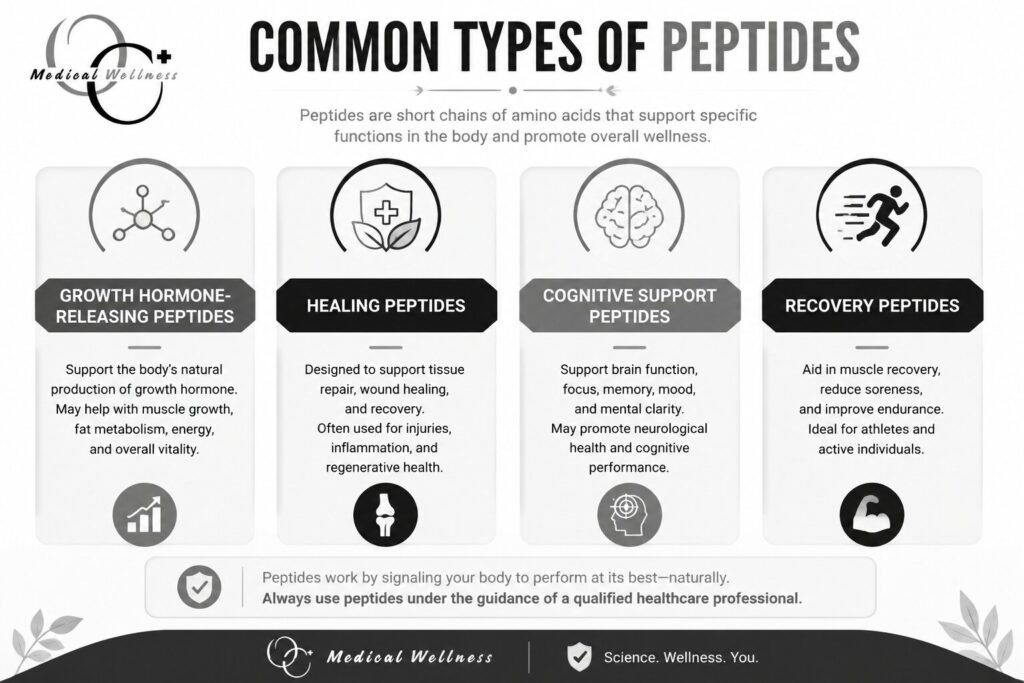
Growth Hormone-Releasing Peptides
Support the body’s natural production of growth hormone under appropriate medical supervision.
Healing Peptides
Designed to assist tissue repair and recovery.
Cognitive Support Peptides
One example is semax peptide, which has been studied for its potential effects on cognitive function, focus, and neurological recovery in research settings. Availability and regulatory status vary by country, and clinical evidence for routine medical use continues to evolve.
Recovery Peptides
The term wolverine peptide is commonly used online as a nickname for peptide protocols intended to support recovery. It is not an official medical classification and may refer to compounds discussed in sports and regenerative medicine communities. These should only be considered under qualified medical guidance.
Benefits of Peptide Therapy
When prescribed appropriately, peptide therapy may help support:
- Healthy aging
- Lean muscle maintenance
- Recovery after exercise
- Improved sleep quality
- Hormone optimization
- Metabolic health
- Joint comfort
- Tissue repair
- Healthy body composition
- Skin health and collagen production
Results vary depending on the individual’s health status, lifestyle, and treatment plan.
Potential Benefits of Steroids
Medical steroid therapy may be appropriate for specific conditions such as:
- Testosterone deficiency
- Severe inflammatory diseases
- Muscle wasting disorders
- Certain autoimmune diseases
Outside medically supervised care, anabolic steroid misuse significantly increases health risks.
Risks of Steroid Use
Anabolic steroid misuse has been associated with:
- Hormonal imbalance
- Infertility
- Liver damage
- Elevated blood pressure
- Increased cardiovascular risk
- Mood changes
- Acne
- Hair loss
- Gynecomastia
- Testicular shrinkage
These risks often increase with higher doses and prolonged use.
Peptide Side Effects
Like any medical treatment, Peptide Side Effects can occur, although many are mild when therapy is prescribed and monitored appropriately.
Possible side effects include:
- Injection site irritation
- Mild headache
- Temporary fatigue
- Water retention
- Nausea
- Changes in appetite
The likelihood of side effects depends on the specific peptide, dosage, treatment duration, and individual health factors. Self-medicating or using products from unverified sources increases the risk of complications.
Important: Peptides are not risk-free. Always discuss your medical history, medications, and treatment goals with a qualified healthcare professional before starting therapy.
Peptides vs Steroids: Which Is Safer?
For many people seeking wellness optimization rather than rapid physique enhancement, medically supervised peptide therapy generally offers a more targeted approach with less disruption to the body’s natural hormone production.
However, “safer” does not mean appropriate for everyone. The right treatment depends on:
- Medical history
- Hormone levels
- Current medications
- Fitness goals
- Existing health conditions
- Laboratory evaluation
A comprehensive medical assessment is essential before beginning either therapy.
Who May Benefit from Peptides?
A healthcare provider may evaluate peptide therapy for individuals who are experiencing:
- Age-related decline in recovery
- Reduced energy
- Hormonal imbalance
- Difficulty maintaining lean muscle
- Poor sleep quality
- Slower healing from exercise or injury
- Interest in regenerative wellness approaches
Treatment recommendations should always be personalized rather than based on online trends or social media claims.
Why Medical Supervision Matters
Many peptide and steroid products marketed online lack quality assurance, accurate labeling, or appropriate clinical oversight. Working with an experienced medical provider helps ensure:
- Proper diagnosis
- Laboratory testing
- Personalized treatment planning
- Ongoing monitoring
- Dose adjustments when needed
- Management of potential side effects
This approach supports both safety and better long-term outcomes.
Why Choose OC Medical Wellness for Peptide Therapy?
If you’re exploring peptide therapy Irvine, choosing a qualified medical team is just as important as selecting the right treatment. At OC Medical Wellness, every treatment plan begins with a comprehensive evaluation to determine whether peptide therapy aligns with your health goals, medical history, and laboratory findings.
Led by Dr. Arturo Portales, a board-certified osteopathic physician, the clinic focuses on personalized care, evidence-informed treatment strategies, and ongoing monitoring to help patients optimize recovery, wellness, and overall health. Rather than offering one-size-fits-all solutions, each plan is tailored to the individual for safe and effective care.
Key Differences at a Glance
✅ Peptides stimulate natural biological processes.
✅ Steroids directly introduce synthetic hormones.
✅ Peptides typically support recovery and hormone optimization.
✅ Steroids often produce faster muscle gains but carry greater health risks.
✅ Both therapies should only be used under medical supervision.
FAQs:
Are peptides better than steroids?
They serve different purposes. Peptides are designed to support specific biological functions, while anabolic steroids directly alter hormone levels. The better option depends on your medical condition, goals, and healthcare provider’s recommendations.
Do peptides build muscle like steroids?
No. Peptides generally support recovery, tissue repair, and natural hormone signaling, whereas anabolic steroids typically produce faster increases in muscle size and strength.
Are peptides legal?
Some peptide medications are legally prescribed for approved medical uses, while others are investigational or restricted. Regulations vary by country, so it’s important to obtain treatment through a licensed healthcare provider.
Are peptide side effects common?
Most people tolerate medically supervised peptide therapy well, but side effects can occur. Your provider will discuss potential risks based on the specific peptide being prescribed.
Can peptides replace testosterone therapy?
Not necessarily. Peptides and testosterone replacement therapy address different medical needs. Some patients may benefit from one approach, while others may require a different treatment plan after proper evaluation.
How long does peptide therapy take to show results?
The timeline depends on the peptide used, treatment goals, and individual response. Some people notice changes within a few weeks, while others may require several months of consistent treatment under medical supervision.
Final Thoughts
The discussion around peptides vs steroids is more nuanced than simply comparing muscle-building potential. While anabolic steroids directly manipulate hormone levels and may produce rapid physical changes, they also carry significant health risks when misused. Peptides work differently by supporting the body’s natural signaling pathways and are increasingly being explored for recovery, hormone optimization, and regenerative medicine under appropriate medical supervision.
The best choice depends on your individual health, goals, and clinical evaluation—not internet trends or anecdotal claims.
Ready to Learn Whether Peptide Therapy Is Right for You?
If you’re interested in a personalized approach to wellness, recovery, or hormone optimization, schedule a consultation with OC Medical Wellness in Irvine, led by Dr. Arturo Portales. A comprehensive medical evaluation can help determine whether peptide therapy is appropriate for your unique needs and provide a treatment plan based on evidence, safety, and your long-term health goals.