
When a patient leaves an emergency room, acute care clinic, or acute care hospital, recovery often continues long after the immediate medical crisis is over. That transitional phase is known as post acute care, an essential part of modern healthcare that helps patients regain strength, prevent complications, and improve quality of life after illness, injury, or surgery.
Post acute care plays a critical role in reducing hospital readmissions, supporting rehabilitation, and helping patients safely return home or transition to long-term care when necessary. Whether someone is recovering from surgery, stroke, pneumonia, cardiac events, or serious injuries, the right post acute care plan can significantly improve outcomes.
What Is Post Acute Care?
Definition of Post Acute Care
Post acute care (PAC) refers to medical and rehabilitative services provided after a patient is discharged from an acute care hospital or acute care clinic. The goal is to help patients recover safely, restore function, manage chronic conditions, and prevent complications or readmission.
Post acute care may include:
- Skilled nursing care
- Physical therapy
- Occupational therapy
- Speech therapy
- Medication management
- Wound care
- Pain management
- Home healthcare services
- Rehabilitation programs
These services can take place in different settings depending on the patient’s condition and recovery needs.
Simple Example of Post Acute Care
A patient undergoes hip replacement surgery in an acute care hospital. After discharge, they may require:
- Physical therapy to regain mobility
- Pain management
- Assistance with daily activities
- Follow-up monitoring
Instead of staying hospitalized, they transition into post acute care through a rehabilitation center or home health program.
Acute Care vs. Post Acute Care
Many people confuse acute care with post acute care, but they serve different purposes in the healthcare continuum.
| Feature | Acute Care | Post Acute Care |
|---|---|---|
| Primary Goal | Stabilize urgent medical conditions | Support recovery and rehabilitation |
| Setting | Acute care hospital, emergency room, acute care clinic | Rehab facility, skilled nursing facility, home healthcare |
| Duration | Short-term | Short-term or extended recovery |
| Focus | Immediate treatment | Recovery, therapy, long-term wellness |
| Examples | Heart attack treatment, surgery, trauma care | Physical therapy, wound care, rehabilitation |
What Is an Acute Care Hospital?
An acute care hospital provides short-term treatment for severe illnesses, injuries, surgeries, and urgent medical conditions. Patients receive intensive monitoring, diagnostics, and immediate medical interventions.
Examples include:
- Emergency surgery
- Severe infections
- Stroke treatment
- Cardiac emergencies
- Respiratory distress
Once stabilized, many patients transition into post acute care for continued recovery.
Read More: What Is an Acute Care Hospital? Complete Guide for Patients
What Is an Acute Care Clinic?
An acute care clinic treats non-life-threatening illnesses and injuries that require prompt medical attention but not emergency hospitalization.
Common services include:
- Flu treatment
- Minor fractures
- Respiratory infections
- Urinary tract infections
- Cuts and lacerations
- Mild dehydration
If a condition requires extended recovery support, providers may recommend post acute care services afterward.
Types of Post Acute Care Services
Post acute care is not one-size-fits-all. Different care settings are designed for different recovery needs.
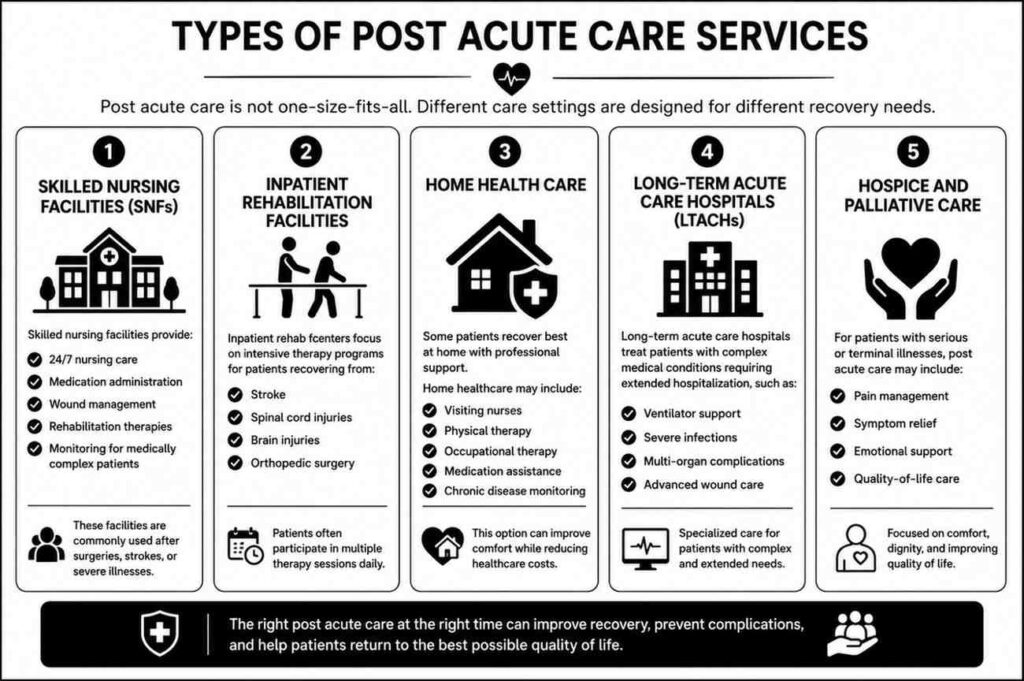
1. Skilled Nursing Facilities (SNFs)
Skilled nursing facilities provide:
- 24/7 nursing care
- Medication administration
- Wound management
- Rehabilitation therapies
- Monitoring for medically complex patients
These facilities are commonly used after surgeries, strokes, or severe illnesses.
Read More: Can an FNP Work in Acute Care?
2. Inpatient Rehabilitation Facilities
Inpatient rehab centers focus on intensive therapy programs for patients recovering from:
- Stroke
- Spinal cord injuries
- Brain injuries
- Orthopedic surgery
Patients often participate in multiple therapy sessions daily.
3. Home Health Care
Some patients recover best at home with professional support.
Home healthcare may include:
- Visiting nurses
- Physical therapy
- Occupational therapy
- Medication assistance
- Chronic disease monitoring
This option can improve comfort while reducing healthcare costs.
4. Long-Term Acute Care Hospitals (LTACHs)
Long-term acute care hospitals treat patients with complex medical conditions requiring extended hospitalization, such as:
- Ventilator support
- Severe infections
- Multi-organ complications
- Advanced wound care
5. Hospice and Palliative Care
For patients with serious or terminal illnesses, post acute care may include:
- Pain management
- Symptom relief
- Emotional support
- Quality-of-life care
Key Benefits of Post Acute Care
1. Faster Recovery and Rehabilitation
Structured rehabilitation programs help patients regain:
- Strength
- Mobility
- Speech
- Independence
- Daily functioning
Early rehabilitation is often linked to better long-term outcomes.
2. Reduced Hospital Readmissions
One major benefit of post acute care is preventing avoidable hospital returns.
Patients receive:
- Medication monitoring
- Ongoing assessments
- Follow-up treatment
- Complication prevention
This continuity of care reduces healthcare risks after discharge.
3. Personalized Treatment Plans
Post acute care programs are tailored to each patient’s:
- Medical history
- Recovery goals
- Functional limitations
- Family support system
Personalized care improves both safety and patient satisfaction.
4. Improved Quality of Life
Recovery is not only about treating disease. It is also about restoring independence and confidence.
Patients may regain the ability to:
- Walk independently
- Perform daily tasks
- Return to work
- Participate in social activities
5. Better Chronic Disease Management
Patients with chronic conditions often benefit from ongoing monitoring and education.
Common conditions managed include:
- Diabetes
- Heart disease
- COPD
- Arthritis
- Neurological disorders
6. Lower Healthcare Costs
Effective post acute care can reduce:
- Emergency room visits
- Readmissions
- Long hospital stays
- Long-term complications
Home-based recovery programs may also lower overall treatment expenses.
Who Needs Post Acute Care?
Post acute care is commonly recommended for patients recovering from:
Surgical Procedures
- Joint replacement surgery
- Cardiac surgery
- Spine surgery
- Abdominal surgery
Serious Medical Conditions
- Stroke
- Pneumonia
- Heart attack
- Sepsis
- COVID-19 complications
Injuries and Trauma
- Fractures
- Falls
- Head injuries
- Sports injuries
Chronic Illness Flare-Ups
Patients with chronic diseases may require temporary rehabilitation or skilled nursing support after hospitalization.
Read More: What to Expect in Acute Care Settings
Common Treatments Provided in Post Acute Care
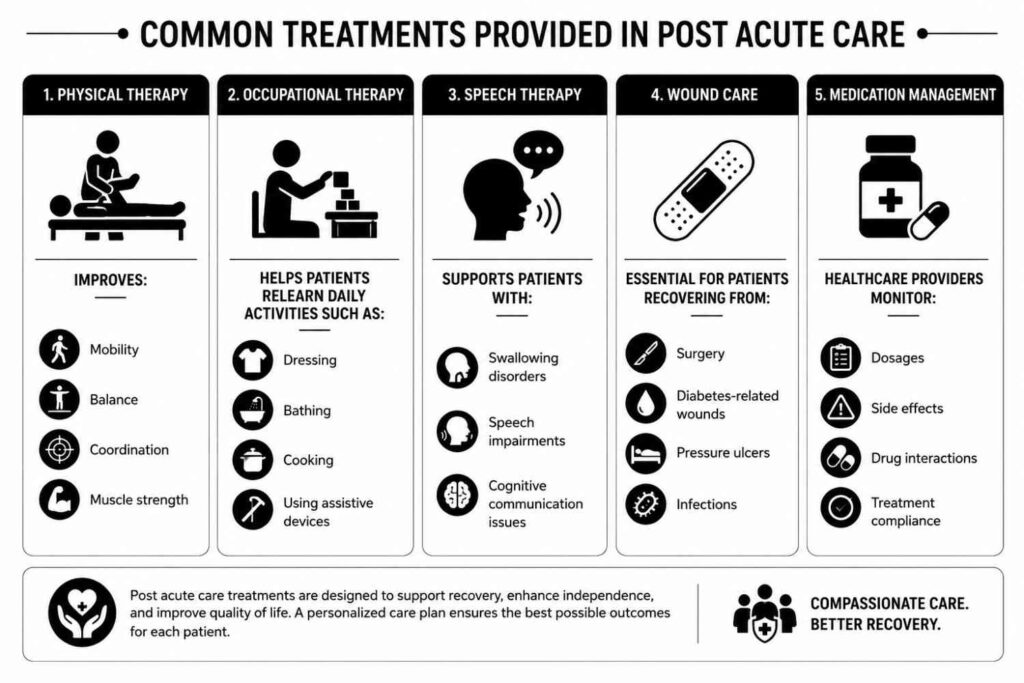
Physical Therapy
Improves:
- Mobility
- Balance
- Coordination
- Muscle strength
Occupational Therapy
Helps patients relearn daily activities such as:
- Dressing
- Bathing
- Cooking
- Using assistive devices
Speech Therapy
Supports patients with:
- Swallowing disorders
- Speech impairments
- Cognitive communication issues
Wound Care
Essential for patients recovering from:
- Surgery
- Diabetes-related wounds
- Pressure ulcers
- Infections
Medication Management
Healthcare providers monitor:
- Dosages
- Side effects
- Drug interactions
- Treatment compliance
How Long Does Post Acute Care Last?
The length of post acute care depends on:
- Severity of illness or injury
- Recovery progress
- Patient age
- Functional status
- Medical complications
Some patients only need a few days of therapy, while others may require weeks or months of rehabilitation.
How to Choose the Right Post Acute Care Provider
Selecting the appropriate facility or care team can significantly impact recovery outcomes.
Important Factors to Consider
Clinical Expertise
Look for providers experienced in treating your specific condition.
Rehabilitation Services
Evaluate available therapies and recovery programs.
Staff Credentials
Check for licensed nurses, therapists, and board-certified physicians.
Care Coordination
Strong communication between hospitals, acute care clinics, specialists, and rehabilitation providers is essential.
Patient Reviews and Outcomes
Research patient satisfaction scores and recovery success rates.
Insurance Coverage
Verify accepted insurance plans and out-of-pocket costs.
Signs a Patient May Need Post Acute Care
Patients may benefit from post acute care if they:
- Cannot safely return home independently
- Need rehabilitation after surgery
- Require ongoing medical monitoring
- Have difficulty performing daily activities
- Need wound care or IV medications
- Are at risk for hospital readmission
Challenges in Post Acute Care
While post acute care provides major benefits, there can also be challenges.
Coordination Between Providers
Transitions between hospitals and rehabilitation centers sometimes create communication gaps.
Insurance Limitations
Coverage varies depending on insurance plans and medical necessity.
Caregiver Burden
Family members often play a large role in supporting recovery at home.
Access to Specialized Care
Some rural or underserved areas may have limited rehabilitation resources.
The Future of Post Acute Care
Healthcare systems increasingly recognize the importance of recovery-focused care.
Emerging trends include:
- Telehealth rehabilitation
- Remote patient monitoring
- Home-based recovery programs
- Value-based healthcare models
- AI-assisted patient monitoring
- Integrated care coordination
As healthcare evolves, post acute care is becoming more personalized, technology-driven, and outcome-focused.
Key Takeaways
- Post acute care supports recovery after hospitalization, surgery, or serious illness.
- It bridges the gap between acute medical treatment and long-term wellness.
- Common settings include skilled nursing facilities, rehab centers, home healthcare, and long-term acute care hospitals.
- Benefits include faster recovery, lower readmission rates, improved quality of life, and personalized rehabilitation.
- Patients recovering from surgery, stroke, trauma, or chronic illness often benefit from structured post acute care programs.
FAQs:
What is considered post acute care?
Post acute care includes medical and rehabilitation services provided after discharge from an acute care hospital or acute care clinic. It focuses on recovery, therapy, and preventing complications.
What is the difference between acute care and post acute care?
Acute care treats urgent or severe medical conditions, while post acute care helps patients recover after the initial treatment phase.
Who qualifies for post acute care?
Patients recovering from surgery, stroke, injuries, severe infections, or chronic disease complications may qualify for post acute care services.
Is post acute care the same as rehabilitation?
Not exactly. Rehabilitation is one component of post acute care. Post acute care may also include skilled nursing, medication management, wound care, and chronic disease monitoring.
How long do patients stay in post acute care?
The duration varies depending on the patient’s condition, recovery goals, and medical needs. Some patients need only a few days, while others require several weeks or months.
Can post acute care be provided at home?
Yes. Many patients receive post acute care through home health services, including nursing care, therapy, and remote monitoring.
Final Thoughts
Recovery does not end when a patient leaves the hospital. In many cases, the most important phase begins afterward. Post acute care provides the structured support patients need to heal safely, regain independence, and reduce the risk of complications.
Whether recovering from surgery, illness, or injury, choosing the right post acute care plan can make a meaningful difference in both short-term recovery and long-term health outcomes.
Need fast, reliable acute care in Irvine, CA? OC Medical Wellness, led by Dr. Arturo Portales, provides expert treatment for illnesses, infections, minor injuries, and urgent health concerns, with personalized care focused on helping you feel better, faster. Schedule your visit today.