
When a sudden illness strikes or an injury can’t wait until next week’s doctor appointment, knowing where to go can make the difference between a smooth recovery and a costly complication. An acute care facility fills that critical gap between routine primary care and the emergency room, offering same-day treatment for medical issues that need prompt attention but aren’t life-threatening.
This guide breaks down the ten most common conditions treated in an acute care setting, what to expect during your visit, and how to recognize when acute care is the right choice for you or a loved one.
What Is an Acute Care Facility?
An acute care facility is a medical setting designed to treat short-term, urgent health issues that develop suddenly or worsen quickly. Unlike long-term care, which focuses on managing chronic conditions over months or years, acute care delivers focused, immediate treatment with the goal of stabilizing the patient and restoring health within days.
These facilities sit at the intersection of primary care and emergency medicine. You’ll find them under several names, including urgent care centers, acute care clinics, and walk-in medical offices. Larger versions, called acute care hospitals, provide inpatient services for more serious conditions, while long-term acute care hospitals (LTACHs) serve patients who need extended recovery time after a critical illness.
Acute care addresses sudden, time-sensitive medical needs without the wait times or higher costs of an emergency department.
Acute Care vs. Emergency Room vs. Primary Care: A Quick Comparison
| Feature | Primary Care | Acute Care Clinic | Emergency Room |
|---|---|---|---|
| Best for | Routine checkups, chronic conditions | Sudden illness, minor injuries | Life-threatening emergencies |
| Wait time | Days to weeks (appointment) | Usually under 30 minutes | Varies, often hours |
| Cost | Low to moderate | Moderate | High |
| Hours | Standard business hours | Extended, often weekends | 24/7 |
| Appointment needed | Yes | Walk-in available | No |
The Top 10 Conditions Treated at an Acute Care Facility
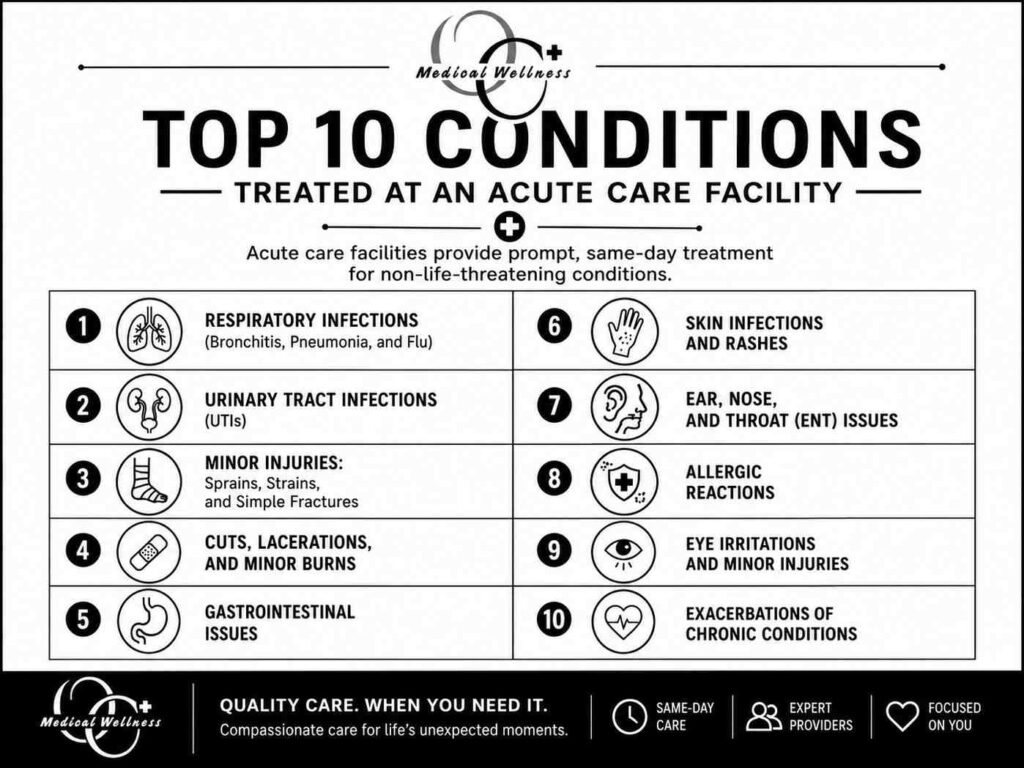
1. Respiratory Infections (Bronchitis, Pneumonia, and Flu)
Respiratory infections are among the most common reasons patients walk into an acute care clinic. These illnesses can escalate quickly, especially in children, older adults, and people with weakened immune systems.
Providers typically diagnose respiratory issues through a physical exam, listening to the lungs, and ordering quick in-office tests like rapid flu swabs, COVID-19 tests, or chest X-rays. Treatment may include antibiotics for bacterial infections, antiviral medications, inhalers, or breathing treatments administered on-site.
When to seek acute care: Persistent cough lasting more than a few days, chest tightness, fever above 101°F, or shortness of breath that doesn’t improve with rest.
2. Urinary Tract Infections (UTIs)
UTIs are painful, disruptive, and surprisingly common, affecting nearly half of all women at some point in their lives. Left untreated, a simple bladder infection can travel to the kidneys and trigger a serious illness.
Acute care providers can confirm a UTI within minutes using a urine dipstick test and start patients on antibiotics the same day. Most people feel significantly better within 24 to 48 hours of starting treatment.
Common symptoms include:
- Burning during urination
- Frequent urge to urinate with little output
- Cloudy or strong-smelling urine
- Lower abdominal pressure or back pain
3. Minor Injuries: Sprains, Strains, and Simple Fractures
Sports injuries, household falls, and workplace mishaps often result in soft tissue damage or minor bone fractures. An acute care facility equipped with on-site X-ray capability can quickly assess the injury, splint or cast it, and provide pain management.
For more complex fractures requiring surgery, the acute care provider will coordinate referral to an orthopedic specialist. This saves patients an unnecessary ER visit while still ensuring proper follow-up.
4. Cuts, Lacerations, and Minor Burns
Deep cuts that won’t stop bleeding, kitchen burns, and puncture wounds all require timely care to prevent infection and minimize scarring. Acute care clinics handle wound cleaning, stitches, staples, skin adhesive (medical glue), and tetanus shots when needed.
For burns, providers assess the depth and surface area, then apply specialized dressings and pain relief. Second-degree burns covering large areas or affecting the face, hands, or genitals should be evaluated promptly.
5. Gastrointestinal Issues
Sudden nausea, vomiting, diarrhea, or severe stomach pain can dehydrate a person quickly. Whether the cause is food poisoning, a stomach virus, or gastritis, acute care providers can rehydrate patients with IV fluids, prescribe anti-nausea medications, and run tests to identify the underlying cause.
Highlight: Persistent vomiting for more than 24 hours, blood in stool, or signs of dehydration (dizziness, dry mouth, dark urine) warrant immediate medical attention.
6. Skin Infections and Rashes
Cellulitis, abscesses, impetigo, shingles, and allergic skin reactions all benefit from prompt diagnosis. A delay in treating a skin infection can lead to spreading bacteria or, in rare cases, sepsis.
Acute care providers can drain abscesses, prescribe topical or oral antibiotics, and identify whether a rash is viral, bacterial, fungal, or allergic. Same-day treatment often prevents the need for hospitalization.
7. Ear, Nose, and Throat (ENT) Issues
Ear infections in children, strep throat, sinusitis, and tonsillitis are bread-and-butter cases at any acute care clinic. Rapid strep tests deliver results in five to ten minutes, and providers can prescribe antibiotics on the spot if needed.
Sinus infections that linger beyond ten days, severe ear pain, or difficulty swallowing are all valid reasons to seek same-day care rather than waiting for a primary care appointment.
8. Allergic Reactions
Mild to moderate allergic reactions, including hives, swelling, and reactions to insect stings, are routinely managed in the acute care setting. Treatment may involve antihistamines, corticosteroids, or epinephrine for more severe reactions.
Important: True anaphylaxis (difficulty breathing, throat tightening, drop in blood pressure) is a medical emergency that requires calling 911 or going directly to the ER.
9. Eye Irritations and Minor Injuries
Pink eye (conjunctivitis), corneal abrasions, foreign objects in the eye, and styes are all treatable in an acute care clinic. Providers can flush the eye, examine for damage using fluorescein dye, and prescribe medicated drops.
Vision changes, eye trauma from blunt force, or chemical splashes need emergency evaluation rather than acute care.
10. Exacerbations of Chronic Conditions
Patients with asthma, diabetes, COPD, or high blood pressure sometimes experience flare-ups that need attention before they become emergencies. An acute care provider can administer nebulizer treatments, adjust medications, check blood sugar levels, or stabilize blood pressure.
This service is especially valuable for patients between specialist appointments who notice their symptoms worsening.
What to Expect During Your Acute Care Visit
A typical visit to an acute care clinic follows a predictable rhythm:
- Check-in and intake: Provide insurance, ID, and a brief description of symptoms.
- Vitals and triage: A nurse records blood pressure, temperature, pulse, and oxygen levels.
- Provider exam: A physician, nurse practitioner, or physician assistant evaluates you.
- Diagnostics: Lab tests, X-rays, or rapid screens may be ordered.
- Treatment: Medications, procedures, or referrals are arranged before discharge.
- Follow-up plan: Written instructions and any prescriptions are provided.
Most visits last between 30 and 90 minutes from check-in to discharge.
When Acute Care Is the Right Choice
Use this quick checklist to decide if acute care fits your situation:
- Symptoms started recently and are getting worse
- You can’t get a same-day appointment with your primary care doctor
- The issue is uncomfortable or interfering with daily life, but not life-threatening
- You need same-day diagnostics like X-rays or lab work
- You’re experiencing chest pain, stroke symptoms, severe bleeding, or trouble breathing, go to the ER
Benefits of Choosing an Acute Care Facility
- Faster access: No need to wait days for a primary care appointment.
- Lower cost: Significantly less expensive than an emergency room visit.
- Convenient hours: Many clinics offer evening and weekend availability.
- Comprehensive services: On-site labs, imaging, and pharmacy support in one visit.
- Continuity of care: Records can be shared with your primary doctor for follow-up.
FAQs:
What is the difference between acute care and urgent care?
The terms are often used interchangeably. Acute care is a broader category that includes urgent care clinics, hospital-based acute care units, and long-term acute care hospitals. Urgent care specifically refers to walk-in clinics that handle non-emergency medical needs.
Can an acute care clinic treat chronic conditions?
Acute care facilities focus on short-term issues, but they can manage flare-ups of chronic conditions like asthma or diabetes. Long-term management should remain with your primary care provider or specialist.
Do I need an appointment to visit an acute care facility?
Most acute care clinics accept walk-ins, though some offer online check-in or appointment reservations to reduce wait times. Calling ahead is always a good idea.
Is acute care covered by insurance?
Yes, most health insurance plans cover acute care visits, often with a copay similar to or slightly higher than a primary care visit. Always confirm coverage with your insurer beforehand.
What’s the difference between an acute care hospital and a long-term acute care hospital?
An acute care hospital treats patients with sudden, severe illnesses, typically for stays under 25 days. A long-term acute care hospital cares for medically complex patients who need extended recovery time, often after ICU stays, with average stays of 25 days or more.
When should I go to the ER instead of acute care?
Go to the ER for chest pain, signs of stroke (facial drooping, slurred speech, weakness on one side), severe bleeding, difficulty breathing, head injuries with loss of consciousness, or any condition that feels life-threatening.
Final Thoughts
Knowing what an acute care facility treats, and when to use one, puts you in control of your health decisions. From respiratory infections to minor injuries, an acute care clinic offers timely, affordable care for the kinds of medical issues that come up in everyday life, without the wait or expense of an emergency room visit.

Trusted Acute Care in Irvine, CA
If you’re in Irvine, CA, or the surrounding Orange County area and need same-day medical attention, OC Medical Wellness offers trusted acute care services led by Dr. Arturo Portales. Whether it’s a sudden infection, a minor injury, or a flare-up of a chronic condition, Dr. Portales and his team provide attentive, evidence-based care designed to get you feeling better quickly. Walk in or schedule a visit today, and let our team help you take the next step toward a healthier you.