
When someone experiences a serious illness, sudden injury, infection, or medical emergency, they often need fast, specialized treatment in an acute care setting. From emergency rooms to intensive care units, acute care services are designed to stabilize patients, diagnose conditions quickly, and provide short-term medical treatment.
Understanding common acute care settings examples can help patients, caregivers, healthcare students, and families make informed healthcare decisions. It also clarifies the differences between acute care clinics, acute care hospitals, urgent care centers, rehabilitation facilities, and long-term care services.
This guide explains the most common acute care environments, what services they provide, who they treat, and when each setting is appropriate.
What Is Acute Care?
Acute care is short-term medical treatment provided for severe injuries, urgent illnesses, postoperative recovery, or sudden health conditions that require immediate professional attention.
Unlike long-term care or preventive care, acute care focuses on:
- Rapid diagnosis
- Immediate treatment
- Stabilization of serious conditions
- Continuous monitoring
- Recovery from sudden medical events
Acute care may last a few hours, several days, or several weeks depending on the patient’s condition.
Read More: What Is Acute Care?
Quick Definition
Acute care settings are healthcare facilities where patients receive active, short-term medical treatment for urgent or severe health conditions.
Examples include:
- Emergency departments
- Acute care hospitals
- Intensive care units (ICUs)
- Urgent care clinics
- Surgical centers
- Trauma centers
Common Acute Care Settings Examples
Below are the most common types of acute care settings and how they function within the healthcare system.
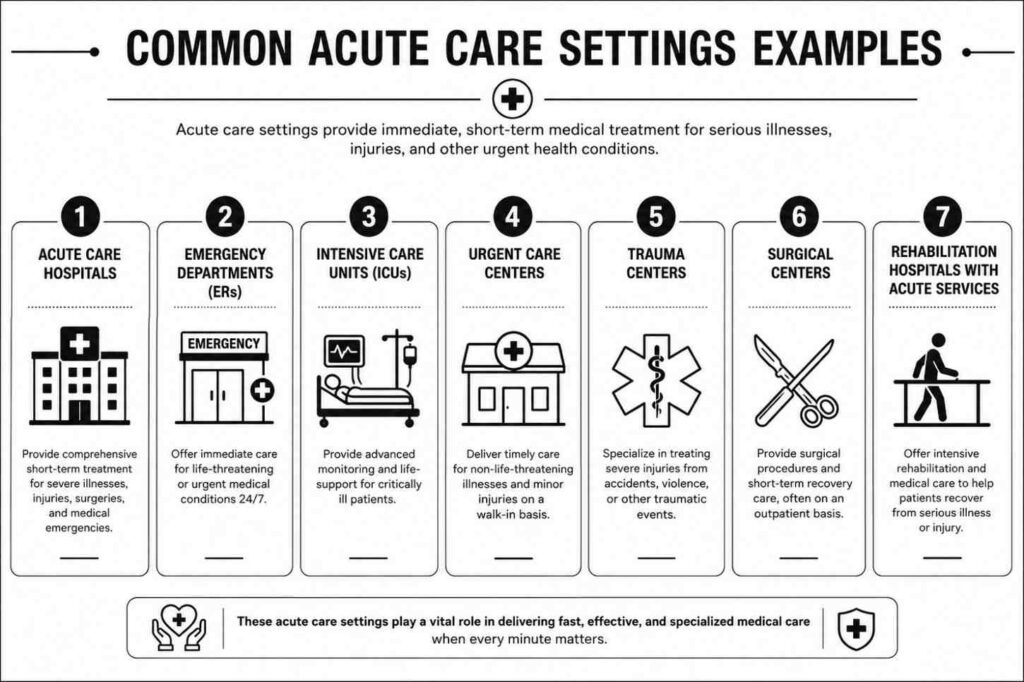
1. Acute Care Hospitals
An acute care hospital is one of the most recognized acute care settings. These hospitals provide comprehensive short-term treatment for severe injuries, illnesses, surgeries, and medical emergencies.
Services Offered in Acute Care Hospitals
- Emergency medical care
- Inpatient treatment
- Surgical procedures
- Intensive care services
- Diagnostic imaging
- Cardiac care
- Respiratory therapy
- Postoperative recovery
Common Conditions Treated
- Heart attacks
- Pneumonia
- Stroke
- Severe infections
- Broken bones
- Internal bleeding
- Surgical complications
Example Scenario
A patient experiencing chest pain may be admitted to an acute care hospital for cardiac monitoring, blood tests, imaging, and emergency intervention.
Read More: What Is an Acute Care Hospital?
Key Features
| Feature | Acute Care Hospital |
|---|---|
| Care Duration | Short-term |
| Patient Type | Critically ill or injured |
| Services | Emergency + inpatient |
| Staffing | Multidisciplinary medical teams |
| Availability | 24/7 |
2. Emergency Departments (ERs)
Emergency departments are specialized hospital units designed to manage life-threatening and urgent medical conditions.
These settings prioritize patients based on severity through triage systems.
Conditions Commonly Treated in the ER
- Severe trauma
- Chest pain
- Stroke symptoms
- Breathing difficulties
- Seizures
- Major burns
- Uncontrolled bleeding
What Makes Emergency Care Different?
Emergency departments provide:
- Immediate stabilization
- Rapid diagnostics
- Critical interventions
- Access to trauma and surgical teams
Example
Someone involved in a car accident would typically receive emergency acute care in the ER before being transferred to surgery or intensive care.
3. Intensive Care Units (ICUs)
The ICU is a highly specialized acute care setting for critically ill patients requiring continuous monitoring and advanced medical support.
ICU Services Include
- Ventilator support
- Cardiac monitoring
- Intravenous medications
- Organ support therapy
- Neurological monitoring
Patients Often Admitted to ICUs
- Severe COVID-19 complications
- Organ failure
- Septic shock
- Major trauma
- Post-surgical complications
Types of ICUs
- Medical ICU
- Surgical ICU
- Pediatric ICU
- Neonatal ICU
- Cardiac ICU
Read More: Is Acute Care an ICU?
4. Urgent Care Centers
Urgent care clinics provide immediate treatment for non-life-threatening illnesses and injuries.
They bridge the gap between primary care and emergency rooms.
Acute Care Clinic vs Urgent Care
An acute care clinic may function similarly to an urgent care center, depending on the healthcare system and provider structure.
Common Services
- Minor fracture treatment
- Flu and fever care
- Infection treatment
- Stitches
- X-rays
- Diagnostic testing
Conditions Appropriate for Urgent Care
- Ear infections
- Mild asthma attacks
- Sprains
- Minor burns
- Allergic reactions
- Urinary tract infections
Benefits of Urgent Care Clinics
- Faster than ER visits
- Lower costs
- Walk-in convenience
- Extended hours
Important Note
Urgent care centers are not designed for severe emergencies such as strokes, heart attacks, or major trauma.
Acute Care Clinic: What It Means
An acute care clinic focuses on diagnosing and treating sudden medical conditions that require prompt attention but may not require hospitalization.
These clinics are often staffed by:
- Physicians
- Nurse practitioners
- Physician assistants
- Registered nurses
Read More: What Is an Acute Care Nurse Practitioner?
Common Acute Care Clinic Services
- Same-day appointments
- Respiratory illness treatment
- Minor injury care
- IV hydration
- Diagnostic screenings
- Medication management
Who Uses Acute Care Clinics?
Patients who need timely care but do not require emergency hospitalization often benefit from acute care clinics.
5. Trauma Centers
Trauma centers specialize in treating severe injuries caused by accidents, violence, or catastrophic events.
Not all hospitals are trauma centers.
Trauma Center Capabilities
- Emergency surgery
- Advanced imaging
- Blood transfusions
- Neurosurgical care
- Orthopedic trauma management
Common Trauma Cases
- Motorcycle accidents
- Gunshot wounds
- Severe falls
- Head injuries
- Multi-system trauma
Trauma Center Levels
Trauma centers are categorized by levels:
| Trauma Level | Capability |
|---|---|
| Level I | Highest comprehensive trauma care |
| Level II | Advanced trauma treatment |
| Level III | Initial stabilization |
| Level IV/V | Basic emergency trauma support |
6. Surgical Centers
Surgical centers provide acute care for patients undergoing procedures that require specialized monitoring and recovery.
Types of Procedures
- Orthopedic surgery
- General surgery
- ENT procedures
- Gastrointestinal surgery
- Same-day surgeries
Acute Surgical Care Includes
- Preoperative assessment
- Anesthesia management
- Postoperative recovery
- Pain control
- Infection monitoring
Some surgeries require overnight hospitalization, while others are outpatient procedures.
7. Rehabilitation Hospitals With Acute Services
Certain rehabilitation facilities also provide acute medical services during recovery from severe illness or injury.
Examples
- Stroke rehabilitation
- Spinal cord injury recovery
- Post-trauma rehabilitation
- Cardiac rehabilitation
Acute Rehabilitation Focuses On
- Intensive therapy
- Functional recovery
- Mobility restoration
- Medical supervision
These settings differ from long-term nursing care because they involve active recovery programs and medical oversight.
Acute Care vs Other Healthcare Settings
Understanding how acute care differs from other medical services helps patients choose the right level of care.
Acute Care vs Primary Care
| Acute Care | Primary Care |
|---|---|
| Immediate treatment | Preventive healthcare |
| Short-term focus | Long-term wellness |
| Urgent conditions | Routine checkups |
| Emergency support | Chronic disease management |
Acute Care vs Long-Term Care
| Acute Care | Long-Term Care |
|---|---|
| Temporary treatment | Ongoing assistance |
| Medical stabilization | Daily living support |
| Hospital-based | Residential facilities |
| Intensive monitoring | Maintenance care |
Acute Care vs Urgent Care
| Acute Care | Urgent Care |
|---|---|
| Severe conditions | Minor illnesses/injuries |
| Hospital-level services | Outpatient treatment |
| May require admission | Usually same-day discharge |
| Advanced diagnostics | Limited diagnostics |
Benefits of Acute Care Services
Acute care systems play a critical role in modern healthcare delivery.
Key Benefits
Rapid Medical Intervention
Quick treatment can prevent complications and improve survival rates.
Specialized Expertise
Patients gain access to trained specialists, surgeons, emergency physicians, and critical care teams.
Advanced Diagnostic Technology
Acute care hospitals often use:
- CT scans
- MRI imaging
- Laboratory testing
- Cardiac monitoring
- Ultrasound technology
Coordinated Patient Care
Multidisciplinary teams collaborate to improve outcomes and recovery.
When Should Someone Seek Acute Care?
Many patients struggle to determine when acute care is necessary.
Seek Acute Care Immediately For:
- Chest pain
- Difficulty breathing
- Stroke symptoms
- Severe bleeding
- Sudden confusion
- High fever with complications
- Serious injuries
- Loss of consciousness
Consider an Acute Care Clinic or Urgent Care For:
- Minor infections
- Mild dehydration
- Sprains
- Minor burns
- Flu symptoms
- Non-emergency pain
Challenges in Acute Care Settings
Acute healthcare environments also face several operational and clinical challenges.
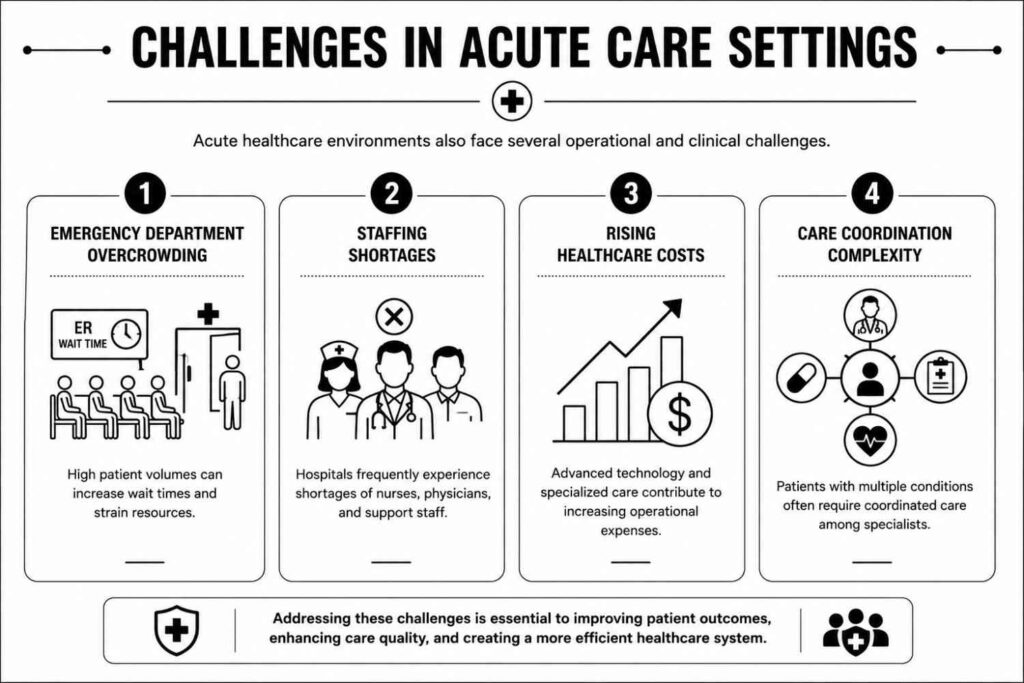
Emergency Department Overcrowding
High patient volumes can increase wait times and strain resources.
Staffing Shortages
Hospitals frequently experience shortages of nurses, physicians, and support staff.
Rising Healthcare Costs
Advanced technology and specialized care contribute to increasing operational expenses.
Care Coordination Complexity
Patients with multiple conditions often require coordinated care among specialists.
Key Takeaways About Acute Care Settings
- Acute care provides short-term treatment for urgent or severe medical conditions.
- Common acute care settings examples include emergency rooms, ICUs, trauma centers, urgent care clinics, and acute care hospitals.
- Acute care clinics help treat non-life-threatening conditions requiring prompt medical attention.
- Acute care differs from primary care, preventive care, and long-term care.
- Choosing the right acute care setting can improve treatment outcomes and reduce complications.
FAQs
What is an example of an acute care setting?
An acute care hospital is one of the most common examples of an acute care setting. Other examples include emergency departments, trauma centers, intensive care units, and urgent care clinics.
What is the difference between acute care and urgent care?
Acute care typically handles severe or life-threatening conditions requiring advanced medical treatment, while urgent care focuses on non-emergency illnesses and minor injuries.
What services are provided in an acute care clinic?
An acute care clinic may offer same-day treatment for infections, minor injuries, respiratory illnesses, dehydration, diagnostic testing, and medication management.
Is the emergency room considered acute care?
Yes. Emergency rooms are a major component of acute care because they provide immediate treatment for serious medical emergencies and injuries.
How long do patients stay in acute care hospitals?
Length of stay depends on the patient’s condition. Some patients are discharged within hours, while others may require several days or weeks of hospitalization.
Are urgent care centers part of acute care?
Yes, urgent care centers are considered a form of acute care for non-life-threatening medical conditions that require prompt treatment.
Conclusion
Acute care settings form the foundation of emergency and short-term medical treatment across the healthcare system. Whether someone visits an acute care clinic for a sudden illness or receives lifesaving treatment in an acute care hospital, these facilities are designed to provide rapid, specialized, and effective care when it matters most.
Understanding the different types of acute care environments helps patients choose the appropriate level of treatment, avoid unnecessary delays, and improve healthcare outcomes.

Trusted Acute Care in Irvine, CA
OC Medical Wellness in Irvine, CA offers compassionate, personalized acute care for sudden illnesses, minor injuries, and urgent health concerns. Led by board-certified osteopathic physician Dr. Arturo Portales, our team provides holistic, patient-centered care focused on timely treatment and long-term wellness. Schedule your visit today to experience trusted acute care in Irvine, CA.