
Healthcare can feel complicated, especially when patients hear terms like “acute care,” “non-acute care,” inpatient treatment, rehabilitation, or long-term care. Understanding the difference between acute and non-acute care is important because it helps patients know what type of treatment they need, where they should receive it, and what level of medical attention is involved.
In simple terms, acute care focuses on immediate, short-term treatment for severe or urgent medical conditions, while non-acute care involves ongoing, preventive, rehabilitative, or long-term healthcare services.
Both types of care play a critical role in the healthcare system, but they serve different purposes. This guide explains the key differences, examples, benefits, treatment settings, and how patients transition between these levels of care.
Understanding Acute Care
What Is Acute Care?
Acute care refers to short-term medical treatment provided for serious injuries, illnesses, or urgent health conditions that require immediate attention.
Patients receiving acute care often need:
- Rapid diagnosis
- Intensive monitoring
- Emergency intervention
- Surgery or specialized treatment
- Continuous physician supervision
Most acute care services are delivered in an acute care hospital or emergency medical setting where trained healthcare professionals can respond quickly to critical medical needs.
Read More: What Is Acute Care?
Common Examples of Acute Care
Acute care is typically necessary when a patient’s condition is severe or sudden. Examples include:
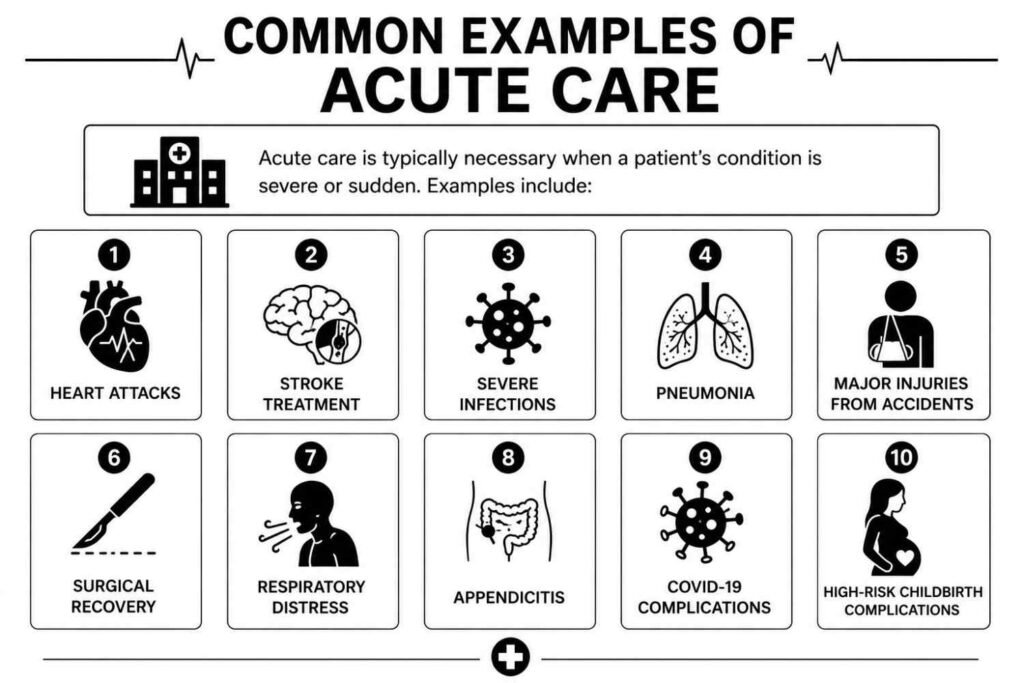
- Heart attacks
- Stroke treatment
- Severe infections
- Pneumonia
- Major injuries from accidents
- Surgical recovery
- Respiratory distress
- Appendicitis
- COVID-19 complications
- High-risk childbirth complications
Patients may receive care in:
- Emergency rooms
- Intensive care units (ICUs)
- Surgical units
- Trauma centers
- Specialized hospital departments
An Acute Care Clinic may also treat urgent but non-life-threatening conditions such as dehydration, fractures, infections, or severe flu symptoms.
Key Characteristics of Acute Care
| Feature | Acute Care |
|---|---|
| Purpose | Immediate treatment |
| Duration | Short-term |
| Severity | Serious or urgent conditions |
| Monitoring | Continuous medical supervision |
| Location | Hospitals, emergency rooms, trauma centers |
| Goal | Stabilize and treat the patient quickly |
What Is Non-Acute Care?
Definition of Non-Acute Care
Non-acute care includes healthcare services that are not considered emergencies or immediately life-threatening. These services focus on:
- Long-term recovery
- Chronic disease management
- Preventive care
- Rehabilitation
- Routine medical support
Unlike acute care, non-acute care is usually planned and ongoing rather than urgent.
Common Examples of Non-Acute Care
Non-acute care may include:
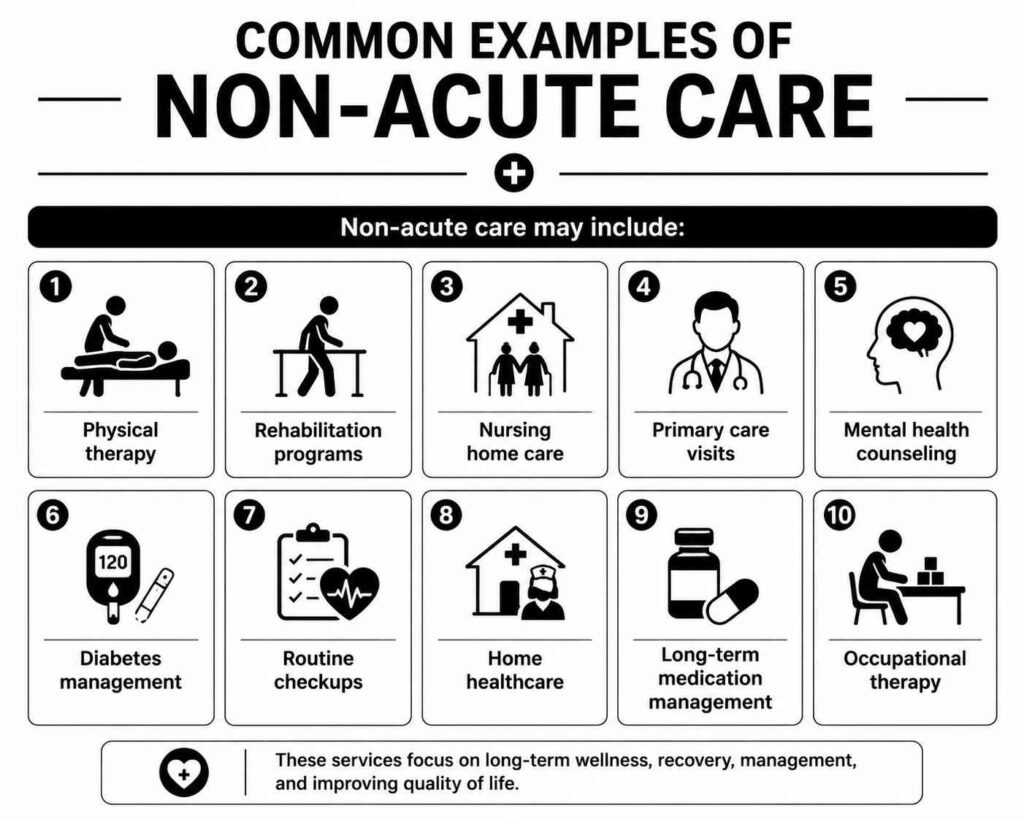
- Physical therapy
- Rehabilitation programs
- Nursing home care
- Primary care visits
- Mental health counseling
- Diabetes management
- Routine checkups
- Home healthcare
- Long-term medication management
- Occupational therapy
Patients often receive non-acute care after leaving an acute care hospital to continue recovery safely.
Key Characteristics of Non-Acute Care
| Feature | Non-Acute Care |
|---|---|
| Purpose | Long-term support and recovery |
| Duration | Ongoing or extended |
| Severity | Stable or non-emergency conditions |
| Monitoring | Periodic supervision |
| Location | Clinics, rehab centers, nursing facilities, home care |
| Goal | Improve quality of life and manage health |
Acute vs Non-Acute Care: Main Differences
1. Urgency of Treatment
The biggest difference is urgency.
- Acute care addresses immediate medical emergencies.
- Non-acute care focuses on stable conditions that do not require emergency intervention.
For example:
- A patient having a stroke needs acute care immediately.
- A patient recovering from that stroke may later need non-acute rehabilitation therapy.
2. Length of Care
Acute care is usually temporary and lasts until the patient stabilizes.
Non-acute care may continue for weeks, months, or even years depending on the condition.
3. Treatment Goals
Acute Care Goals
- Save lives
- Stabilize critical conditions
- Prevent complications
- Provide emergency intervention
Non-Acute Care Goals
- Improve long-term health
- Restore mobility and function
- Manage chronic conditions
- Prevent hospital readmissions
4. Healthcare Settings
Acute care commonly occurs in:
- Hospitals
- Emergency departments
- Trauma centers
- Intensive care units
Non-acute care is often delivered in:
- Rehabilitation centers
- Outpatient clinics
- Skilled nursing facilities
- Home healthcare settings
Types of Facilities That Provide Acute and Non-Acute Care
Acute Care Facilities
Acute Care Hospitals
An acute care hospital provides immediate and specialized medical treatment for severe conditions requiring rapid intervention.
Read More: What Is an Acute Care Hospital?
Services often include:
- Emergency medicine
- Surgery
- Intensive care
- Cardiac treatment
- Trauma care
Acute Care Clinics
An Acute Care Clinic typically treats urgent but less critical conditions that still require prompt medical attention.
Patients may visit for:
- Minor fractures
- Infections
- Severe flu symptoms
- Asthma flare-ups
- Dehydration
Non-Acute Care Facilities
Rehabilitation Centers
Help patients recover after surgery, stroke, or injury.
Skilled Nursing Facilities
Provide medical monitoring and assistance for patients needing long-term support.
Home Healthcare Services
Allow patients to receive treatment and therapy from home.
Primary Care Offices
Manage preventive care and chronic illnesses.
Why Both Types of Care Matter
Healthcare systems rely on both acute and non-acute services to deliver complete patient care.
Without acute care:
- Medical emergencies would become life-threatening.
Without non-acute care:
- Patients may experience poor recovery outcomes or repeated hospitalizations.
Together, they support the full patient journey, from emergency treatment to long-term recovery.
How Patients Transition From Acute to Non-Acute Care
Many patients move from acute care into non-acute care after stabilization.
Example Patient Journey
| Stage | Type of Care |
|---|---|
| Emergency heart attack treatment | Acute care |
| Hospital monitoring | Acute care |
| Cardiac rehabilitation | Non-acute care |
| Long-term medication management | Non-acute care |
This transition is important for reducing complications and improving long-term health outcomes.
When Should You Seek Acute Care?
You should seek acute care immediately if symptoms include:
- Chest pain
- Difficulty breathing
- Sudden confusion
- Severe bleeding
- Stroke symptoms
- Major injuries
- Loss of consciousness
- Severe allergic reactions
Delaying emergency treatment can lead to serious complications.
When Is Non-Acute Care Appropriate?
Non-acute care is appropriate when managing:
- Chronic illnesses
- Recovery after surgery
- Long-term rehabilitation
- Preventive healthcare
- Routine follow-up appointments
- Stable medical conditions
Patients often work closely with physicians, therapists, and care coordinators during this phase.
Benefits of Non-Acute Care
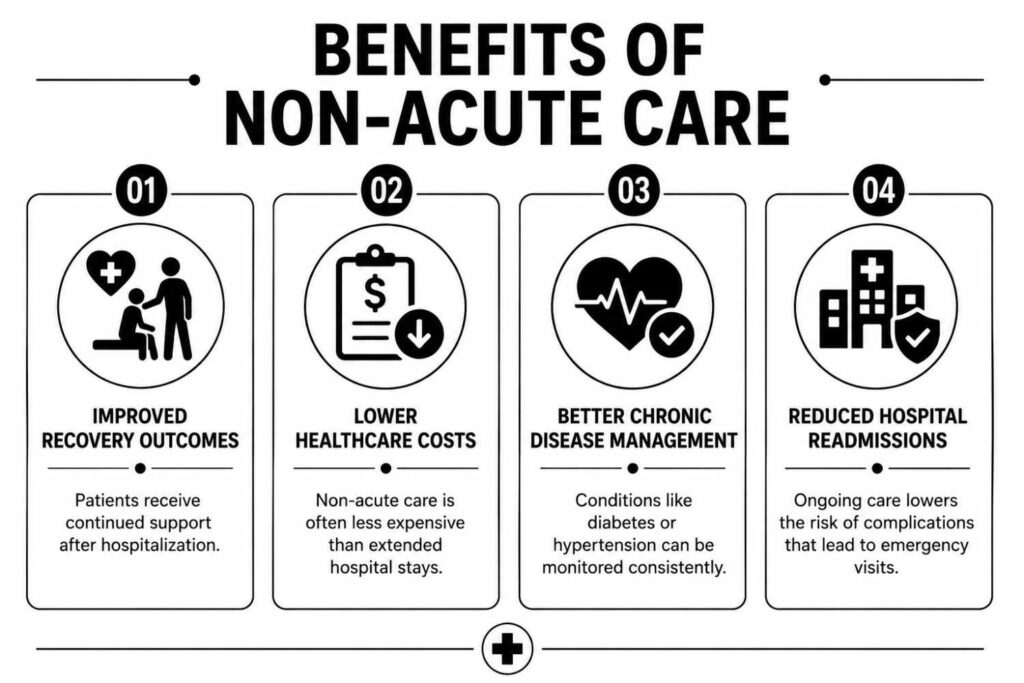
Improved Recovery Outcomes
Patients receive continued support after hospitalization.
Lower Healthcare Costs
Non-acute care is often less expensive than extended hospital stays.
Better Chronic Disease Management
Conditions like diabetes or hypertension can be monitored consistently.
Reduced Hospital Readmissions
Ongoing care lowers the risk of complications that lead to emergency visits.
The Growing Importance of Integrated Healthcare
Modern healthcare systems increasingly focus on coordinated care models that combine acute and non-acute services.
This integrated approach helps:
- Improve patient experiences
- Reduce healthcare costs
- Enhance treatment continuity
- Support better long-term outcomes
Hospitals, clinics, rehabilitation providers, and primary care physicians now work more closely together to ensure seamless transitions between care settings.
FAQs:
What is considered acute care?
Acute care refers to short-term medical treatment for severe, urgent, or emergency conditions requiring immediate attention and professional monitoring.
What is an example of non-acute care?
Examples include physical therapy, rehabilitation services, routine doctor visits, chronic disease management, and home healthcare.
Is urgent care considered acute care?
Yes, urgent care and an Acute Care Clinic may fall under acute care because they treat conditions requiring prompt medical attention, though they are generally less severe than emergency room cases.
How long does acute care usually last?
Acute care is typically short-term and continues until the patient’s condition stabilizes.
Can a patient move from acute care to non-acute care?
Yes. Many patients transition from acute hospital treatment into rehabilitation, skilled nursing, or home healthcare services.
What is the main goal of non-acute care?
The main goal is long-term recovery, chronic condition management, rehabilitation, and improving overall quality of life.
Final Thoughts
Understanding the difference between acute and non-acute care helps patients make informed healthcare decisions and better navigate treatment options.
Acute care focuses on urgent, short-term medical treatment for severe conditions, while non-acute care supports recovery, rehabilitation, preventive services, and long-term health management.
Both forms of care are essential parts of a complete healthcare system, ensuring patients receive the right treatment at every stage of their medical journey.
If you or a loved one needs prompt medical attention, OC Medical Wellness, led by Dr. Arturo Portales, is here to provide compassionate and reliable acute care services in Irvine, CA. From sudden illnesses to urgent health concerns, our experienced medical team is committed to delivering timely treatment focused on your recovery and well-being. Contact OC Medical Wellness today to schedule your visit and receive the quality care you deserve when it matters most.