
When illness strikes, timing can make the difference between a smooth recovery and serious complications. Acute care plays a critical role in this window by delivering rapid assessment, diagnosis, and treatment when patients need it most. Whether it’s a sudden infection, injury, or worsening chronic condition, timely medical attention can stop problems from escalating.
This article explains how acute care works, why it matters, and how it helps prevent complications using practical, real-world insights aligned with modern healthcare standards.
What Is Acute Care?
Acute care refers to short-term medical treatment for urgent or severe conditions that require prompt attention. It focuses on stabilizing patients, identifying the root cause, and initiating timely treatment.
Patients typically receive care in settings such as an an Acute care hospital, depending on how serious their condition is.
Read More: What Is Acute Care
Key Characteristics of Acute Care
- Rapid evaluation and triage
- Immediate medical intervention
- Advanced diagnostic support
- Short-term, outcome-focused treatment
Why Early Intervention Matters
Delays in treatment can allow minor health issues to evolve into serious complications. Acute care prevents this by addressing problems at their earliest and most treatable stage.
Common Risks of Delayed Care
| Condition | Potential Complication |
|---|---|
| Untreated infection | Sepsis |
| Minor injury | Chronic pain or mobility issues |
| Respiratory illness | Pneumonia |
| High blood pressure | Stroke or heart attack |
Early intervention significantly reduces these risks by stopping disease progression before it becomes severe.
How Acute Care Prevents Complications
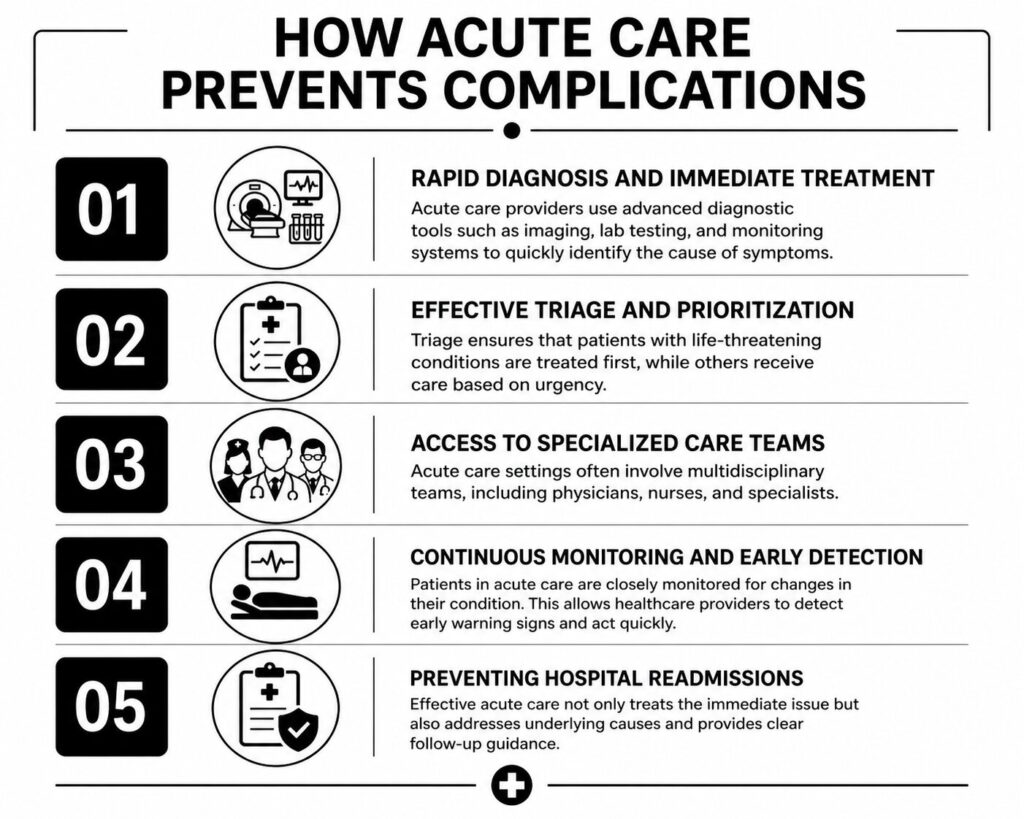
1. Rapid Diagnosis and Immediate Treatment
Acute care providers use advanced diagnostic tools such as imaging, lab testing, and monitoring systems to quickly identify the cause of symptoms.
Impact
- Faster treatment initiation
- Reduced risk of misdiagnosis
- Prevention of disease progression
2. Effective Triage and Prioritization
Triage ensures that patients with life-threatening conditions are treated first, while others receive care based on urgency.
Why it matters
- Critical cases are stabilized immediately
- Resources are used efficiently
- Delays that lead to complications are minimized
3. Access to Specialized Care Teams
Acute care settings often involve multidisciplinary teams, including physicians, nurses, and specialists.
Benefits
- Comprehensive treatment plans
- Better coordination of care
- Reduced likelihood of medical errors
4. Continuous Monitoring and Early Detection
Patients in acute care are closely monitored for changes in their condition. This allows healthcare providers to detect early warning signs and act quickly.
Example
Monitoring vital signs can reveal subtle deterioration before it becomes a major complication.
5. Preventing Hospital Readmissions
Effective acute care not only treats the immediate issue but also addresses underlying causes and provides clear follow-up guidance.
Strategies include
- Medication management
- Patient education
- Discharge planning and follow-ups
Read More: What to Expect in Acute Care Settings
Acute Care vs. Other Healthcare Services
Understanding where acute care fits helps patients make better healthcare decisions.
| Type of Care | Purpose | When to Use |
|---|---|---|
| Acute care | Immediate treatment | Sudden illness or injury |
| Primary care | Ongoing health management | Routine check-ups |
| Urgent care | Non-life-threatening issues | Minor injuries or infections |
| Emergency care | Life-threatening situations | Heart attack, stroke, trauma |
Real-World Example
A patient with flu-like symptoms seeks acute care instead of waiting. After evaluation and testing, clinicians diagnose early-stage pneumonia.
Outcome
- Immediate treatment begins
- Hospitalization is avoided
- Recovery is faster and smoother
Without timely intervention, the condition could have progressed into a severe respiratory complication.
When unexpected health issues come up, knowing where to go can save valuable time. Providers like OC Medical Wellness offer acute care in Irvine, helping patients get prompt medical attention without the hassle of long ER waits.
Best Practices for Acute Care Patients
To get the most benefit from acute care:
- Seek medical attention early when symptoms worsen
- Follow treatment plans as prescribed
- Ask about warning signs and follow-up steps
- Keep a record of medications and health history
Related: The Role of Acute Care in Modern Healthcare Systems
FAQs:
1. When should I seek acute care?
You should seek acute care if symptoms are sudden, severe, or getting worse, such as high fever, chest pain, or difficulty breathing.
2. Can acute care manage chronic conditions?
Yes, it can handle flare-ups of chronic conditions and prevent them from becoming serious.
3. Is acute care the same as emergency care?
Not exactly. Emergency care is for life-threatening situations, while acute care also includes urgent but non-life-threatening conditions.
4. How does acute care reduce complications?
By providing early diagnosis, immediate treatment, and continuous monitoring.
5. Do I need an appointment?
In most cases, no. Many acute care facilities accept walk-ins.
6. What happens after treatment?
Patients typically receive follow-up instructions to ensure full recovery and prevent recurrence.
Summary
Acute care is a vital part of healthcare that focuses on fast, effective treatment when it matters most. By enabling early diagnosis, prompt intervention, and continuous monitoring, it plays a key role in preventing complications from illness.
Get Expert Acute Care In Irvine
If you’re experiencing sudden or worsening symptoms, getting timely care can make all the difference. At OC Medical Wellness, we provide expert acute care treatment in Irvine with a focus on fast diagnosis, personalized care, and better outcomes. Reach out today to get the care you need, when you need it most.