
When a health issue suddenly becomes serious like chest pain, a high fever, or a bad injury, you need immediate medical help. That’s where acute care comes in.
Acute care is designed to treat urgent and severe conditions quickly, helping stabilize patients and prevent complications. In this patient-friendly guide, you’ll learn what acute care is, when to seek it, and what to expect.
What Is Acute Care?
Acute care refers to short-term medical care for illnesses or injuries that need immediate attention.
An Acute Care Hospital is equipped with emergency rooms, intensive care units, and specialized staff to handle serious health situations quickly and safely.
Simple Examples:
- A broken bone from an accident
- Severe chest pain or possible heart attack
- High fever that won’t go down
- Difficulty breathing
When Should You Go for Acute Care?
Knowing when to seek acute care can make a big difference.
Go to acute care if you experience:
- Sudden or severe pain
- Chest pain or pressure
- Trouble breathing
- Uncontrolled bleeding
- Head injuries or loss of consciousness
- Signs of stroke (slurred speech, weakness on one side)
If symptoms feel life-threatening, don’t wait, seek emergency care immediately.
Read More: What to Expect in Acute Care Settings
What Happens During Acute Care Treatment?
Understanding the process can help reduce stress during a medical emergency.
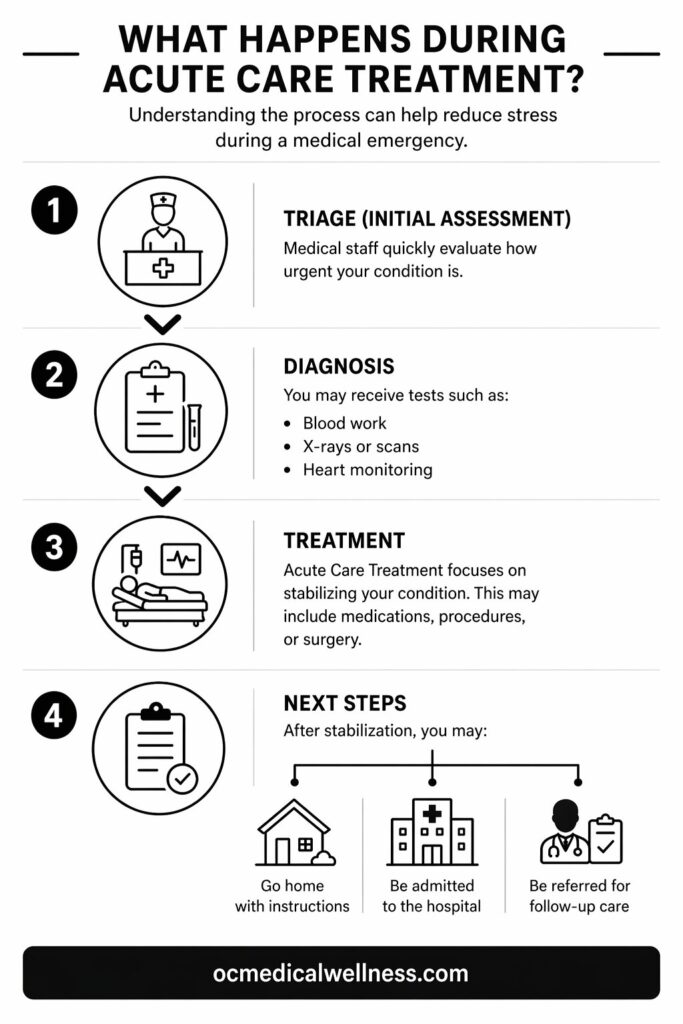
Step-by-Step Process:
- Triage (Initial Assessment)
Medical staff quickly evaluate how urgent your condition is. - Diagnosis
You may receive tests such as:- Blood work
- X-rays or scans
- Heart monitoring
- Treatment
Acute Care Treatment focuses on stabilizing your condition. This may include medications, procedures, or surgery. - Next Steps
After stabilization, you may:- Go home with instructions
- Be admitted to the hospital
- Be referred for follow-up care
Acute Care vs Urgent Care vs Primary Care
It’s easy to confuse different types of care. Here’s a simple breakdown:
| Type of Care | When to Use It | Example |
|---|---|---|
| Acute Care | Serious or life-threatening conditions | Heart attack, severe injury |
| Urgent Care | Non-life-threatening but needs quick care | Minor fractures, infections |
| Primary Care | Routine checkups and ongoing care | Annual exams, chronic conditions |
Why Acute Care Is Important for Patients
Acute care plays a critical role in protecting your health.
Key Benefits:
- Fast response during emergencies
- Access to specialists and advanced equipment
- Prevents complications by treating issues early
- Saves lives in critical situations
What Happens After Acute Care?
Your care doesn’t end after the emergency is treated.
Aftercare May Include:
- Follow-up visits with your doctor
- Medications or lifestyle recommendations
- Physical therapy or rehabilitation
- Monitoring for recovery
Tips for Patients and Families
Being prepared can make emergencies less overwhelming.
- Keep a list of medications and allergies
- Know your nearest hospital
- Don’t ignore serious symptoms
- Ask questions about your treatment and next steps
- Bring a family member or friend if possible
FAQs
1. What is acute care in simple terms?
Acute care is immediate medical treatment for serious illnesses or injuries that need urgent attention.
2. Is acute care the same as emergency care?
Emergency care is a type of acute care focused on life-threatening situations, but acute care also includes other serious short-term treatments.
3. How long do patients stay in acute care?
Most stays are short-term ranging from a few hours to a few days, depending on the condition.
4. Do I need a referral for acute care?
No, you can go directly to an emergency department without a referral.
5. What should I bring to the hospital?
Bring identification, insurance details (if available), medication lists, and emergency contact information.
6. What happens after I leave acute care?
You may need follow-up care, medications, or rehabilitation depending on your condition.
Conclusion
Acute care is a vital part of healthcare that ensures you receive immediate help when you need it most. Whether it’s a sudden illness or a serious injury, knowing when and how to seek acute care can protect your health and even save your life.
If you or a loved one is facing a sudden illness or injury, don’t wait. OC Medical Wellness provides Acute Care Treatment in Irvine, CA, delivering fast, reliable, and patient-focused care when it matters most.
Our experienced team is here to assess your condition quickly, provide the right treatment, and guide you through every step of recovery.
Walk in or contact OC Medical Wellness today to receive prompt, professional care and get back to feeling your best.