
Hormone Replacement Therapy (HRT) is often not recommended for women who have had breast cancer, especially if the cancer was estrogen-receptor positive (ER-positive). This is because HRT contains estrogen or progesterone, which may stimulate cancer cells and increase the risk of recurrence.
However, there are several safe and effective alternatives to HRT that can help manage menopause symptoms such as hot flashes, vaginal dryness, sleep problems, and mood changes.
Related: Does HRT Bloating Go Away?
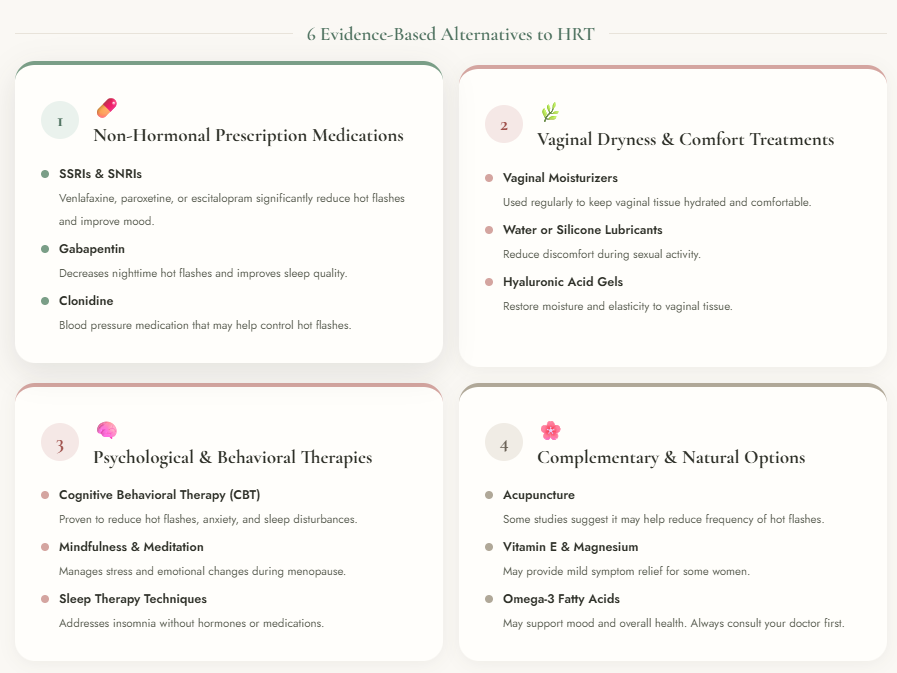
1. Non-Hormonal Prescription Medications
Doctors frequently prescribe non-hormonal medications to reduce menopausal symptoms without increasing hormone levels.
Common options include:
- SSRIs and SNRIs (antidepressants) – Low doses of medications like venlafaxine, paroxetine, or escitalopram can significantly reduce hot flashes and improve mood.
- Gabapentin – Originally used for nerve pain and seizures, it can help decrease nighttime hot flashes and improve sleep.
- Clonidine – A blood pressure medication that may help some women control hot flashes.
These medications are widely used for breast cancer survivors who cannot take estrogen therapy.
2. Treatments for Vaginal Dryness and Painful Sex
Many women experience vaginal dryness, irritation, or painful intercourse after breast cancer treatment due to low estrogen levels.
Safer alternatives include:
- Vaginal moisturizers – Used regularly to keep vaginal tissue hydrated.
- Water-based or silicone lubricants – Used during sexual activity to reduce discomfort.
- Hyaluronic acid vaginal gels – Help restore moisture and elasticity.
In certain cases, doctors may consider low-dose vaginal estrogen, but this decision is made carefully with input from an oncologist.
3. Lifestyle Changes That Reduce Menopause Symptoms
Lifestyle adjustments can naturally improve symptoms and overall health after breast cancer.
Helpful strategies include:
- Regular physical activity – Exercise can reduce hot flashes, improve mood, and boost energy.
- Maintaining a healthy weight – Excess body fat can worsen menopausal symptoms.
- Avoiding hot flash triggers such as caffeine, alcohol, and spicy foods.
- Keeping the bedroom cool and wearing breathable fabrics to reduce night sweats.
Simple lifestyle changes often make a significant difference in symptom control.
4. Psychological and Behavioral Therapies
Some non-medical approaches can help women manage menopause symptoms effectively.
Examples include:
- Cognitive Behavioral Therapy (CBT) – Proven to reduce the impact of hot flashes, anxiety, and sleep disturbances.
- Mindfulness and meditation – Help manage stress and emotional changes during menopause.
- Sleep therapy techniques – Useful for women experiencing insomnia.
These approaches are especially beneficial because they do not involve hormones or medications.
5. Complementary and Natural Options
Some women explore complementary therapies, though scientific evidence varies.
Possible options include:
- Acupuncture – Some studies suggest it may help reduce hot flashes.
- Vitamin E or magnesium supplements – May provide mild symptom relief for some women.
- Omega-3 fatty acids – May support mood and overall health.
Always consult your doctor before taking supplements, as some herbal products can interact with cancer treatments.
6. Work With a Breast Cancer or Menopause Specialist
Every woman’s situation is different. The best alternative to HRT depends on factors such as:
- Type of breast cancer
- Current medications
- Age and menopause stage
- Severity of symptoms
- Overall health history
A menopause specialist, oncologist, or gynecologist can create a treatment plan tailored to your needs.
Related: How Long Should You Take Hormone Replacement Therapy (HRT)?
Key Takeaway:
If you cannot take hormone replacement therapy after breast cancer, effective alternatives include non-hormonal medications, vaginal moisturizers and lubricants, lifestyle changes, psychological therapies, and certain complementary treatments. Always discuss options with your healthcare provider to choose the safest and most effective approach for your situation.
If you’re looking for safe and effective hormone replacement therapy in Irvine, CA, OC Medical Wellness can help. Our experienced team provides personalized care to manage menopause symptoms and support your overall well-being. Schedule a consultation today to find the right treatment plan for you.