Hormone replacement therapy (HRT) may be necessary when your body is no longer producing adequate levels of key hormones such as estrogen, progesterone, or testosterone. This most commonly occurs during menopause, perimenopause, or andropause, but hormonal imbalances can happen at other stages of life as well.
Below is a clear breakdown to help you understand when HRT might be needed.
Early Warning Signs of Hormonal Imbalance
Hormone-related symptoms often start gradually. Many people ignore them or assume they are simply aging. However, persistent symptoms may indicate an underlying imbalance.
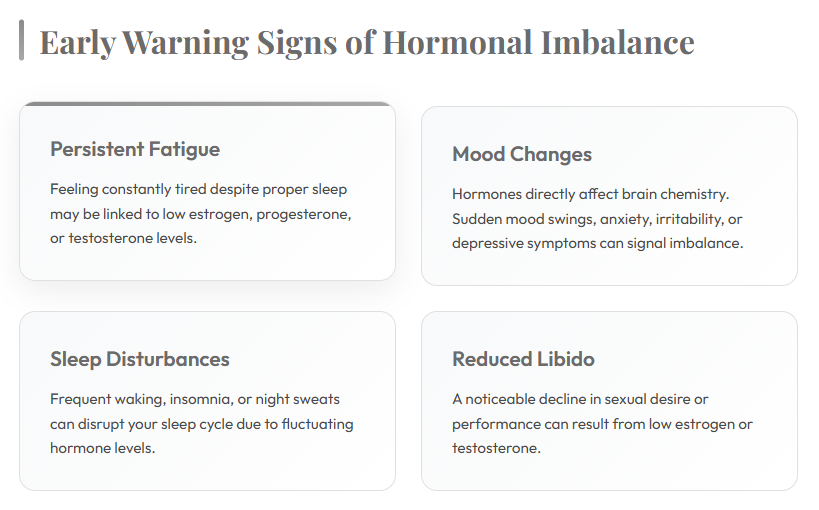
1. Persistent Fatigue
Feeling constantly tired despite proper sleep may be linked to low estrogen, progesterone, or testosterone levels.
2. Mood Changes or Depression
Hormones directly affect brain chemistry. Sudden mood swings, anxiety, irritability, or depressive symptoms can signal imbalance.
3. Sleep Disturbances
Frequent waking, insomnia, or night sweats can disrupt your sleep cycle due to fluctuating hormone levels.
4. Reduced Libido
A noticeable decline in sexual desire or performance can result from low estrogen or testosterone.
Signs in Women (Menopause & Perimenopause)
Women are most commonly prescribed HRT during menopause.
Common Symptoms:
- Hot flashes
- Night sweats
- Vaginal dryness
- Pain during intercourse
- Irregular or missed periods
- Brain fog or memory lapses
- Weight gain, especially around the abdomen
- Thinning hair or dry skin
When estrogen levels drop, these symptoms may become more frequent and intense.
Signs in Men (Low Testosterone / Andropause)
Men can also experience hormonal decline, often called “low T.”
Common Symptoms:
- Low energy levels
- Decreased muscle mass
- Increased body fat
- Erectile dysfunction
- Reduced motivation
- Difficulty concentrating
- Irritability
Blood testing is essential to confirm testosterone deficiency before treatment.
Physical Health Changes That May Indicate HRT Is Needed
Hormonal imbalance doesn’t only affect mood and energy it can impact long-term health.
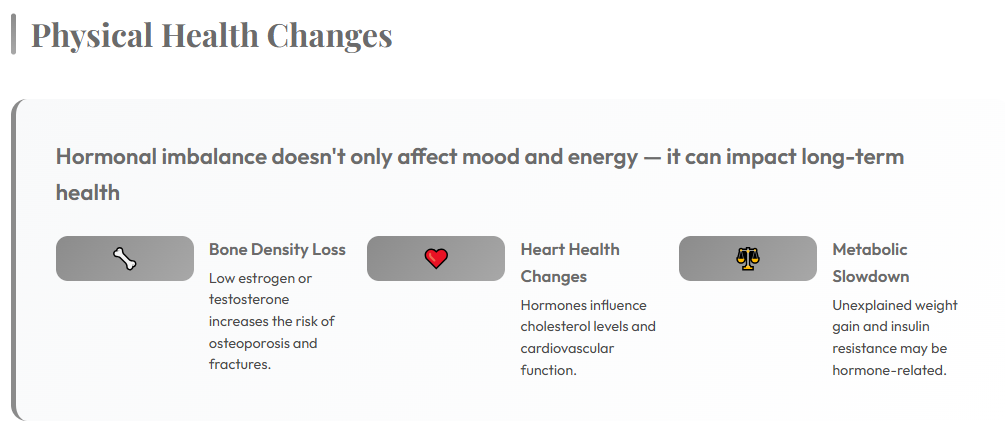
Bone Density Loss
Low estrogen or testosterone increases the risk of osteoporosis and fractures.
Heart Health Changes
Hormones influence cholesterol levels and cardiovascular function.
Metabolic Slowdown
Unexplained weight gain and insulin resistance may be hormone-related.
When Should You Consider Hormone Replacement Therapy?
You should speak with a healthcare provider about HRT if:
- Symptoms interfere with your quality of life
- Lifestyle changes have not improved your condition
- Lab testing confirms hormonal deficiency
- You are entering menopause or experiencing andropause symptoms
HRT should always be personalized. Factors such as age, medical history, cancer risk, and cardiovascular health must be evaluated before starting therapy.
How Is Hormone Replacement Therapy Administered?
Treatment options may include:
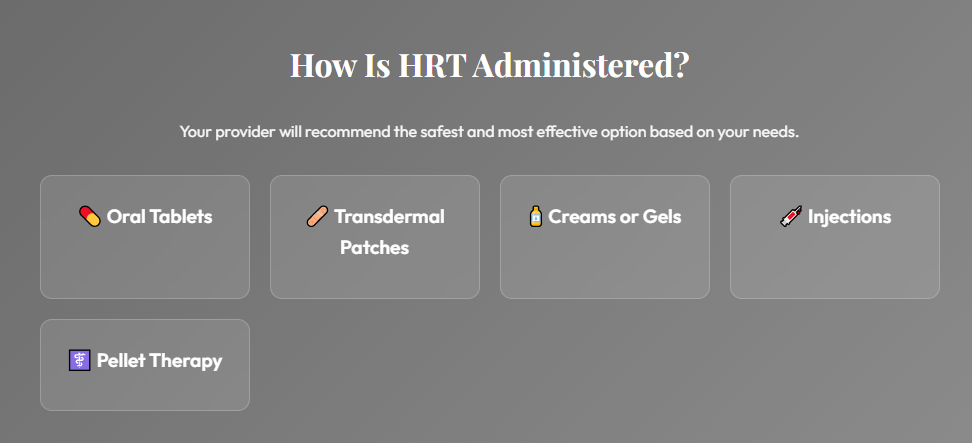
- Oral tablets
- Transdermal patches
- Creams or gels
- Injections
- Pellet therapy
Your provider will recommend the safest and most effective option based on your needs.
Is Hormone Replacement Therapy Safe?
For many patients, modern, bioidentical hormone therapy is safe when monitored by a qualified provider. Regular follow-ups and lab testing are essential to ensure proper dosage and minimize risks.
However, HRT may not be recommended for individuals with:
- A history of certain cancers
- Blood clot disorders
- Uncontrolled heart disease
- Severe liver disease
A full medical consultation is required before starting therapy.
Final Takeaway
You may need hormone replacement therapy if you are experiencing ongoing fatigue, mood changes, hot flashes, low libido, cognitive issues, or unexplained physical changes especially during menopause or andropause.
The most accurate way to determine if HRT is right for you is through professional evaluation and hormone testing.
If you’re experiencing symptoms of hormonal imbalance and want expert guidance, OC Medical Wellness, led by Dr. Arturo Portales, provides personalized hormone replacement therapy in Irvine, CA.
Their team begins with comprehensive lab testing and a thorough medical evaluation to create a treatment plan tailored specifically to your body and health goals.
Schedule your consultation today to better understand your hormone levels, explore safe and effective treatment options, and start feeling balanced, energized, and confident again.