No, birth control is not hormone replacement therapy (HRT).
Both contain hormones, but they serve completely different medical purposes.
- Birth control prevents pregnancy.
- Hormone replacement therapy replaces hormones the body is no longer producing adequately.
Understanding the Difference in Simple Terms
Many people confuse these treatments because both involve estrogen and progesterone hormones. However, the intent, dosage, and patient needs are different.
Think of it this way:
- Birth control = Hormone regulation to stop ovulation
- HRT = Hormone restoration to support body function
What Is Birth Control?
Birth control (hormonal contraception) is primarily used during the reproductive years.
Main Goals:
- Prevent ovulation
- Avoid pregnancy
- Control menstrual cycles
- Reduce acne or heavy periods
Common Types:
- Oral contraceptive pills
- Hormonal patches
- Vaginal rings
- Hormonal IUDs
- Birth control injections
How It Works
Birth control delivers synthetic hormones that override the body’s natural reproductive cycle, preventing the ovaries from releasing an egg.
The body still produces hormones — they are simply being controlled.
What Is Hormone Replacement Therapy (HRT)?
Hormone Replacement Therapy is commonly prescribed during perimenopause or menopause, when natural hormone production declines.
Main Goals:
- Replace lost estrogen and/or progesterone
- Relieve menopause symptoms
- Improve quality of life
- Protect bone and heart health in appropriate patients
Symptoms HRT Helps Treat:
- Hot flashes
- Night sweats
- Mood swings
- Sleep disturbances
- Vaginal dryness
- Brain fog
- Low energy
How It Works
HRT provides hormones in physiologic replacement doses, meaning it restores levels closer to what the body naturally produced before menopause.
The goal is balance, not fertility control.
Key Medical Differences
| Factor | Birth Control | Hormone Replacement Therapy |
|---|---|---|
| Purpose | Prevent pregnancy | Replace declining hormones |
| Life Stage | Reproductive years | Perimenopause & menopause |
| Hormone Effect | Suppresses ovulation | Restores hormone levels |
| Hormone Dose | Higher synthetic control | Lower replacement dosing |
| Fertility Impact | Prevents pregnancy | Does not function as contraception |
Why Some Doctors Prescribe Birth Control for Hormone Symptoms
Sometimes healthcare providers prescribe birth control pills for:
- PCOS
- Irregular periods
- Severe PMS
- Perimenopause symptom control (younger patients)
This does not mean birth control becomes HRT.
It simply means hormones are being used for cycle regulation, not hormone replacement.
Can Birth Control Act Like HRT?
Not exactly.
While birth control may reduce symptoms like hot flashes or irregular bleeding in younger women, it:
- Uses different hormone types
- Uses higher suppression doses
- Is designed for contraception first
True HRT is tailored specifically to age-related hormone decline.
When Someone Typically Transitions From Birth Control to HRT
Many women move from birth control to HRT when:
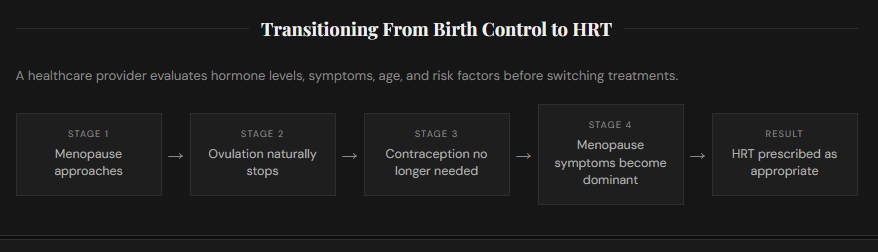
- Menopause approaches
- Ovulation naturally stops
- Contraception is no longer needed
- Menopause symptoms become dominant
A healthcare provider evaluates hormone levels, symptoms, age, and risk factors before switching treatments.
Summary
Birth control is not hormone replacement therapy.
Birth control uses hormones to prevent ovulation and pregnancy, while hormone replacement therapy restores declining hormones to treat menopause or hormonal imbalance symptoms. Although both involve estrogen and progesterone, their medical goals and hormone dosing are different.
If you’re experiencing symptoms of hormonal imbalance or menopause, the team at OC Medical Wellness offers personalized Hormone Replacement Therapy in Irvine, CA. Their providers take time to evaluate your symptoms, medical history, and long-term health goals to create a treatment plan tailored specifically to you.
Schedule a consultation today to learn whether hormone replacement therapy is the right step toward restoring your energy, balance, and overall well-being.