
Hormonal changes can affect your energy, mood, metabolism, sexual health, sleep, and overall quality of life. If you’ve been researching treatment options, you’ve likely come across the terms HRT vs TRT. While these therapies are often mentioned together, they are not the same and serve different purposes.
Hormone Replacement Therapy (HRT) is a broader term that refers to replacing one or more hormones that the body no longer produces in adequate amounts. Testosterone Replacement Therapy (TRT) is a specific type of hormone therapy focused solely on restoring testosterone levels, primarily in men with clinically diagnosed testosterone deficiency.
This guide explains the differences between HRT and TRT, who may benefit from each, their potential benefits, risks, and how to determine the most appropriate treatment with the guidance of a qualified healthcare provider.
What Is Hormone Replacement Therapy (HRT)?
Hormone Replacement Therapy (HRT) is a medical treatment designed to restore hormonal balance when natural hormone production declines due to aging, menopause, or certain medical conditions.
Depending on the patient’s needs, HRT may include:
- Estrogen
- Progesterone
- Testosterone
- Combination hormone therapy
- Bioidentical hormone therapy (when appropriate)
HRT is commonly associated with women experiencing menopause, but hormone replacement can also benefit men and women with diagnosed hormone deficiencies.
Common Reasons for HRT
- Menopause
- Perimenopause
- Surgical menopause
- Hormonal imbalance
- Low estrogen
- Low progesterone
- Low testosterone (in selected patients)
- Certain endocrine disorders
What Is Testosterone Replacement Therapy (TRT)?
Testosterone Replacement Therapy (TRT) is a specialized treatment that focuses exclusively on increasing testosterone levels in individuals with clinically confirmed testosterone deficiency.
TRT is most commonly prescribed for men with low testosterone (Low T), although carefully selected women with documented testosterone deficiency may also benefit from low-dose testosterone therapy under specialist supervision.
Symptoms of Low Testosterone
- Fatigue
- Reduced muscle mass
- Low libido
- Erectile dysfunction
- Difficulty concentrating
- Mood changes
- Increased body fat
- Poor exercise recovery
- Reduced motivation
Before starting TRT, physicians typically confirm low testosterone through blood testing, symptom evaluation, and a comprehensive medical assessment.
HRT vs TRT: What’s the Difference?
| Feature | Hormone Replacement Therapy (HRT) | Testosterone Replacement Therapy (TRT) |
|---|---|---|
| Purpose | Restores multiple hormone deficiencies | Restores testosterone only |
| Common Patients | Women and men | Primarily men |
| Hormones Used | Estrogen, progesterone, testosterone, others | Testosterone |
| Primary Goal | Overall hormonal balance | Improve testosterone deficiency |
| Typical Conditions | Menopause, perimenopause, hormone imbalance | Low testosterone (Hypogonadism) |
| Individualized Treatment | Yes | Yes |
Simply put, TRT is one form of HRT, but not all HRT involves testosterone replacement.
Benefits of Hormone Replacement Therapy
When prescribed appropriately, HRT may help improve many symptoms related to hormonal imbalance.
Potential benefits include:
- Better energy levels
- Improved sleep quality
- Reduced hot flashes and night sweats
- Enhanced mood
- Better cognitive function
- Improved bone health
- Increased libido
- Healthier skin
- Improved overall quality of life
Treatment plans should always be individualized based on symptoms, medical history, hormone testing, and treatment goals.
Benefits of Testosterone Replacement Therapy
For men diagnosed with testosterone deficiency, TRT may provide meaningful improvements in daily functioning.
Potential benefits include:
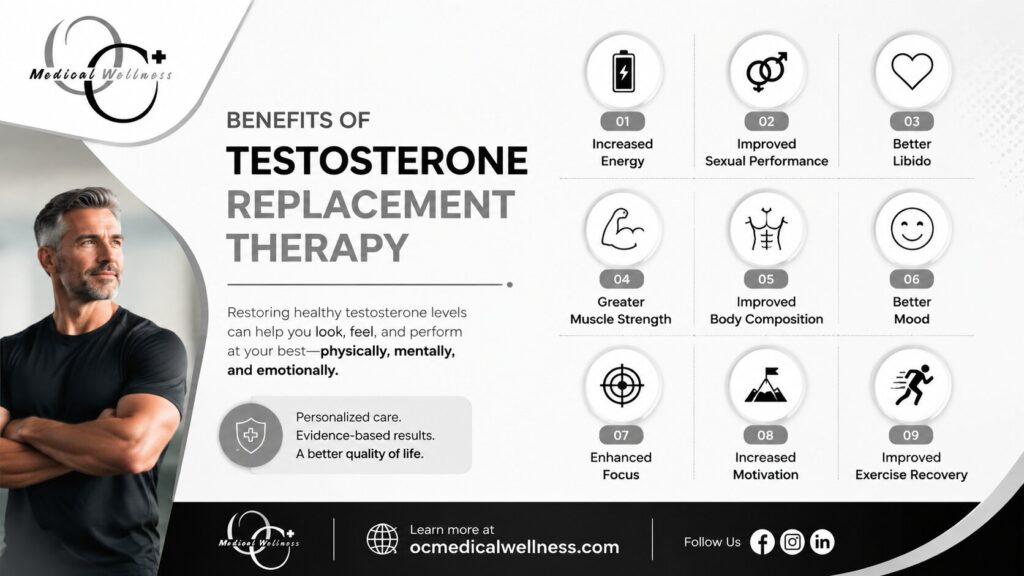
- Increased energy
- Improved sexual performance
- Better libido
- Greater muscle strength
- Improved body composition
- Better mood
- Enhanced focus
- Increased motivation
- Improved exercise recovery
Results vary by individual and typically develop gradually over several weeks to months under medical supervision.
Who Is a Good Candidate?
HRT May Be Appropriate For:
- Women experiencing menopause
- Women with severe menopausal symptoms
- Individuals with documented hormone deficiencies
- Patients with hormone imbalance confirmed through laboratory testing
TRT May Be Appropriate For:
- Men with persistent symptoms of low testosterone
- Men with laboratory-confirmed testosterone deficiency
- Patients whose symptoms cannot be explained by another medical condition
Self-diagnosing hormone imbalance can be misleading. Many symptoms overlap with thyroid disorders, sleep apnea, stress, depression, and nutritional deficiencies. A comprehensive medical evaluation is essential before beginning treatment.
Are There Risks?
Like any medical treatment, both HRT and TRT carry potential risks and should only be prescribed after evaluating the individual’s health history.
Possible considerations include:
- Changes in blood cell counts
- Acne or oily skin (TRT)
- Fluid retention
- Breast tenderness (certain HRT regimens)
- Fertility considerations
- Cardiovascular risk assessment
- Regular laboratory monitoring
Routine follow-up appointments and blood work help ensure treatment remains safe and effective.
HRT vs TRT: Which One Is Right for You?
The right therapy depends entirely on the underlying cause of your symptoms.
You may benefit from Hormone Replacement Therapy if your symptoms are related to menopause, perimenopause, or multiple hormone deficiencies.
You may benefit from Testosterone Replacement Therapy if testing confirms low testosterone as the primary cause of your symptoms.
Rather than choosing a treatment based on symptoms alone, experienced providers evaluate:
- Medical history
- Current symptoms
- Hormone laboratory results
- Lifestyle factors
- Existing medical conditions
- Long-term health goals
A personalized treatment plan offers the best opportunity for safe, effective hormone optimization.
Key Takeaways
- HRT is a broad treatment approach that replaces one or more hormones.
- TRT specifically replaces testosterone.
- TRT is considered one type of Hormone Replacement Therapy.
- Hormone testing is essential before treatment begins.
- Personalized care produces better outcomes than one-size-fits-all hormone therapy.
- Ongoing monitoring helps maximize benefits while minimizing potential risks.
FAQs
Is TRT the same as HRT?
No. TRT is a specific form of Hormone Replacement Therapy that focuses only on testosterone replacement.
Can women receive testosterone therapy?
In select cases, women with carefully evaluated testosterone deficiency may benefit from low-dose testosterone therapy under the supervision of an experienced healthcare provider.
Which treatment is better: HRT or TRT?
Neither treatment is universally better. The appropriate option depends on your symptoms, hormone levels, medical history, and diagnosis.
How do doctors determine if I need HRT or TRT?
Your provider will review your symptoms, perform a physical examination, evaluate your medical history, and order laboratory tests to assess hormone levels before recommending treatment.
How long does it take to notice results?
Many patients begin noticing improvements within several weeks, although full benefits may take several months depending on the therapy and individual response.
Conclusion
Understanding HRT vs TRT is the first step toward making informed decisions about your hormonal health. While both therapies aim to improve well-being, they address different hormonal needs and should always be guided by comprehensive testing and individualized medical care.
If you’re experiencing persistent fatigue, low libido, mood changes, menopause symptoms, or other signs of hormonal imbalance, consult a qualified healthcare provider for a thorough evaluation rather than relying on self-diagnosis.
Hormone Replacement Therapy in Irvine, CA
If you’re looking for personalized Hormone Replacement Therapy in Irvine, CA, OC Medical Wellness provides comprehensive hormone evaluations and customized treatment plans tailored to your unique health needs. Our experienced team focuses on restoring hormonal balance through evidence-based care, ongoing monitoring, and individualized treatment designed to help you feel your best. Contact OC Medical Wellness today to schedule your consultation and learn whether Hormone Replacement Therapy is right for you.