
Hormonal treatments play a major role in women’s health, but birth control and hormone replacement therapy (HRT) are often confused or used interchangeably when they serve very different purposes. If you’re trying to manage symptoms like irregular periods, hot flashes, acne, or mood changes, understanding the difference between birth control vs hormone replacement therapy is essential for making the right medical decision.
This guide breaks down the key differences, benefits, risks, and ideal use cases for each option using clear, evidence-based insights to help you choose confidently.
What Is Birth Control?
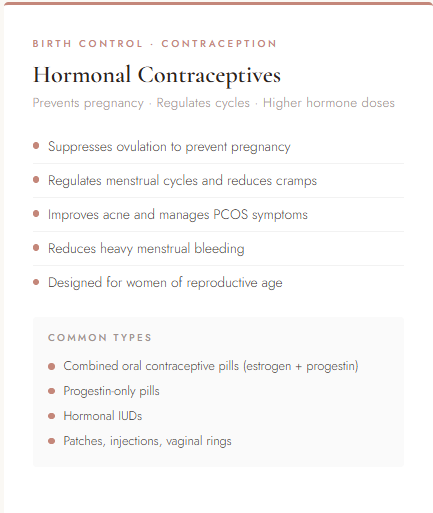
Birth control, also known as hormonal contraception, is primarily used to prevent pregnancy, but it also offers several secondary health benefits.
Common Types of Birth Control
- Combined oral contraceptive pills (estrogen + progestin)
- Progestin-only pills
- Hormonal IUDs
- Birth control patches, injections, and vaginal rings
How Birth Control Works
Birth control suppresses ovulation and stabilizes hormone levels to prevent pregnancy. The hormone doses are higher than HRT and designed for women of reproductive age.
Common Benefits
- Pregnancy prevention
- Regulation of menstrual cycles
- Reduced menstrual cramps and heavy bleeding
- Acne improvement
- Management of PCOS symptoms
Who It’s Typically For
- Teens and women of reproductive age
- Individuals needing contraception
- Patients with cycle-related hormonal conditions
What Is Hormone Replacement Therapy (HRT)?
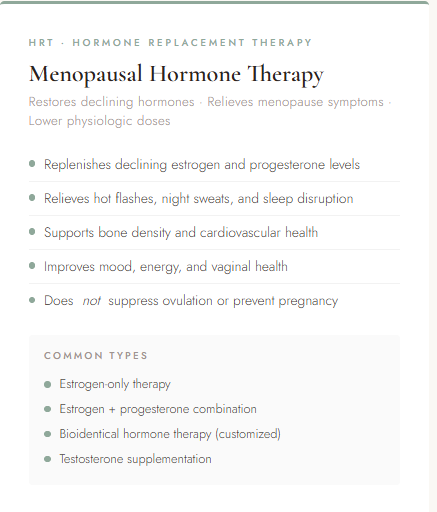
Hormone Replacement Therapy (HRT) is used to restore declining hormone levels, most commonly during perimenopause and menopause.
Types of HRT
- Estrogen-only therapy
- Estrogen + progesterone therapy
- Bioidentical hormone therapy (customized dosing)
How HRT Works
HRT replenishes estrogen (and sometimes progesterone or testosterone) to relieve symptoms caused by hormonal decline not to suppress ovulation.
Common Benefits
- Relief from hot flashes and night sweats
- Improved sleep and mood
- Vaginal dryness relief
- Bone density support
- Improved quality of life during menopause
Who It’s Typically For
- Women in perimenopause or menopause
- Patients with estrogen deficiency symptoms
- Individuals no longer needing contraception
Birth Control vs Hormone Replacement Therapy: Side-by-Side Comparison
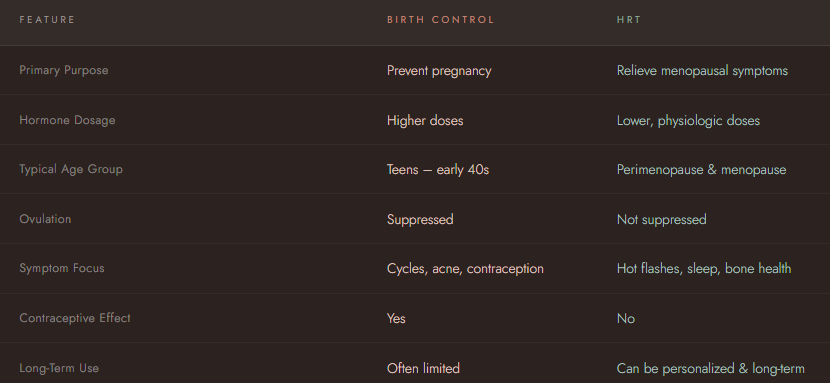
| Feature | Birth Control | Hormone Replacement Therapy |
|---|---|---|
| Primary Purpose | Prevent pregnancy | Relieve menopausal symptoms |
| Hormone Dosage | Higher | Lower, physiologic |
| Typical Age Group | Reproductive age | Perimenopause & menopause |
| Ovulation | Suppressed | Not suppressed |
| Symptom Focus | Cycles, acne, contraception | Hot flashes, sleep, bone health |
| Long-Term Use | Often limited | Can be personalized and long-term |
Can Birth Control Be Used Instead of HRT?
In early perimenopause, some clinicians may temporarily prescribe low-dose birth control to manage:
- Irregular periods
- Hormonal fluctuations
- Heavy bleeding
However, birth control is not a substitute for HRT in menopause. As estrogen levels continue to decline, the higher hormone doses in birth control may increase unnecessary risk without addressing menopausal physiology appropriately.
Safety, Risks, and Medical Oversight
Both treatments are regulated and prescribed under medical guidelines established by organizations like the U.S. Food and Drug Administration.
Potential Risks (Varies by Individual)
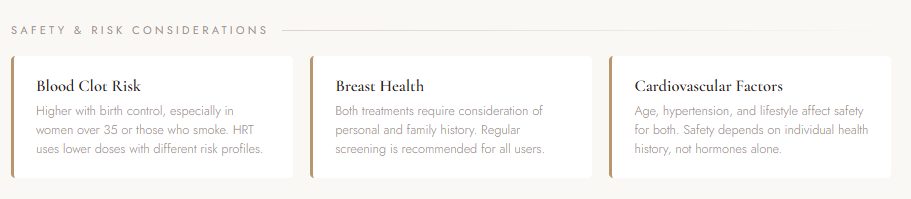
- Blood clot risk (higher with birth control, especially over age 35)
- Breast health considerations
- Cardiovascular factors
- Family and personal medical history
Key takeaway: The safest option depends on age, symptoms, health history, and goals—not just hormone levels.
How to Choose the Right Option
You may be a better candidate for birth control if you:
- Need pregnancy prevention
- Are under 40 with regular cycles
- Have PCOS or acne-related hormone concerns
You may benefit more from HRT if you:
- Are in perimenopause or menopause
- Experience hot flashes, sleep issues, or vaginal dryness
- No longer need contraception
A personalized hormone evaluation is critical before deciding.
Frequently Asked Questions
1. Is birth control the same as hormone replacement therapy?
No. Birth control prevents pregnancy using higher hormone doses, while HRT restores declining hormones to relieve menopausal symptoms.
2. Can I take HRT if I still have periods?
Yes. Many women begin HRT during perimenopause while still menstruating, under medical guidance.
3. Is birth control safer than HRT?
Safety depends on age, dosage, and health history. Birth control may carry higher clot risk in older women, while HRT uses lower, physiologic doses.
4. Does HRT prevent pregnancy?
No. HRT does not suppress ovulation and should not be used as contraception.
5. Can I switch from birth control to HRT?
Yes, many women transition from birth control to HRT as they approach menopause—ideally with hormone testing and medical supervision.
Summary:
While both treatments involve hormones, birth control and hormone replacement therapy serve entirely different purposes. Birth control is designed for contraception and cycle control, while HRT focuses on restoring hormonal balance and improving quality of life during menopause.
If you’re experiencing symptoms related to hormonal changes, OC Medical Wellness offers personalized Hormone Replacement Therapy in Irvine, CA, guided by medical expertise and individualized care. Schedule a consultation today to discuss your symptoms, review your hormone levels, and explore a treatment plan designed to support long-term balance and well-being.