
Stem cell therapy is reshaping how modern medicine approaches pain management and tissue repair. As a form of regenerative medicine, it focuses on supporting the body’s natural healing processes rather than masking symptoms with medications or invasive surgery.
Below, we break down what stem cells are, how treatment works, and the top 10 benefits of stem cell therapy, especially for individuals seeking long-term pain relief and improved function.
Related: What Is Stem Cell Therapy? Definition, How It Works & Real Uses
What Are Stem Cells?
Stem cells are unique human cells capable of developing into many different cell types. Often referred to as “master cells,” they can either replicate themselves or transform into specialized cells that perform specific functions in the body.
Depending on how they are used, stem cells may support the repair of tissues such as:
- Bone
- Muscle
- Cartilage
- Nerves
- Blood
Common Sources of Stem Cells
| Source | Description |
|---|---|
| Embryonic Stem Cells | Derived from embryos that are 3–5 days old |
| Adult Stem Cells | Harvested from bone marrow or adipose (fat) tissue |
| Induced Pluripotent Stem Cells (iPSCs) | Adult cells reprogrammed to behave like embryonic stem cells |
In clinical pain management settings, adult stem cells are most commonly used due to safety, ethical considerations, and reduced risk of rejection.
Is Stem Cell Therapy Safe for Pain Management?
Stem cell therapy for pain management is widely regarded as minimally invasive and non-surgical. Because many treatments use cells derived from the patient’s own body, the risk of allergic reaction or rejection is typically low.
Key safety advantages include:
- No reliance on opioids
- No major incisions
- Reduced recovery time compared to surgery
That said, outcomes vary by condition, technique, and individual health factors. Stem cell therapy should always be performed by qualified medical professionals following evidence-based protocols.
How Does Stem Cell Treatment Work?
While protocols may differ, stem cell treatment generally follows these steps:
- Cell Collection – Stem cells are harvested from bone marrow or adipose tissue.
- Processing & Concentration – The sample is placed in a centrifuge to isolate and concentrate regenerative components.
- Targeted Injection – The concentrated cells are injected directly into the affected area using imaging guidance such as ultrasound or fluoroscopy.
Specialized vs. Unspecialized Stem Cells
- Unspecialized stem cells may support general tissue repair and inflammation modulation.
- Specialized stem cells are prepared to assist specific tissues, such as cartilage, muscle, or nerve structures.
Why Stem Cell Therapy Is Considered the Future of Modern Medicine
Stem cell therapy represents a shift from symptom-based care to regenerative medicine, which aims to restore tissue health and function.
Research continues to explore its potential applications in:
- Orthopedic injuries
- Degenerative joint conditions
- Sports-related trauma
- Certain neurological and cardiovascular conditions
While still an evolving field, stem cell therapy shows promise in helping patients manage pain and improve quality of life with fewer long-term side effects.
10 Key Benefits of Stem Cell Treatment
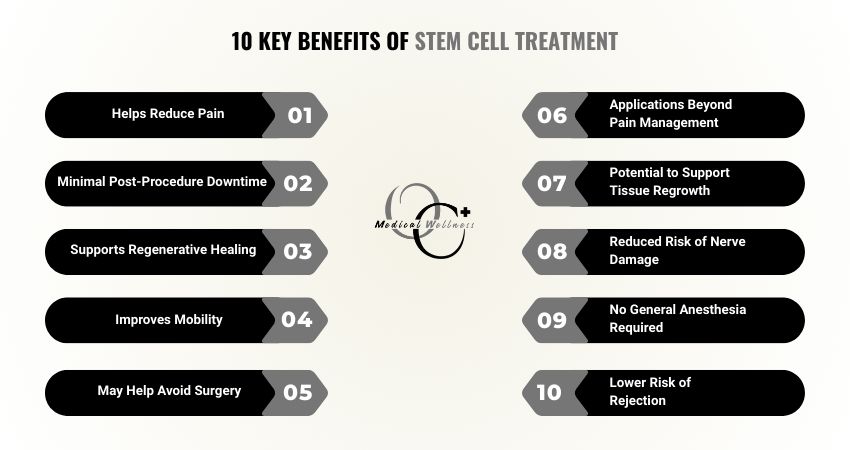
1. Helps Reduce Pain and Inflammation
Stem cells may help regulate inflammation and support tissue repair, which can lead to meaningful pain reduction over time.
2. Minimal Post-Procedure Downtime
Unlike traditional surgery, stem cell treatments often involve shorter recovery periods, allowing patients to return to daily activities sooner.
3. Supports Regenerative Healing
Rather than masking symptoms, stem cell therapy aims to address underlying tissue damage and support natural healing mechanisms.
4. Improves Mobility and Range of Motion
Many patients report improved joint flexibility, strength, and functional movement following treatment.
5. May Help Avoid Surgery
For some conditions, stem cell therapy may be explored as a non-surgical option before considering invasive procedures.
6. Applications Beyond Pain Management
Stem cells are also being studied for use in:
- Cardiovascular conditions
- Neurodegenerative disorders
- Autoimmune diseases
- Metabolic disorders such as diabetes
Related: Benefits of Stem Cell Therapy: Why Patients Are Choosing Regenerative Medicine
7. Potential to Support Tissue Regrowth
In certain cases, stem cells may assist the body in repairing damaged tissues, which can be especially valuable after injuries or trauma.
8. Reduced Risk of Nerve Damage
Because injections are targeted and image-guided, surrounding nerves are less likely to be affected compared to surgical intervention.
9. No General Anesthesia Required
Stem cell procedures are typically performed using local anesthesia, reducing risks associated with general anesthesia.
10. Lower Risk of Rejection
Using the patient’s own cells significantly reduces the likelihood of immune rejection or adverse reactions.
Related: What Not to Do After Stem Cell Treatment? (Guide)
FAQs:
Is stem cell therapy FDA-approved?
Some stem cell procedures are FDA-compliant, while others are considered investigational. Always consult a licensed provider who follows regulatory guidelines.
How long do stem cell treatment results last?
Results vary by condition and individual health. Some patients experience improvement within weeks, while others see gradual benefits over months.
Is stem cell therapy painful?
Discomfort is typically minimal and short-lived, often limited to the injection or harvesting site.
Who is a good candidate for stem cell therapy?
Candidates often include individuals with joint pain, soft tissue injuries, or degenerative conditions who wish to avoid surgery.
Are there risks associated with stem cell treatment?
When performed correctly, risks are generally low but may include temporary soreness, swelling, or infection at the injection site.
Final Thoughts:
Stem cell therapy offers a promising, patient-centered approach to pain management and healing. By leveraging the body’s natural regenerative abilities, it may help reduce pain, restore function, and minimize the need for invasive procedures or long-term medication use.
While research is ongoing, stem cell treatment continues to gain attention as a potential cornerstone of modern regenerative medicine. Consultation with a qualified medical professional is essential to determine whether this therapy aligns with your condition and health goals.
The Best Stem Cell Treatment in Irvine, CA
Before undergoing stem cell therapy, it’s essential to receive a thorough medical evaluation. At OC Medical Wellness, Dr. Arturo Portales carefully assesses each patient’s condition, medical history, and extent of injury to determine whether regenerative medicine through stem cell treatment is an appropriate option.
Dr. Portales utilizes advanced, evidence-based technology to help deliver precise and personalized care. Our clinic follows strict medical protocols and FDA minimal manipulation guidelines, using biologic material derived from the patient’s own body whenever appropriate.
Stem cell therapy may be considered for a variety of conditions, including pain management, joint degeneration, and soft tissue injuries. A personalized consultation ensures that treatment recommendations are safe, realistic, and aligned with your health goals.
Contact OC Medical Wellness today to learn more about advanced stem cell therapy and other regenerative medicine treatments.
Call +17144426642 to schedule your consultation with Dr. Arturo Portales.