
Low libido, a persistent drop in interest in sex, is one of the most common concerns patients bring to a doctor, yet one of the least discussed. At OC Medical Wellness in Irvine, CA, low libido is treated as a medical symptom with identifiable, often correctable causes, not as something patients simply have to accept. For men and women across Orange County, a reduced sex drive frequently traces back to hormonal shifts, chronic stress, sleep disruption, medication side effects, or an underlying health condition.
This guide walks through what low libido actually is, why it happens in both men and women, and what evidence-based treatment paths, from hormone testing to Testosterone Replacement Therapy, typically look like.
What Is Low Libido?
Low libido means a noticeable, ongoing decrease in sexual desire compared to what’s typical for that person, not a single off week, but a pattern that lasts weeks or months and causes personal or relationship distress. It’s distinct from erectile dysfunction in men or vaginal dryness in women, though the three often overlap. Libido is regulated by a mix of hormones (testosterone, estrogen, progesterone), brain chemistry, physical health, and psychological factors, so a drop in desire can stem from any one of these systems, or several at once.
How Common Is Low Libido, and Who Does It Affect?
Low sex drive is far more widespread than most people assume. According to Cleveland Clinic, low libido affects up to 1 in 5 men and an even larger share of women at some point in life</cite>. It isn’t limited to older adults, either, younger patients dealing with high stress, sleep debt, or medication side effects report it too, though hormonal decline becomes a more common driver after the mid-30s in men and around perimenopause in women.
Common Causes of Low Libido in Men
Men in Orange County most often come to OC Medical Wellness with low libido connected to one or more of the following:
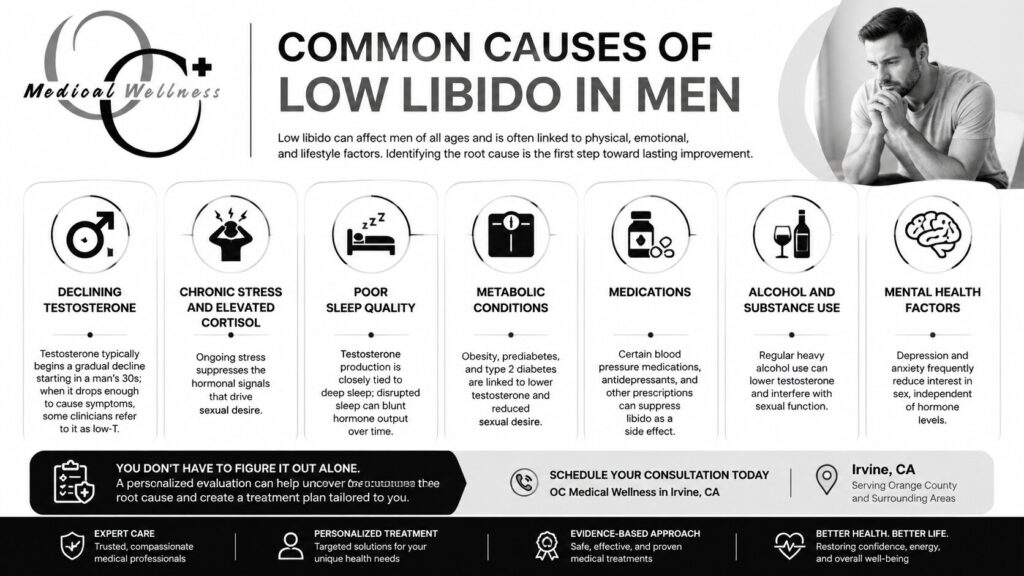
- Declining testosterone — Testosterone typically begins a gradual decline starting in a man’s 30s; when it drops enough to cause symptoms, some clinicians refer to it as low-T.
- Chronic stress and elevated cortisol — Ongoing stress suppresses the hormonal signals that drive sexual desire.
- Poor sleep quality — Testosterone production is closely tied to deep sleep; disrupted sleep can blunt hormone output over time.
- Metabolic conditions — Obesity, prediabetes, and type 2 diabetes are linked to lower testosterone and reduced sexual desire.
- Medications — Certain blood pressure medications, antidepressants, and other prescriptions can suppress libido as a side effect.
- Alcohol and substance use — Regular heavy alcohol use can lower testosterone and interfere with sexual function.
- Mental health factors — Depression and anxiety frequently reduce interest in sex, independent of hormone levels.
Common Causes of Low Libido in Women
For women, the picture is often more layered. Per Mayo Clinic, a satisfying sex life is achievable and worth discussing with a healthcare provider, and because sexual desire is closely tied to emotional intimacy, a lack of closeness with a partner is one of the most common contributors to low libido</cite>. Beyond relationship and emotional factors, physical and hormonal causes are common:
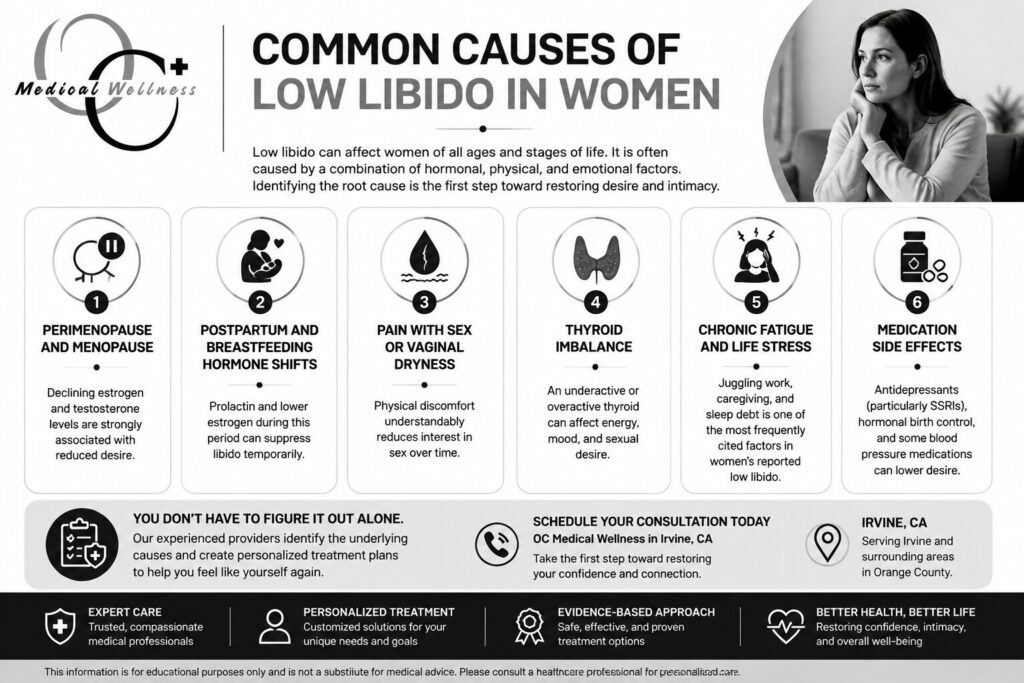
- Perimenopause and menopause — Declining estrogen and testosterone levels are strongly associated with reduced desire.
- Postpartum and breastfeeding hormone shifts — Prolactin and lower estrogen during this period can suppress libido temporarily.
- Pain with sex or vaginal dryness — Physical discomfort understandably reduces interest in sex over time.
- Thyroid imbalance — An underactive or overactive thyroid can affect energy, mood, and sexual desire.
- Chronic fatigue and life stress — Juggling work, caregiving, and sleep debt is one of the most frequently cited factors in women’s reported low libido.
- Medication side effects — Antidepressants (particularly SSRIs), hormonal birth control, and some blood pressure medications can lower desire.
Symptoms That Often Accompany Low Libido
Low libido rarely shows up alone. Patients frequently also notice:
- Persistent fatigue or low energy, especially by midday
- Difficulty achieving or maintaining arousal
- Mood changes, including irritability or low motivation
- Sleep disturbances or waking unrefreshed
- In women, vaginal dryness or discomfort during sex
- In men, reduced morning erections or difficulty with erectile function
- Unexplained weight gain or loss of muscle tone
If several of these symptoms are present together, it’s a signal worth bringing to a physician rather than addressing sex drive in isolation.
How Is Low Libido Diagnosed?
A proper evaluation goes beyond a single conversation. At OC Medical Wellness, working up low libido generally includes:
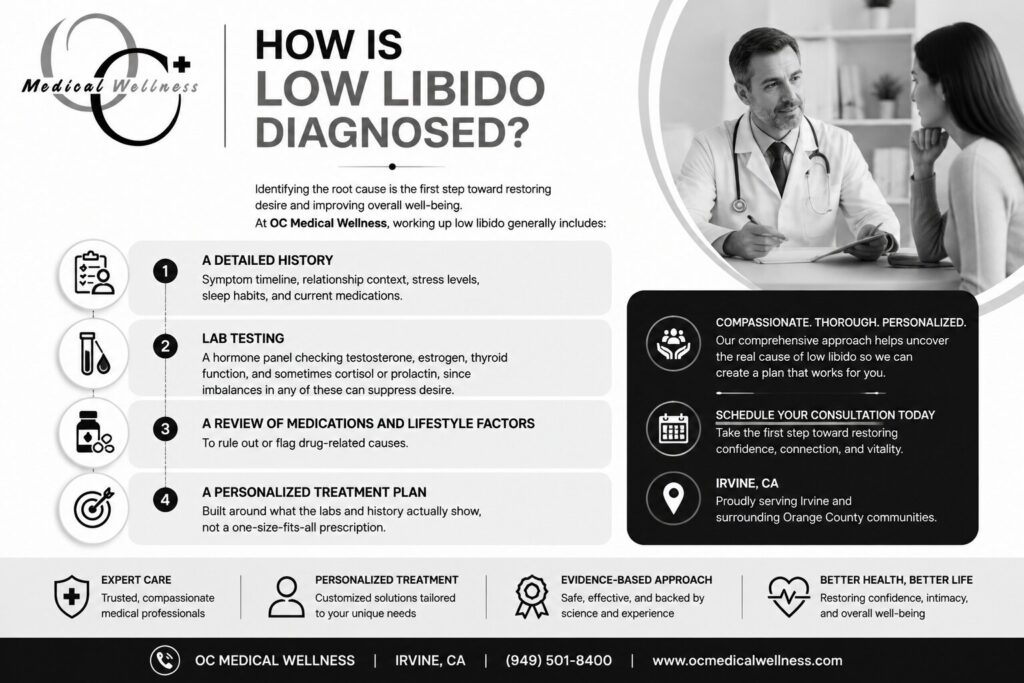
- A detailed history — symptom timeline, relationship context, stress levels, sleep habits, and current medications.
- Lab testing — a hormone panel checking testosterone, estrogen, thyroid function, and sometimes cortisol or prolactin, since imbalances in any of these can suppress desire.
- A review of medications and lifestyle factors — to rule out or flag drug-related causes.
- A personalized treatment plan — built around what the labs and history actually show, not a one-size-fits-all prescription.
Is Low Libido a Sign of Low Testosterone?
In men, low libido combined with fatigue, reduced muscle mass, or difficulty concentrating is one of the classic symptom clusters of low testosterone, but testosterone should be confirmed with bloodwork rather than assumed from symptoms alone. Testosterone naturally declines with age, and lifestyle factors like poor sleep, high stress, and excess body fat can accelerate that decline. When lab results confirm low levels alongside symptoms, Testosterone Replacement Therapy (TRT) is one option a physician may discuss, under ongoing monitoring.
Treatment Options for Low Libido
There isn’t a single fix for low libido, because it doesn’t have a single cause. Depending on what the evaluation uncovers, treatment options may include:
- Hormone replacement therapy — For men or women with confirmed hormonal deficiencies, restoring testosterone, estrogen, or thyroid hormones to an optimal range can meaningfully improve desire. OC Medical Wellness offers a range of hormone replacement therapy options tailored to lab results and symptoms.
- Addressing underlying conditions — Treating thyroid disorders, prediabetes, or depression often improves libido as a secondary benefit.
- Medication review — A physician may adjust or switch a medication that’s known to suppress sex drive.
- Lifestyle and functional medicine support — Sleep optimization, stress management, and nutrition changes can meaningfully move the needle, especially when combined with medical care through a broader functional medicine approach.
- Counseling or sex therapy — When relationship dynamics or psychological factors are the primary driver, therapy is often the most effective path.
Does Hormone Therapy Always Fix Low Libido?
No, and any reputable clinic should say so clearly. Hormone therapy tends to help most when lab testing confirms an actual deficiency; it’s less likely to resolve libido issues rooted primarily in relationship stress, unmanaged depression, or medication side effects. This is why an accurate diagnosis matters more than jumping straight to treatment.
When to See a Doctor About Low Libido
Consider scheduling an evaluation if low sex drive has lasted more than a few months, is causing distress for you or a partner, or is accompanied by other symptoms like fatigue, weight changes, or mood shifts. Low libido is common, but “common” doesn’t mean it has to be permanent or ignored.
FAQ Section
Q: What causes low libido in men and women?
A: Low libido usually stems from hormonal changes (like declining testosterone or estrogen), chronic stress, poor sleep, certain medications, or underlying health conditions such as thyroid disorders or depression. In many cases, more than one factor is involved.
Q: Is low libido a sign of low testosterone?
A: It can be. Low testosterone often causes reduced sex drive alongside fatigue, reduced muscle mass, and difficulty concentrating, but a blood test is needed to confirm testosterone levels before assuming that’s the cause.
Q: Can stress really lower sex drive?
A: Yes. Chronic stress raises cortisol, which can suppress the hormones that drive sexual desire, and it also affects sleep and mood, both of which independently influence libido.
Q: Does hormone replacement therapy help with low libido?
A: For men and women with a confirmed hormone deficiency, hormone replacement therapy can improve sexual desire. It’s most effective when guided by lab testing rather than used as a general assumption-based treatment.
Q: When should I see a doctor about low libido?
A: If reduced sex drive has lasted more than a couple of months, is causing distress, or comes with other symptoms like fatigue or mood changes, it’s worth scheduling an evaluation rather than waiting it out.