
When a health issue comes up, one of the most common questions people face is where to go for care. Should you head to an emergency setting or schedule a visit with your regular doctor? Understanding the difference between acute care and primary care helps you make the right decision quickly and confidently.
Both play an important role in the healthcare system, but they are designed for very different situations. Knowing when to use each can improve outcomes, reduce costs, and prevent unnecessary stress.
What Is Acute Care
Acute care focuses on short term medical treatment for sudden and often serious conditions. It is designed to address urgent health issues that require immediate attention and quick intervention.
You typically receive acute care in settings such as emergency rooms, urgent care centers, or hospital units.
Read More: What Is Acute Care?
Common situations that require acute care
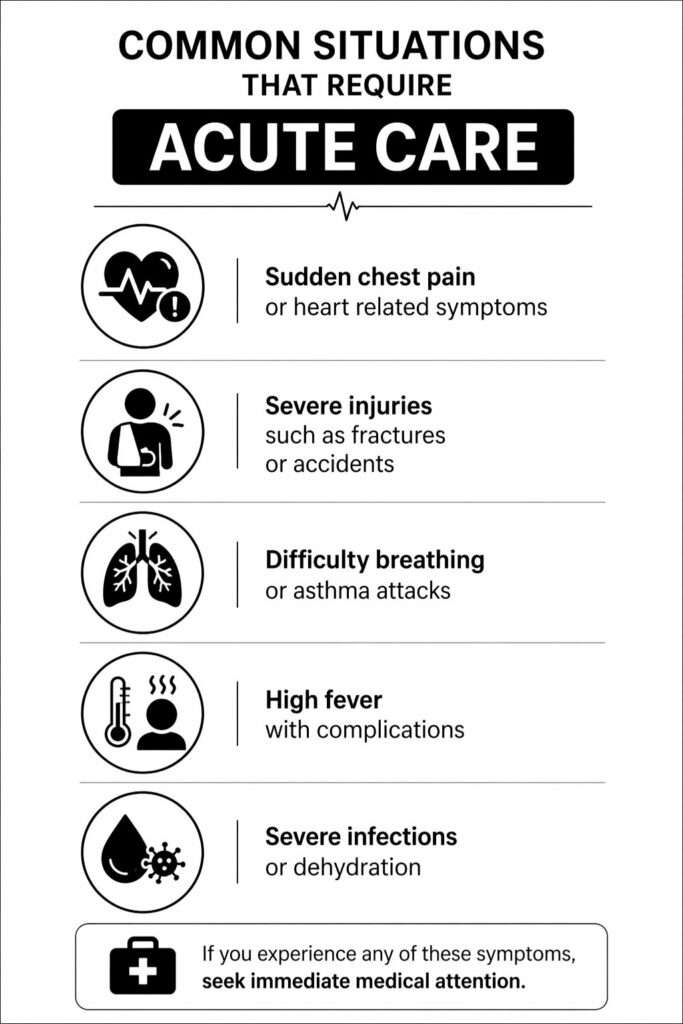
- Sudden chest pain or heart related symptoms
- Severe injuries such as fractures or accidents
- Difficulty breathing or asthma attacks
- High fever with complications
- Severe infections or dehydration
Key features of acute care
- Immediate and time sensitive care
- Short duration of treatment
- Focus on stabilizing the condition
- Often involves specialized equipment and medical teams
What Is Primary Care
Primary care is the foundation of long term health management. It focuses on prevention, routine checkups, and ongoing care for common medical concerns.
Primary care providers build lasting relationships with patients and guide them through different stages of health and wellness.
Services included in primary care
- Annual physical exams and routine checkups
- Preventive screenings and vaccinations
- Management of chronic conditions like diabetes or high blood pressure
- Treatment for minor illnesses such as colds or infections
- Health advice and lifestyle counseling
Key features of primary care
- Long term and continuous care
- Preventive and holistic approach
- Personalized treatment plans
- Coordination with specialists when needed
Acute Care vs Primary Care Comparison
| Aspect | Acute Care | Primary Care |
|---|---|---|
| Purpose | Immediate treatment of urgent conditions | Ongoing health maintenance |
| Duration | Short term | Long term |
| Condition severity | Severe or sudden | Mild to moderate and preventive |
| Care setting | Emergency rooms and hospitals | Clinics and doctor offices |
| Patient relationship | One time or occasional | Continuous and long term |
| Focus | Stabilization and recovery | Prevention and overall wellness |
When to Choose Acute Care
Acute care is the right choice when symptoms are serious, sudden, or life threatening.
Seek immediate care if you have
- Chest pain or pressure
- Sudden weakness or numbness
- Severe bleeding or injury
- Loss of consciousness
- Breathing difficulties
In these situations, quick medical attention is critical and can prevent complications.
When to Choose Primary Care
Primary care is best for non emergency health needs and routine medical care.
Visit a primary care provider for
- Regular health checkups
- Ongoing management of chronic conditions
- Mild symptoms like cough or fatigue
- Preventive screenings and vaccines
- Referrals to specialists
Primary care helps detect health issues early and keeps your overall health on track.
How Acute Care and Primary Care Work Together
Acute care and primary care are closely connected. While they serve different purposes, they support each other in maintaining overall health.
For example, a person managing high blood pressure through regular primary care visits may still need acute care if a sudden complication occurs. After the urgent issue is treated, primary care continues the long term management.
This coordination ensures better recovery, continuity of care, and improved health outcomes.
Why It Is Important to Know the Difference
Understanding the difference between acute care and primary care helps you make better healthcare decisions.
- You avoid unnecessary emergency visits
- You save on medical costs
- You receive the right level of care faster
- You improve long term health outcomes
Using the right type of care at the right time makes the healthcare system more effective for everyone.
FAQs:
What is the main difference between acute care and primary care?
Acute care is for immediate treatment of serious conditions, while primary care focuses on long term health and prevention.
Can a primary care doctor treat urgent conditions?
Primary care doctors can treat minor urgent issues, but severe or life threatening conditions require acute care services.
Is urgent care part of acute care?
Yes, urgent care is a form of acute care that handles non life threatening but immediate medical needs.
Do you need an appointment for acute care?
No, acute care settings like emergency rooms and urgent care centers usually accept walk in patients.
Which type of care is more cost effective?
Primary care is generally more cost effective because it emphasizes prevention and early treatment.
Final Thoughts
Acute care and primary care are both essential, but they serve different roles. Acute care is there when you need immediate help, while primary care supports your health over time.
Choosing the right option based on your situation ensures you get timely care and better results.
OC Medical Wellness is here when you need care most. Whether it is primary care for long term health or guidance on when acute care is necessary, our team is ready to help you make the right choice. Reach out today and let us guide you toward the care that fits your needs.