
When a sudden illness or injury happens, waiting for a routine doctor’s appointment is not an option. This is where acute care plays a critical role in the healthcare system.
Acute care refers to short-term, immediate medical treatment for patients with severe or urgent health conditions. It focuses on stabilizing symptoms, preventing complications, and providing fast medical intervention when every moment matters.
In this guide, you’ll learn what acute care is, what conditions it treats, how it differs from other healthcare services, and when you should seek it.
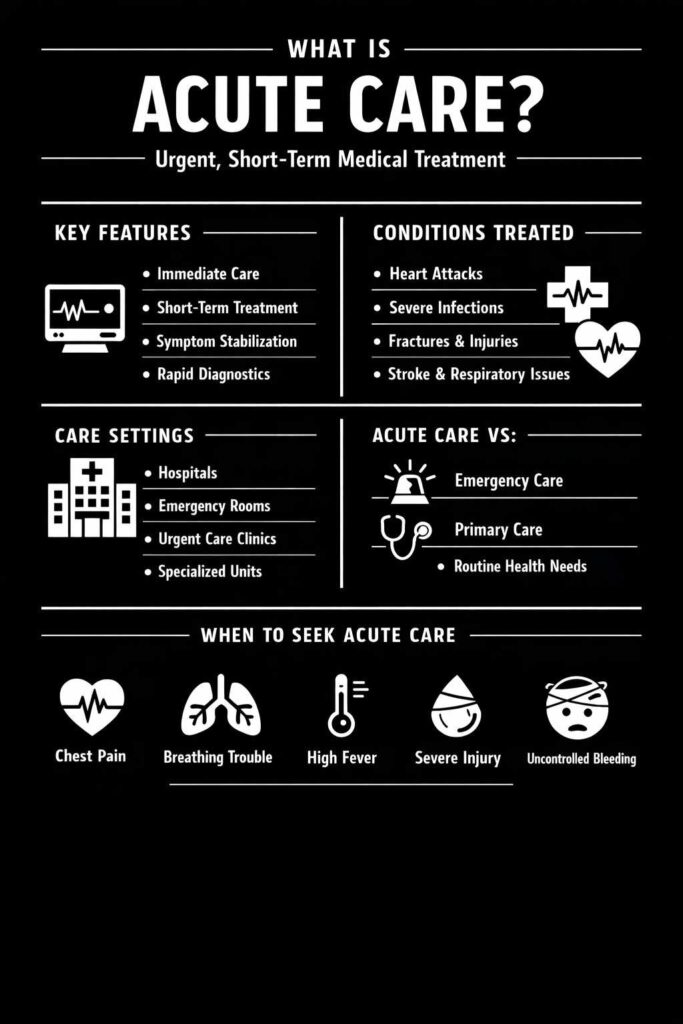
What Is Acute Care?
Acute care is a specialized branch of healthcare designed to treat sudden, severe, or short-term medical conditions that require immediate attention.
It is typically provided in settings such as:
- Hospitals
- Emergency departments
- Urgent care centers
- Specialized acute care units
The primary goal is to stabilize the patient quickly, manage symptoms, and either discharge them or transition them to longer-term care if needed.
Read More: Acute Care vs Primary Care
Key Characteristics of Acute Care
Acute care is defined by its urgency and intensity. The main characteristics include:
- Immediate medical attention
- Short-term treatment duration
- Focus on stabilization, not long-term management
- Multidisciplinary medical teams
- Advanced diagnostic tools and monitoring
What Conditions Are Treated in Acute Care?
Acute care handles a wide range of urgent and serious medical issues. These may include:
Common Medical Conditions
- Severe infections (pneumonia, sepsis)
- Asthma attacks or respiratory distress
- Heart attacks or chest pain
- Stroke symptoms
- Severe dehydration
Injury-Related Conditions
- Fractures and broken bones
- Deep cuts or trauma injuries
- Burns
- Accidents requiring immediate intervention
Other Acute Conditions
- Sudden severe abdominal pain
- High fever in children or adults
- Allergic reactions (anaphylaxis)
- Uncontrolled pain or symptoms
Acute Care vs Emergency Care vs Primary Care
Understanding the difference helps patients choose the right level of care.
| Type of Care | Purpose | When to Use It | Duration |
|---|---|---|---|
| Acute Care | Treat urgent, severe conditions | Sudden illness or injury | Short-term |
| Emergency Care | Life-threatening situations | Heart attack, stroke, major trauma | Immediate |
| Primary Care | Routine health management | Checkups, mild illness | Long-term |
While emergency care handles the most critical situations, acute care bridges the gap between emergency and routine healthcare.
Where Is Acute Care Provided?
Acute care services are delivered in several healthcare settings:
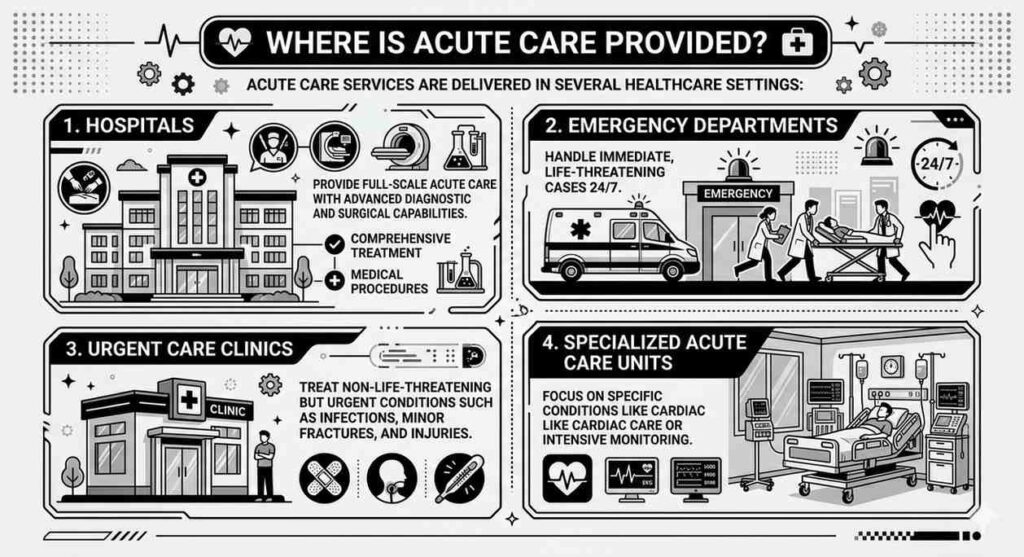
1. Hospitals
Provide full-scale acute care with advanced diagnostic and surgical capabilities.
2. Emergency Departments
Handle immediate, life-threatening cases 24/7.
3. Urgent Care Clinics
Treat non-life-threatening but urgent conditions such as infections, minor fractures, and injuries.
4. Specialized Acute Care Units
Focus on specific conditions like cardiac care or intensive monitoring.
When unexpected health issues come up, knowing where to go can save valuable time. Providers like OC Medical Wellness offer acute care in Irvine, helping patients get prompt medical attention without the hassle of long ER waits.
What Happens During Acute Care Treatment?
Acute care typically follows a structured process:
- Initial Assessment
- Vital signs check
- Symptom evaluation
- Diagnostic Testing
- Blood tests
- Imaging (X-ray, CT scan, MRI)
- Immediate Treatment
- Medication
- Oxygen therapy
- IV fluids
- Emergency procedures if required
- Monitoring
- Continuous observation to ensure stability
- Discharge or Referral
- Patient is sent home or moved to long-term care
Why Acute Care Is Important
Acute care is essential because it:
- Prevents complications from sudden illnesses
- Saves lives in critical situations
- Reduces long-term health risks
- Provides rapid diagnosis and treatment
- Ensures proper stabilization before recovery
Without acute care, many treatable conditions could become life-threatening.
When Should You Seek Acute Care?
You should seek acute care if you experience:
- Sudden chest pain or pressure
- Difficulty breathing
- High fever that doesn’t improve
- Severe injury or trauma
- Sudden confusion or weakness
- Uncontrolled bleeding
- Severe allergic reactions
If symptoms are life-threatening, emergency care should be prioritized immediately.
Frequently Asked Questions
1. What is meant by acute care?
Acute care refers to short-term medical treatment for sudden, severe, or urgent health conditions requiring immediate attention.
2. Is acute care the same as emergency care?
No. Emergency care handles life-threatening conditions, while acute care includes urgent but not always life-threatening conditions.
3. How long does acute care last?
Acute care is typically short-term, ranging from a few hours to several days depending on the condition.
4. Can I go to urgent care instead of a hospital?
Yes, for non-life-threatening conditions like minor injuries or infections, urgent care is often appropriate.
5. What diseases require acute care?
Conditions like heart attacks, strokes, infections, asthma attacks, and serious injuries often require acute care.
6. Is acute care covered by insurance?
Most health insurance plans cover acute care services, but coverage depends on the provider and policy.
Conclusion
Acute care plays a vital role in modern healthcare by providing fast, effective treatment for sudden and serious medical conditions. It ensures patients receive timely intervention, reducing risks and improving outcomes.
Understanding when and where to seek acute care can make a significant difference in health emergencies.
If you’re dealing with symptoms that can’t wait for a primary care visit, getting timely help matters. Clinics like OC Medical provide acute care services in Irvine, making it easier to get evaluated and treated without unnecessary delays.