Yes, Hormone Replacement Therapy (HRT) can make you feel worse before you feel better, and this is a common, temporary adjustment phase for many people.
Some individuals experience worsening symptoms in the first few weeks of HRT because the body is adjusting to new hormone levels. This phase typically lasts 2 to 8 weeks, after which symptoms often stabilize and improvement begins.
What Does “Feeling Worse” Actually Mean?
When people say they feel worse after starting HRT, they usually mean:
- Their original symptoms (like hot flashes or mood swings) temporarily intensify, or
- They develop new, mild side effects as their body adapts
This does not mean HRT is failing—it usually means your body is responding and recalibrating.
Why HRT Can Make Symptoms Worse Initially
HRT changes levels of hormones like estrogen and progesterone, which affect multiple systems in your body:
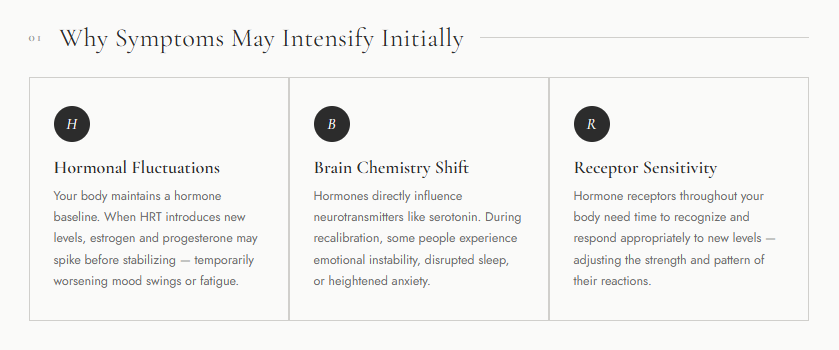
1. Hormonal Fluctuations
Your body is used to a certain hormone baseline. When HRT introduces new levels:
- Hormones may spike or fluctuate before stabilizing
- This can temporarily worsen symptoms like mood swings or fatigue
2. Brain Chemistry Adjustment
Hormones directly impact neurotransmitters like serotonin:
- This can affect mood, anxiety, and sleep
- Some people feel emotionally “off” before balance is restored
3. Receptor Sensitivity
Your body’s hormone receptors need time to:
- Recognize and respond to the new hormone levels
- Adjust how strongly they react
Common Temporary Side Effects
During the adjustment phase, you may notice:
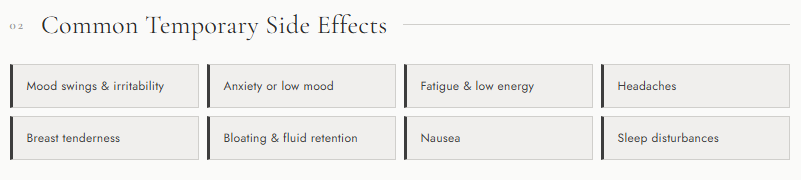
- Mood swings or irritability
- Anxiety or low mood
- Fatigue or low energy
- Headaches
- Breast tenderness
- Bloating or fluid retention
- Nausea
- Sleep disturbances
These are usually mild to moderate and temporary.
Timeline: When Will You Feel Better?
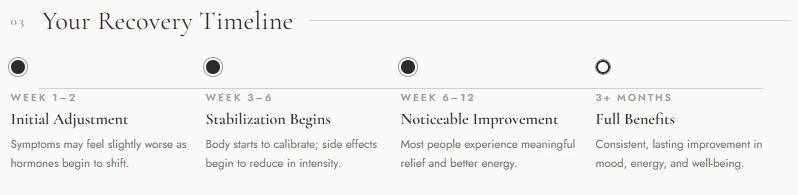
- Week 1–2: Initial adjustment; symptoms may feel slightly worse
- Week 3–6: Body begins stabilizing; side effects reduce
- Week 6–12: Noticeable improvement in symptoms
- 3+ months: Full benefits become more consistent
Every person is different—some feel better quickly, while others need more time or dosage adjustments.
What Affects Your Experience on HRT?
Not everyone feels worse. Your experience depends on:
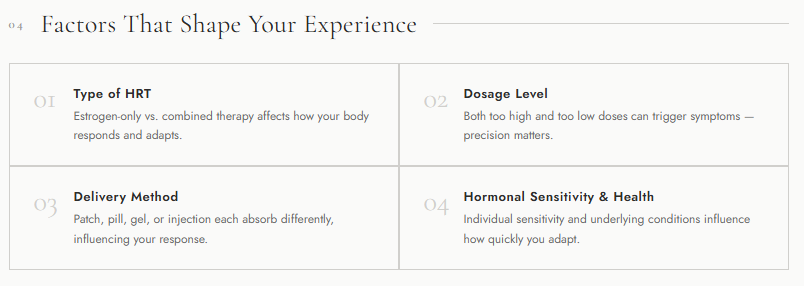
- Type of HRT (estrogen-only vs combined therapy)
- Dosage (too high or too low can cause symptoms)
- Delivery method (patch, pill, gel, injection)
- Your body’s sensitivity to hormones
- Underlying health conditions
Personalization is key to minimizing side effects.
When “Feeling Worse” Is Not Normal
While mild symptoms are expected, speak to a healthcare provider if you experience:
- Severe depression or anxiety
- Persistent symptoms beyond 8–12 weeks
- Heavy bleeding or unusual pain
- Symptoms that interfere with daily life
This may mean your dose or type of HRT needs adjustment.
Practical Tips to Manage the Adjustment Phase
- Give your body time to adapt (don’t stop too early)
- Track your symptoms weekly
- Stay hydrated and maintain a balanced diet
- Prioritize sleep and stress management
- Follow up with your provider for dose adjustments
Key Takeaway
HRT doesn’t work instantly—it’s a process of hormonal rebalancing. Feeling slightly worse at first is often part of your body’s adjustment phase, not a sign of failure. With the right dosage and guidance, most people experience significant symptom relief over time.
Take Control of Your Hormonal Health Today
If you’re struggling with symptoms of hormonal imbalance or unsure whether HRT is right for you, expert guidance can make all the difference. OC Medical Wellness offers personalized Hormone Replacement Therapy in Irvine, CA, designed to restore balance, improve your well-being, and help you feel like yourself again.
Don’t wait for symptoms to get worse, get a customized treatment plan tailored to your body and goals.
Schedule your consultation today and start your journey toward better energy, mood, and overall health.