
Yes, Hormone Replacement Therapy (HRT) may help with peripheral neuropathy symptoms in some women, particularly when the nerve issues are linked to menopause-related hormonal changes. However, HRT is not a standard or guaranteed treatment for peripheral neuropathy.
Related: How Long Should You Take Hormone Replacement Therapy (HRT)?
What Is Peripheral Neuropathy?
Peripheral neuropathy occurs when peripheral nerves (the nerves outside the brain and spinal cord) become damaged or dysfunctional. These nerves are responsible for transmitting signals between the brain and the rest of the body.
Common symptoms include:
- Tingling or “pins and needles” sensations
- Burning or sharp nerve pain
- Numbness in the hands, feet, or legs
- Muscle weakness
- Increased sensitivity to touch
- Balance or coordination problems
These symptoms can range from mild discomfort to severe nerve pain, depending on the cause and severity of the nerve damage.
The Connection Between Hormones and Nerve Health
Hormones especially estrogen play an important role in maintaining nerve health. Estrogen helps support:
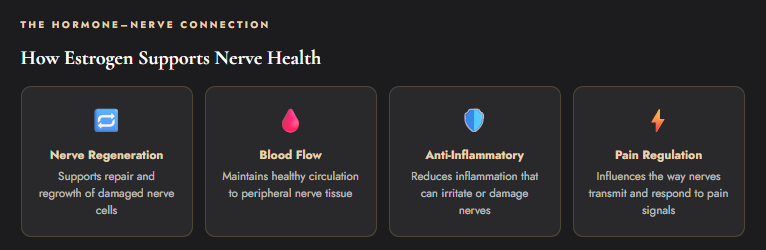
- Nerve regeneration and repair
- Healthy blood flow to nerve tissues
- Anti-inflammatory protection for nerve cells
- Pain regulation in the nervous system
During perimenopause and menopause, estrogen levels decline significantly. This hormonal shift can sometimes lead to neurological symptoms such as:
- Tingling sensations in the hands and feet
- Electric shock–like feelings
- Increased nerve sensitivity
- Burning sensations in the skin
Because of this, some women experience neuropathy-like symptoms during menopause.
How HRT May Help Peripheral Neuropathy
Hormone Replacement Therapy works by restoring estrogen or progesterone levels in the body. For some women, this may provide benefits such as:
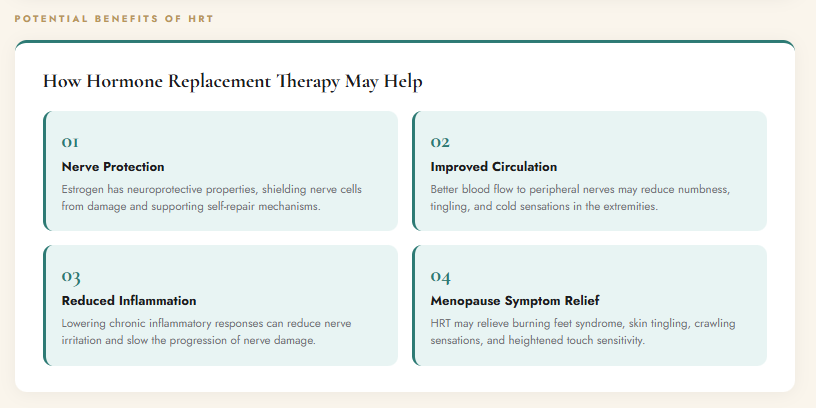
1. Supporting Nerve Protection
Estrogen has neuroprotective properties, meaning it helps protect nerve cells from damage and supports their ability to repair themselves.
2. Improving Circulation
Healthy circulation is essential for nerve function. Estrogen can improve blood flow to peripheral nerves, which may reduce numbness or tingling.
3. Reducing Inflammation
Chronic inflammation can worsen nerve damage. Estrogen may help lower inflammatory responses, which could reduce nerve irritation.
4. Helping With Menopause-Related Symptoms
Women experiencing menopause often report symptoms such as:
- Skin tingling or crawling sensations
- Burning feet syndrome
- Increased sensitivity to touch
HRT may reduce these symptoms by balancing hormone levels.
What Research Suggests
Some studies suggest that estrogen may help protect nerve fibers and improve nerve signaling. Researchers believe estrogen influences the way nerves transmit pain signals and respond to injury.
However, clinical evidence is still limited and mixed, meaning HRT is not currently considered a standard treatment for peripheral neuropathy. It may help in cases where neuropathy symptoms are hormonally related, but not when nerve damage is caused by other conditions.
Common Causes of Peripheral Neuropathy
Most cases of peripheral neuropathy are caused by underlying health conditions rather than hormonal changes. Common causes include:
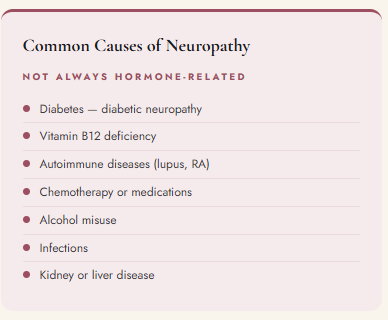
- Diabetes (diabetic neuropathy)
- Vitamin deficiencies, particularly vitamin B12
- Autoimmune diseases such as lupus or rheumatoid arthritis
- Chemotherapy or certain medications
- Alcohol misuse
- Infections
- Kidney or liver disease
If neuropathy is caused by one of these conditions, treatment typically focuses on managing the underlying disease rather than hormone therapy.
When HRT Might Be Considered
A healthcare provider may consider HRT if:
- Neuropathy symptoms began during perimenopause or menopause
- The patient also experiences other menopausal symptoms, such as hot flashes, mood changes, or vaginal dryness
- Other common causes of neuropathy have been ruled out
In such cases, hormone therapy may help relieve symptoms indirectly by restoring hormonal balance.
Related: Birth Control vs Hormone Replacement Therapy (HRT)
Other Treatments for Peripheral Neuropathy
Depending on the cause, doctors may recommend treatments such as:
- Medications for nerve pain
- Vitamin supplementation (especially B vitamins)
- Physical therapy
- Lifestyle changes such as improving diet and exercise
- Managing blood sugar levels for diabetic neuropathy
These treatments often form the primary approach to managing nerve damage.
When to See a Doctor
You should seek medical advice if you experience:
- Persistent numbness or tingling in hands or feet
- Burning or stabbing nerve pain
- Muscle weakness or difficulty walking
- Symptoms that worsen over time
A doctor may perform blood tests, nerve conduction studies, or neurological exams to identify the cause of the symptoms.
Key Takeaway:
Hormone Replacement Therapy may help relieve neuropathy-like symptoms linked to menopause, but it is not a universal treatment for peripheral neuropathy. A proper medical evaluation is essential to determine the underlying cause and the most appropriate treatment option.