
Somatic stem cells, also known as adult or tissue-specific stem cells, are specialized yet adaptable cells found throughout the body that play a vital role in repair and regeneration. Unlike embryonic stem cells, they are already partially programmed but still capable of transforming into specific cell types within their tissue.
These cells help maintain healthy function by replacing damaged or aging cells and are widely studied for their therapeutic potential. They are used in areas such as regenerating tissues like heart, nerve, and bone, treating blood-related disorders including leukemia, and advancing personalized medicine through targeted, patient-specific treatments.
Detailed potential uses of somatic stem cells
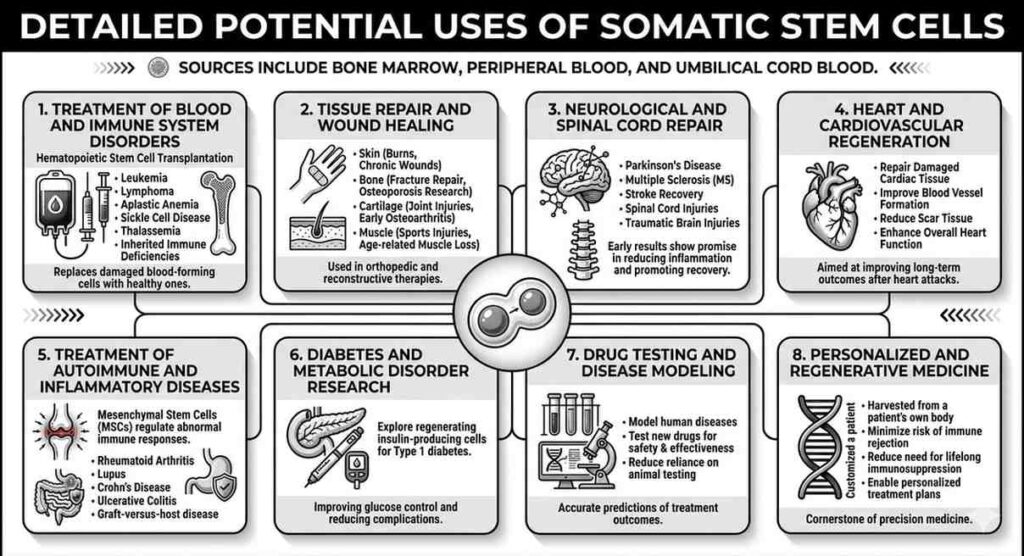
1. Treatment of blood and immune system disorders
One of the most established uses of somatic stem cells is in hematopoietic stem cell transplantation. These stem cells are found in bone marrow, peripheral blood, and umbilical cord blood.
They are used to treat:
- Leukemia and lymphoma
- Aplastic anemia
- Sickle cell disease
- Thalassemia
- Certain inherited immune deficiencies
This therapy works by replacing damaged or diseased blood-forming cells with healthy ones, allowing the body to regenerate a functional immune and blood system.
2. Tissue repair and wound healing
Somatic stem cells play a major role in natural tissue repair. They continuously replace damaged or dying cells in tissues such as:
- Skin (burn treatment, chronic wound healing)
- Bone (fracture repair and osteoporosis research)
- Cartilage (joint injuries and early-stage osteoarthritis)
- Muscle (sports injuries and age-related muscle loss)
In clinical settings, they are increasingly used in orthopedic and reconstructive therapies to accelerate healing and restore mobility.
3. Neurological and spinal cord repair
Although the nervous system has limited self-healing ability, somatic stem cells are being studied for their potential to support nerve repair and regeneration.
Research focuses on conditions such as:
- Parkinson’s disease
- Multiple sclerosis (MS)
- Stroke recovery
- Spinal cord injuries
- Traumatic brain injuries
While many applications are still in clinical trials, early results suggest these cells may help reduce inflammation, protect neurons, and promote functional recovery.
4. Heart and cardiovascular regeneration
After a heart attack, heart muscle tissue is permanently damaged. Somatic stem cells are being explored for their ability to:
- Repair damaged cardiac tissue
- Improve blood vessel formation
- Reduce scar tissue
- Enhance overall heart function
These therapies aim to improve long-term outcomes for patients with cardiovascular disease.
5. Treatment of autoimmune and inflammatory diseases
Somatic stem cells, especially mesenchymal stem cells (MSCs), have strong immune-modulating properties. This makes them promising for treating:
- Rheumatoid arthritis
- Lupus
- Crohn’s disease
- Ulcerative colitis
- Graft-versus-host disease
They work by regulating abnormal immune responses rather than simply suppressing the immune system.
6. Diabetes and metabolic disorder research
Researchers are exploring how somatic stem cells can help repair or regenerate insulin-producing cells in patients with Type 1 diabetes. While not yet a cure, stem cell-based therapies show promise in improving glucose control and reducing complications.
7. Drug testing and disease modeling
Somatic stem cells are widely used in laboratories to:
- Model human diseases
- Test new drugs for safety and effectiveness
- Reduce reliance on animal testing
This leads to more accurate predictions of how treatments will work in humans.
8. Personalized and regenerative medicine
Because somatic stem cells can be harvested from a patient’s own body, they:
- Minimize the risk of immune rejection
- Reduce the need for lifelong immunosuppressive drugs
- Enable personalized treatment plans
This makes them a cornerstone of precision medicine and future regenerative therapies.
Why somatic stem cells are important
Somatic stem cells offer a practical, ethical, and medically proven approach to treating disease and injury. Unlike embryonic stem cells, their use does not involve ethical controversy, making them widely accepted in healthcare systems worldwide.
Quick summary
Somatic stem cells play a crucial role in modern healthcare, offering promising applications in tissue repair, treatment of blood disorders, and the development of regenerative therapies, with expanding potential for future medical advancements.
Looking for safe, patient-focused stem cell therapy? OC Medical Wellness offers evidence-based regenerative treatments to support healing, reduce pain, and improve quality of life.
Book a consultation today to see if stem cell therapy is right for you.
Call now or schedule online with trusted medical experts.